

Along the Kulsi: In Conversation with Biswajit Das and Chandan Borgohain
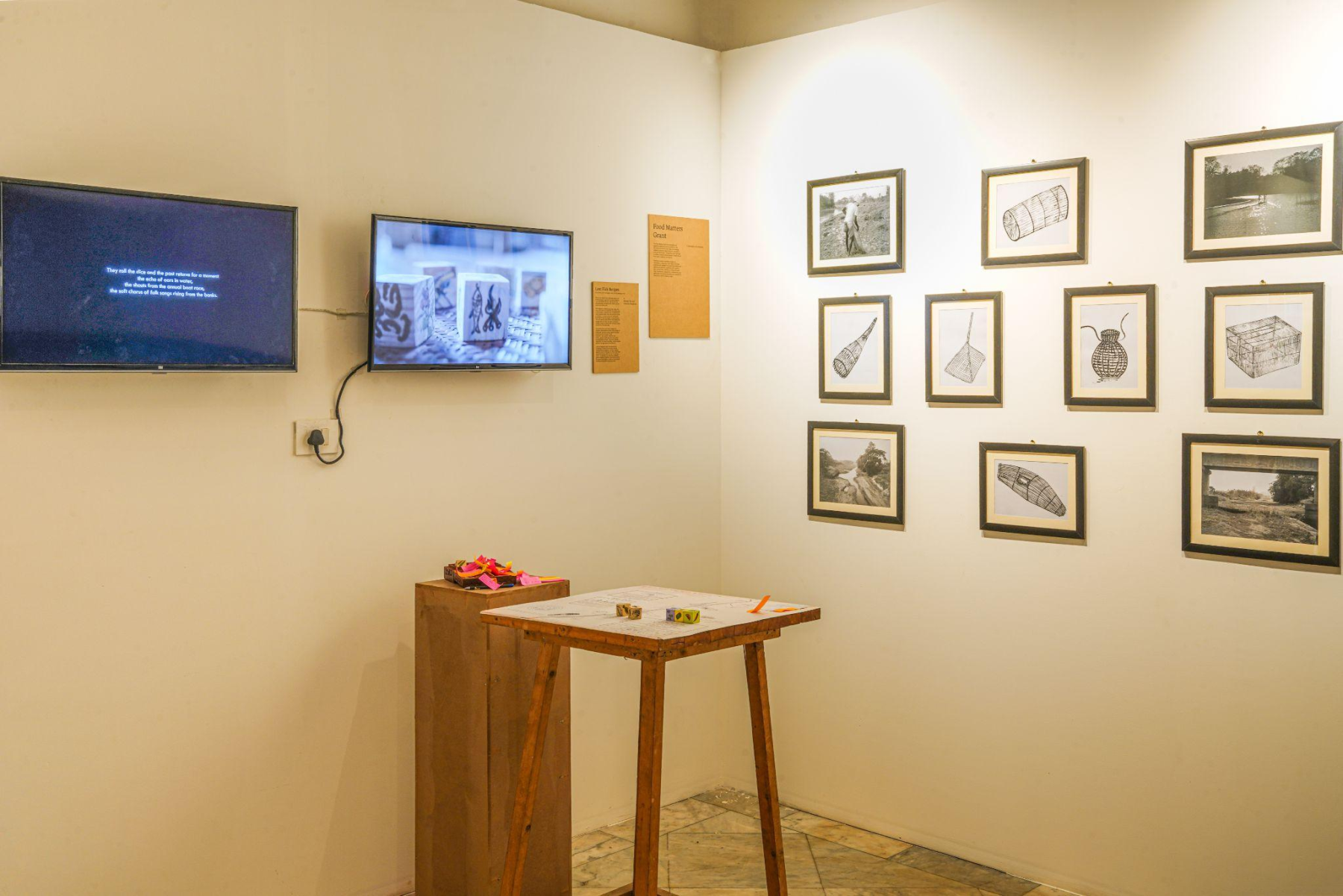
The project Lost Fish Recipes (2025), by filmmaker and animator Biswajit Das and journalist and photographer Chandan Borgohain, attempts to document the dwindling cultural legacy shaped by the Kulsi, a tributary of the Brahmaputra, in Assam. The erasure of the ecosystem built around the river has also led to the loss of Indigenous food cultures sustained by it. Having been awarded the Serendipity Food Matters Grant in 2024, the work was on display at the tenth edition of the Serendipity Arts Festival in Goa from 12–21 December 2025. In the first part of this edited conversation, the duo speak about their long-term engagement with working on ecological issues and their process of collaboration.
Mallika Visvanathan (MV): Can you tell us a bit about your relationship to the Kulsi river and why is it that you decided to trace loss through food cultures around it?
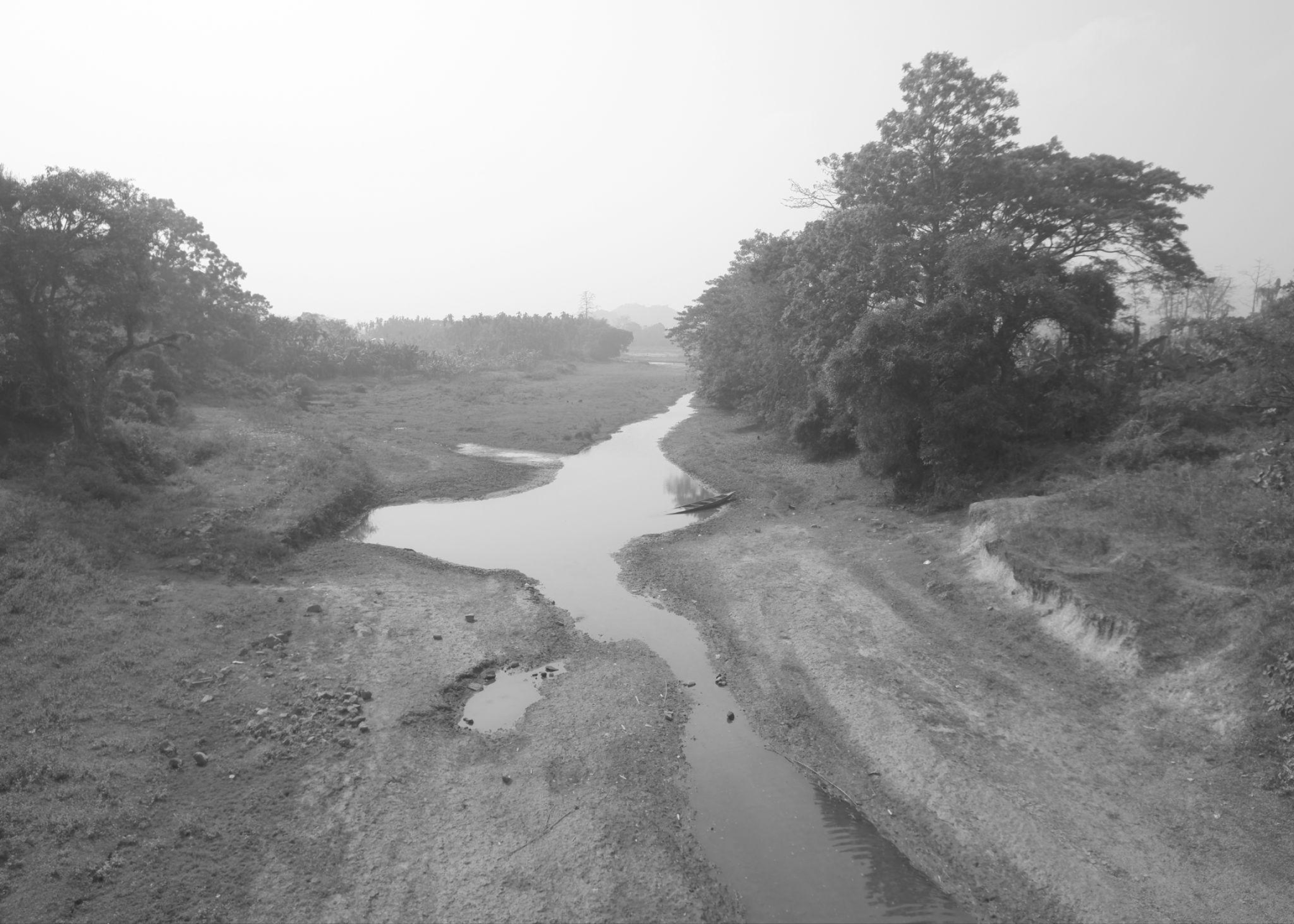
Chandan Borgohain (CB): As a journalist, I was covering a story—back in 2020—on sand mining in Kukurmara, which is on the outskirts of Guwahati. After visiting the river for this story, it remained on my mind. I was keen to return and have longer conversations with the people there and understand how the gradual drying up of the river was affecting them. In 2023, Basu (Biswajit) and I were talking to one another about this and we thought we should go there and see what we could do. So it started from that particular interest of knowing the place and how these changes have affected the people there.
Biswajit Das (BD): I have been interested in wetlands and rivers because there used to be a wetland called the Silsako Beel in front of my house. Over the years, the lake has disappeared. Now, it has turned into a small drain. All this happened right in front of my eyes. I was trying to engage with these changes in the form of a film for the Nagari Film competition. Then there is another wetland called the Deepor Beel, which is the largest lake in Guwahati. Here, to create awareness, we conducted a walk, after which the participants created one-page comics.
When Chandan told me about the Kulsi river, it felt like an extension of what I was already doing in different formats. It is not just sand mining that has reduced the river. The Kulsi has dried up to the extent that it has changed its course. One side of the river is now non-existent. There used to be river dolphins breeding in that particular part of the river. Earlier there were more than 250 dolphins—now only one or two remain.
Similarly, a large-scale boat race used to happen—with more than twenty boats participating at one time. That fifty-year-old tradition has now been reduced to six or seven boats. So we felt that we wanted to tell the story of the river through these different aspects.
MV: I was curious about your process and how you collaborated on the work together?
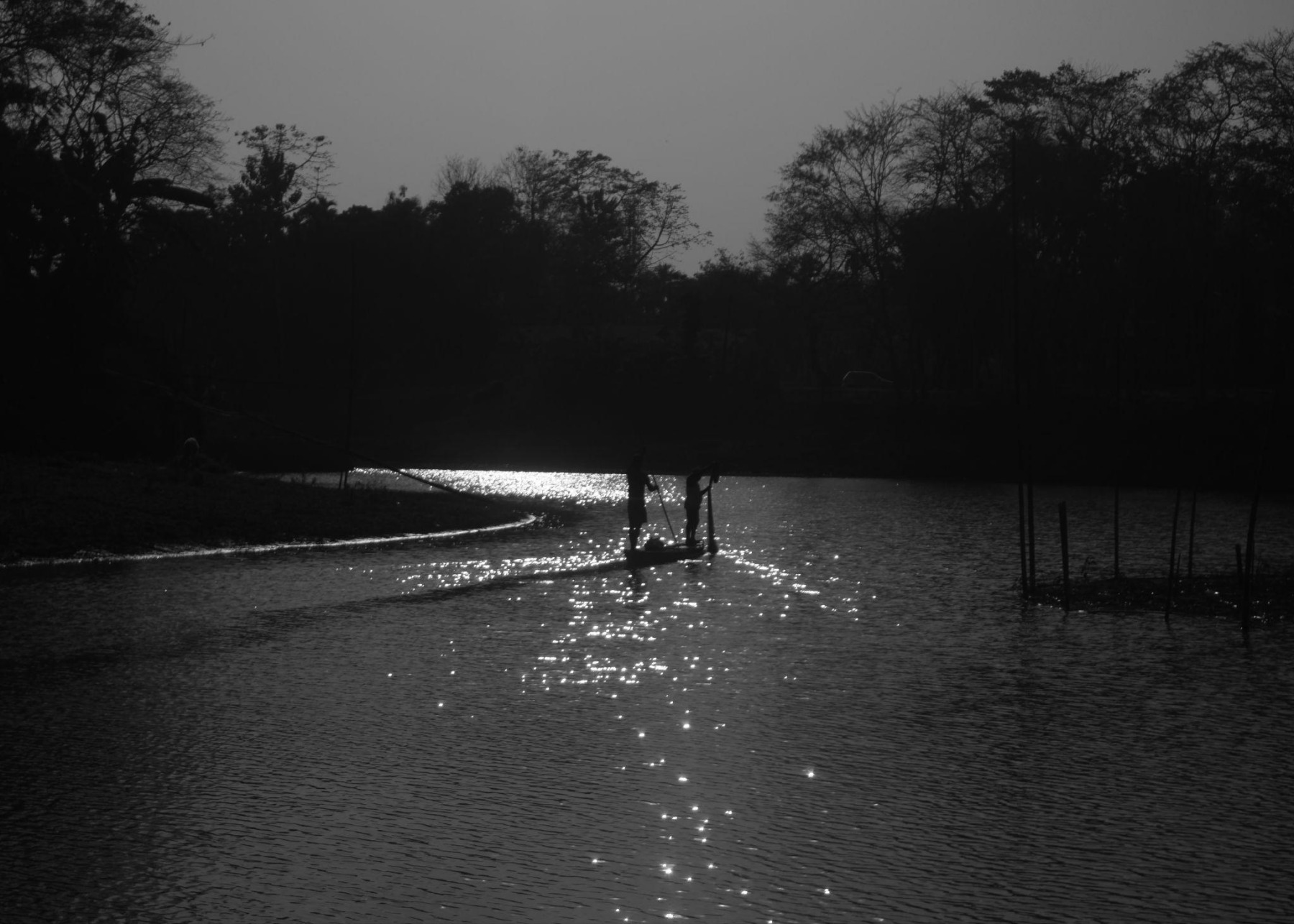
BD: After Chandan told me the story about the river, we would visit the field together. We talked to the people who lived there. Some locals, including Debojit Chowdhury and Dinesh Das especially, helped us connect with fishermen and other villagers. After some amount of research, we pitched our project for the Serendipity Food Matters grant. We were keen to tell the story of the fishermen and how they lost their livelihood over these years.
CB: Our initial phase of research involved travelling along the riverbanks and understanding how the different dynamics played out through diverse communities that relied on the river in various ways. When we heard these stories, we were also searching for a starting point because there are so many possibilities and so many aspects to it. The idea of food as an entry point to the project emerged organically from our interactions with fishermen in Kukurmara village. They told us about how their food practices have changed from when the river was full.
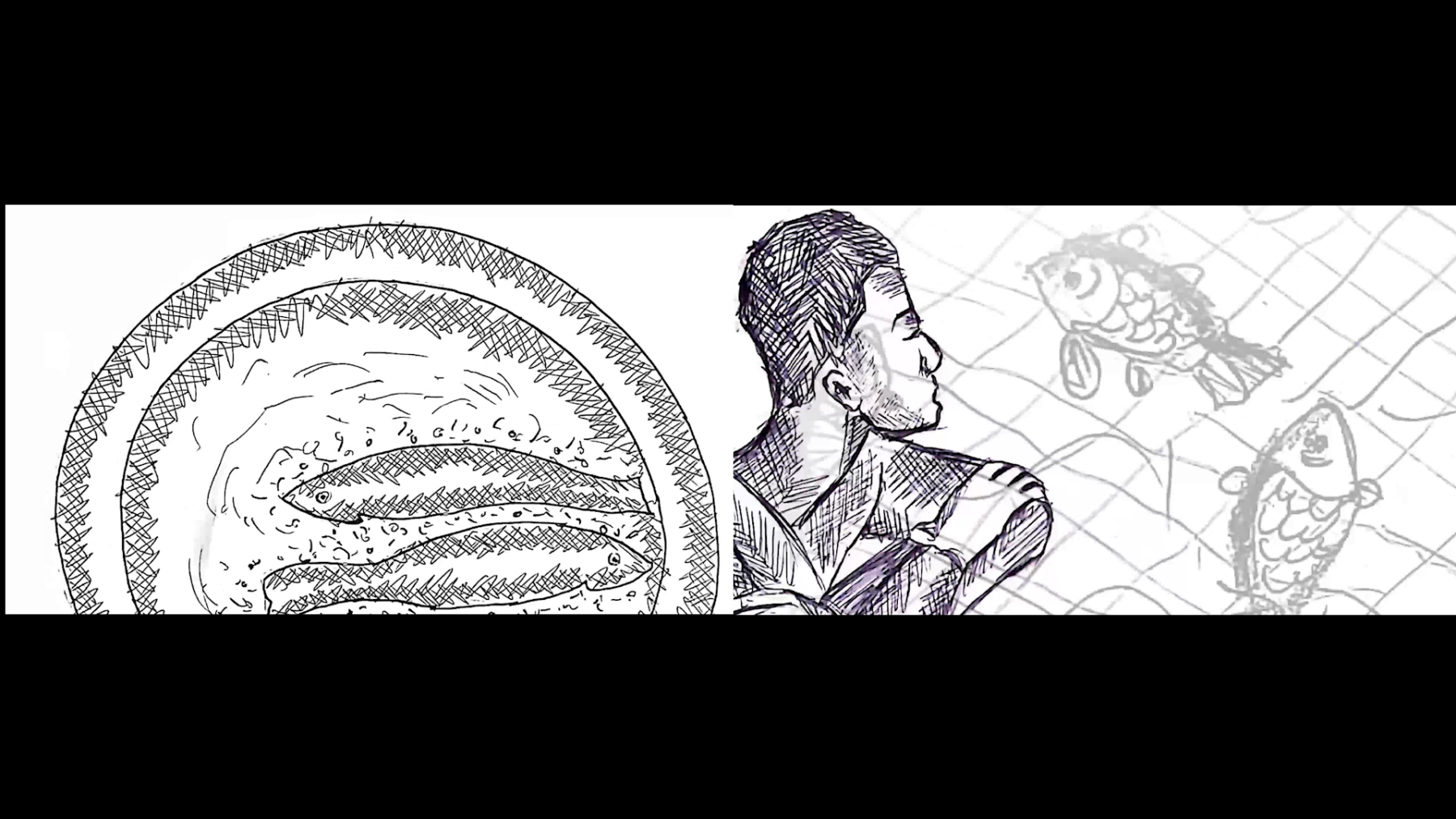
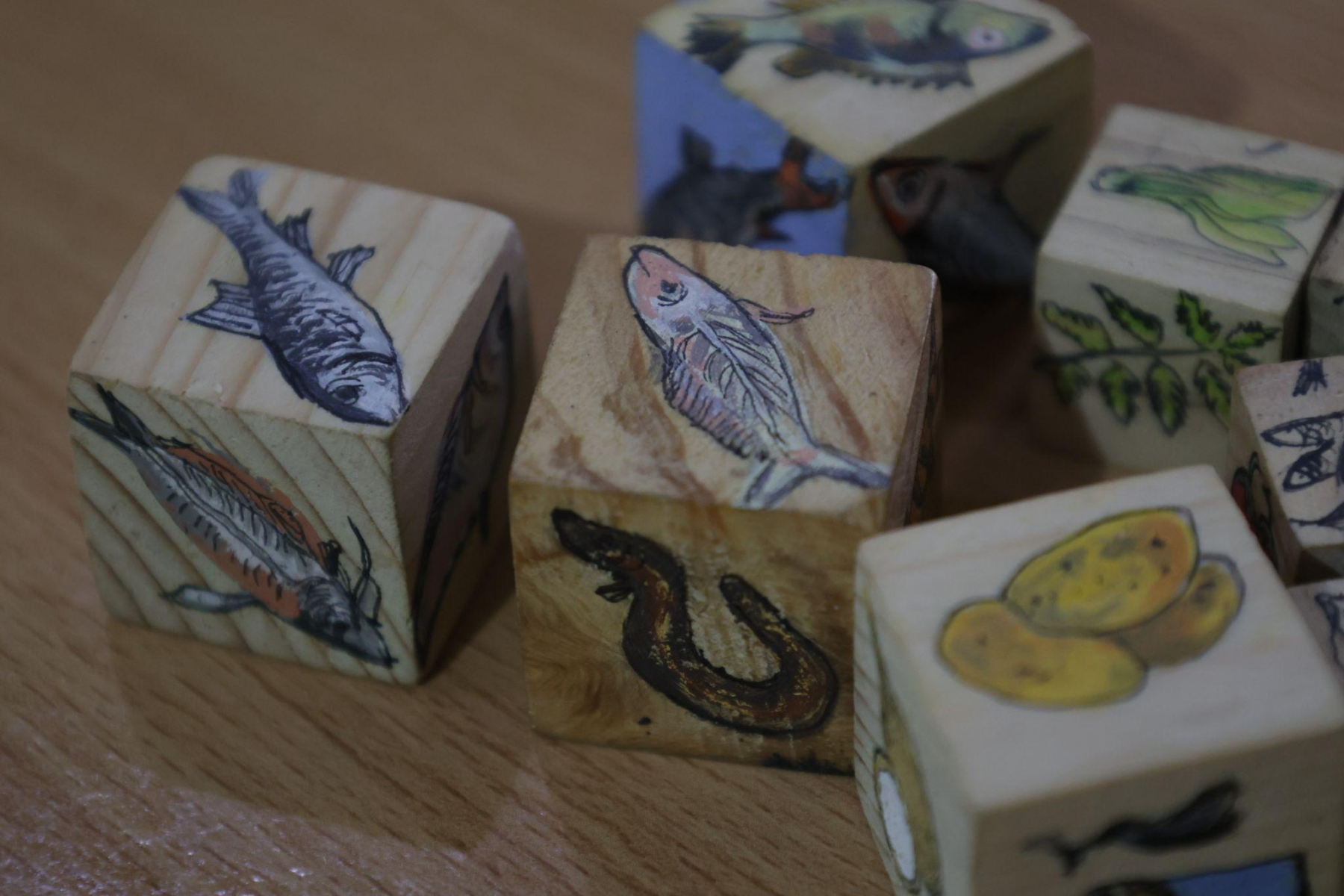
BD: During one of the interviews, a fisherman mentioned that there used to be so many different fish earlier. So I asked him: “What kind of fish?” He said that there used to be a fish called “Ritha,” which is no longer there. I had never heard about that fish before. But he proceeded to tell me that the best way to cook Ritha fish is with moong dal (green gram) sprouts. He said it was a fantastic combination. When we asked him what else worked, he started talking to us about the different Indigenous recipes. He told us about various combinations—this particular fish should be eaten with this, and this particular fish should be cooked with that. He gave us many such examples. And that became the first step in the direction of the project. It was not supposed to be a game, but it emerged from such conversations.
To learn more about the Serendipity Food Matters grant, read Mallika Visvanathan’s two-part conversation with Sumaiya Mustafa on her project Culinary Cosmopolitanism Through Parotta Shops of Rural and Coastal Tamil Nadu (2025) and Radhika Saraf’s conversation with Dayananda Nagaraju and Niranjan NB about their project The Everlasting River (2024).
To learn more about the tenth edition of the Serendipity Arts Festival, watch an episode of In Person featuring Shaima Al-Tamimi as she discusses her film Don’t Get Too Comfortable (2021), which was featured as part of the show Displacement curated by Rahaab Allana, and engage with an album from Kunga Tashi Lepcha’s series Children of the Snowy Peak (2019–ongoing), which was featured as part of the show Murmurations curated by Ravi Agarwal.