
Written in the Water: On Atul Bhalla’s Maceration - I
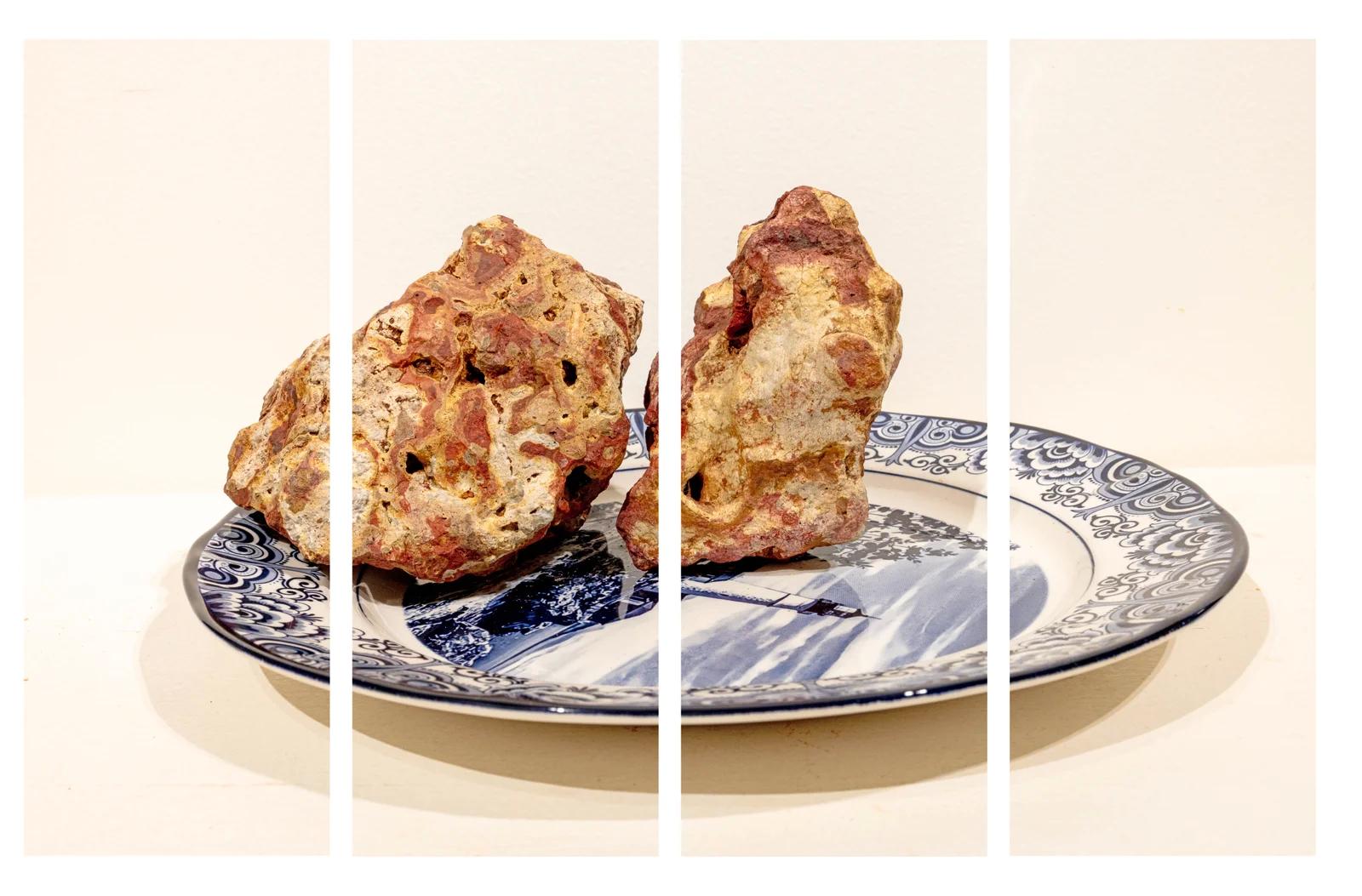
“The Weight of the Ground Beneath.” (Atul Bhalla. Goa, 2025. From Maceration - I at HH Art Spaces. Archival Print on Paper, 56 x 86 inches. Image courtesy of the artist.)
Atul Bhalla’s open studio Maceration - I at HH Artspaces in June 2025 is an extension of the artist's two-decade-long engagement with environmental urgencies around water—in the context of Goa’s khazan (a system of low-lying wetlands used for both agriculture and fishing, carefully balancing seawater and freshwater through embankments and sluice gates). Developed during a three-week residency at HH, the show documents an encounter with Goa mediated by an attentiveness to water, agriculture and the region’s cultural histories.
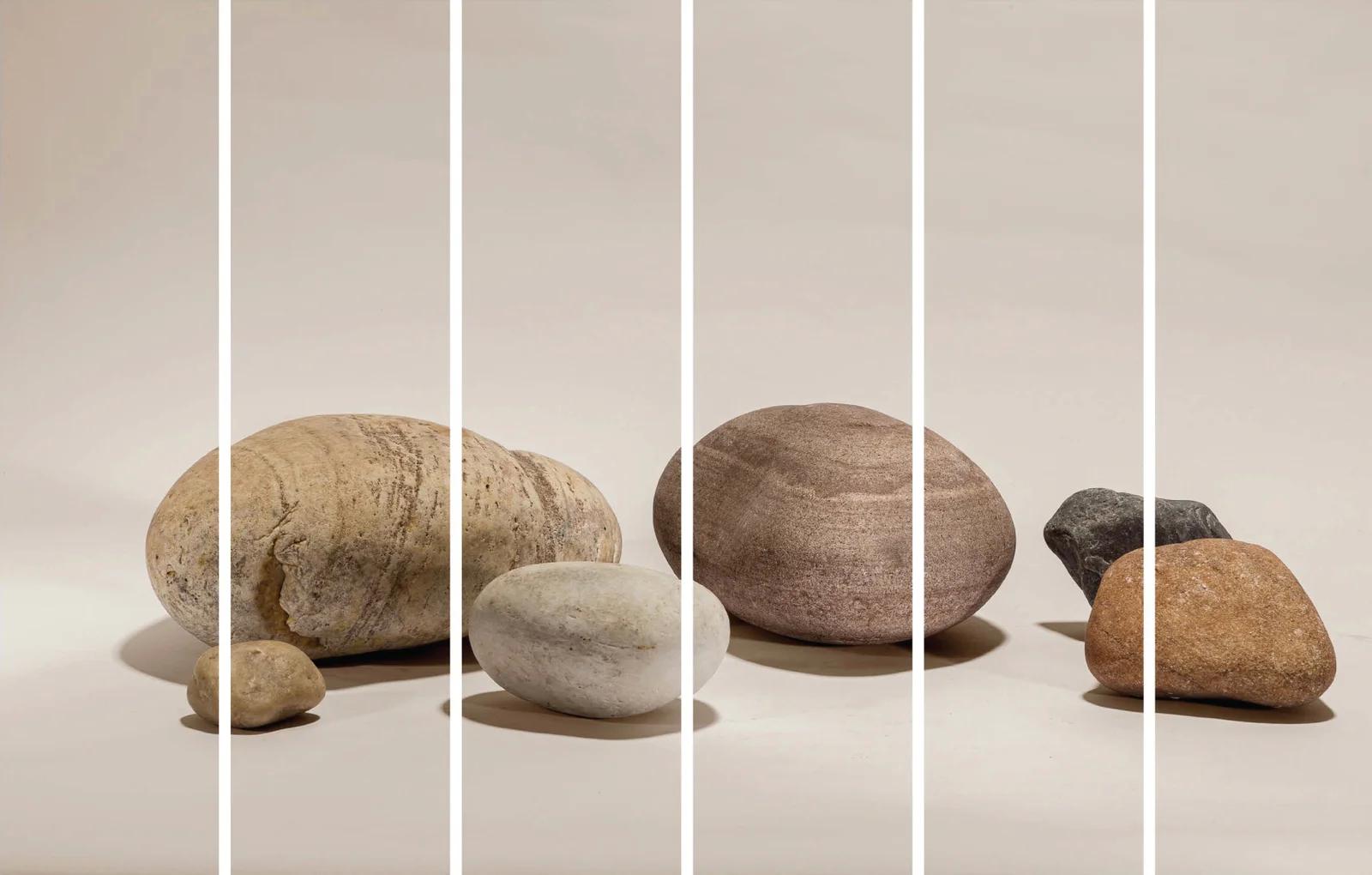
“6 Weathers.” (Atul Bhalla. Delhi, 2023. From the show ‘Ausculation: False Clouds and Real Deluges’ at Vadehra Art Gallery. Archival Pigment Print, 90 x 135 inches. Image courtesy of the artist.)
In the photograph “The Weight of the Earth Beneath,” red laterite rocks, which are ubiquitous in Goa’s plateaus and architecture—formed by prolonged weathering in warm, humid weather—are placed on top of a hand-painted porcelain plate. The plate is recognisably Macau Crockery, imported to Goa from the south-eastern coast of China. The striking cobalt pigment on the crockery, traditionally sourced from Persia, depicts Portuguese ships, beaches and village life. The production and trade of these porcelain wares has endured over hundreds of years, evidencing the shared legacies of Portuguese conquest between Macau and Goa, as well as the persisting nostalgia for colonial-style souvenirs or heirlooms.
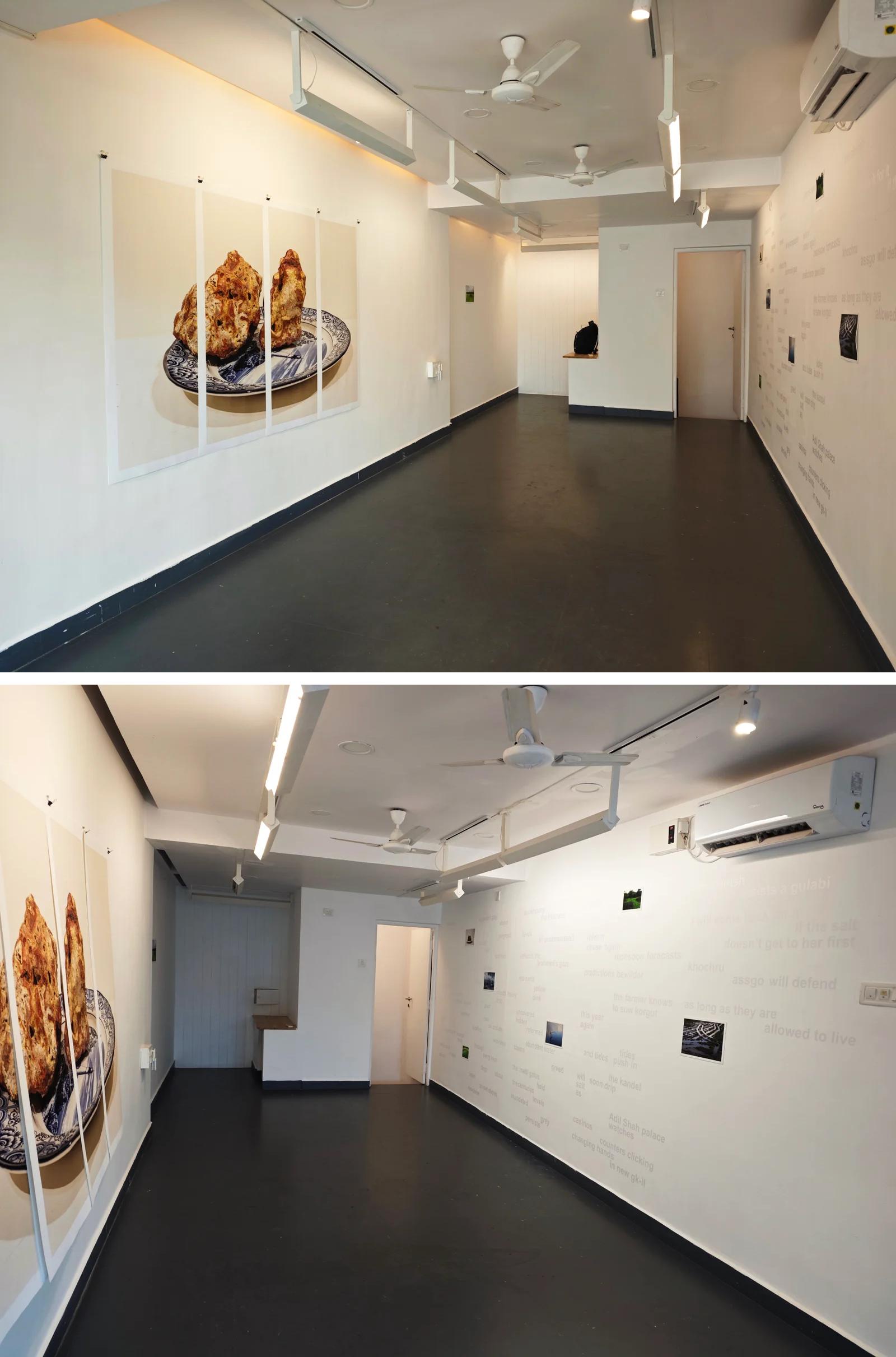
Installation view of Maceration - I by Atul Bhalla at HH Art Spaces. (Goa, 2025. Image courtesy of the artist and HH Art Spaces.)
“The Weight of the Earth Beneath” reveals a partial view of the plate’s landscape of a blue lighthouse, obstructed by the undulating forms of laterite and their shadows. The image is fragmented by vertical white lines, with each strip of the photo ever so slightly discontinuous with the next, calling to mind René Magritte’s “Le Blanc-Seing” (The Blank Signature, 1965), which similarly plays with occlusion and perception—observing how the mind stitches together fragments that are separate or unaligned into a continuous, coherent whole. This formal strategy further suggests the creation of a landscape through the parallel forces of cultural history and ecological time, ridden with disjunctures, but experienced as a continuous whole by Goa’s inhabitants. The photograph, staged against a plain background, is akin to Bhalla’s previous works such as “6 Weathers” and “2 Weathers,” in which rocks become the concentrated reflections of the weather and landscape which created them. In ‘“The Weight of the Earth Beneath,” Goa’s colonial history becomes a part of this coded landscape.
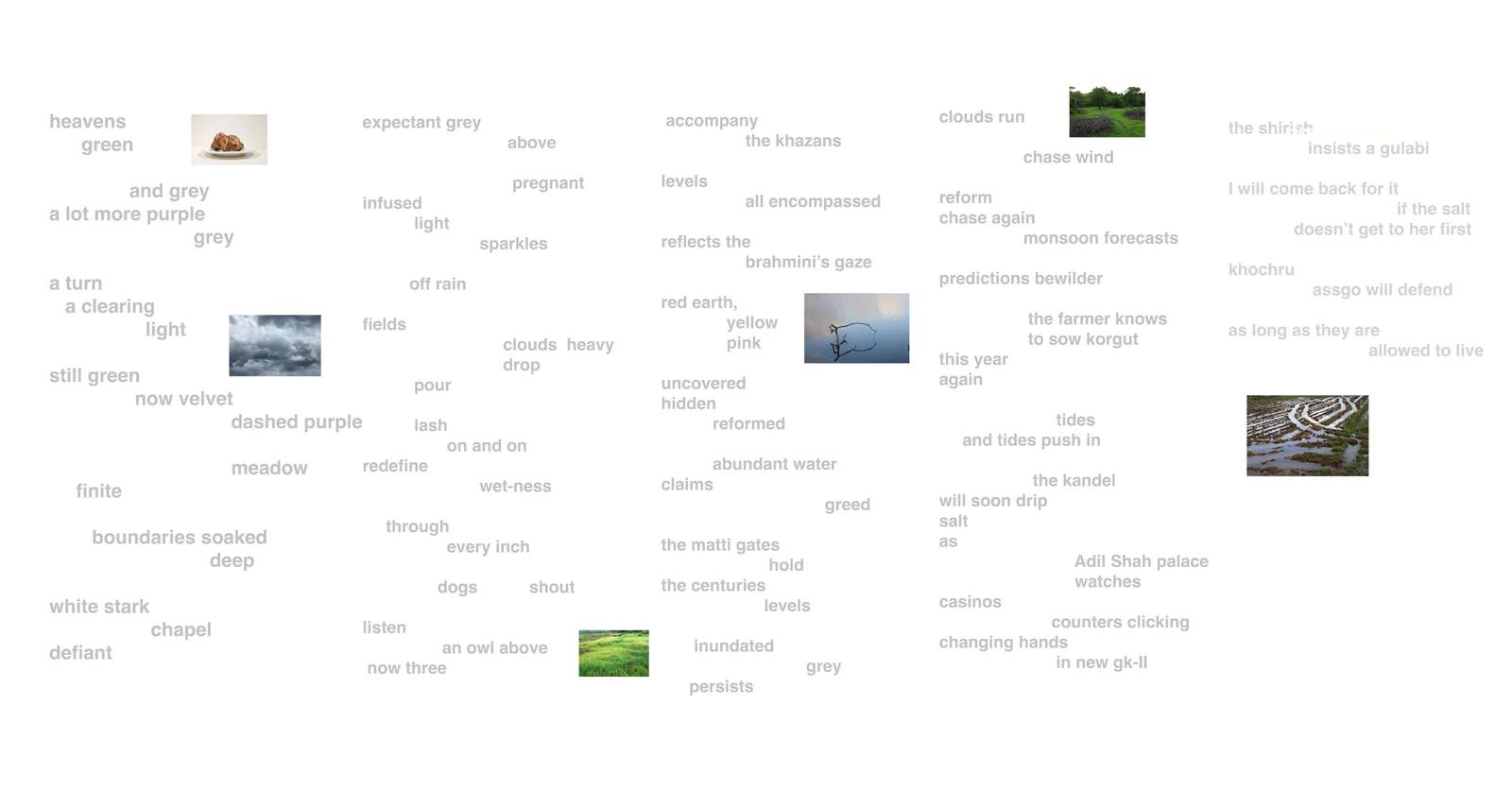
“Maceration.” (Atul Bhalla. Goa, 2025. From Maceration - I at HH Art Spaces. Image courtesy of the artist.)
The show’s eponymous work “Maceration,” spread across one of the gallery's walls, marks an addition to Bhalla’s exploration of the fragment—with the introduction of text as a counterpoint to the photographic form. The writing runs as four left-aligned, vertical stanzas, which can also be read horizontally, interrupting and flowing into photographs of Goa’s wetlands. These loose stanzas, rich with pause and negative space, read as a stream of consciousness in the present tense, listing various stimuli that call out to the senses in Goa’s khazan lands: ‘white stark / chapel / defiant,’ ‘an owl above / now three,’ ‘still green / now velvet.’ The enjambment in these stanzas mirrors what the vertical white strips do for Bhalla’s photographs as they insinuate a continuity in the disjointed and encourage multiple readings. The writing calls attention to the aspects of public memory that are eroding in tandem with the environment, using language that is specific to the context of Goa’s khazan. The line ‘the matti gates / hold / the centuries’ underscores how long the sluice gates called the manos and made of rot-resistant Matti wood have endured, controlling the flow of water in and out of the khazan system.
Made up of acidic, lateritic soil, khazan lands are difficult to cultivate using mechanised farming methods and are maintained by experienced farmers who sow seeds by hand. ‘Korgut’ and ‘Assgo’ in Bhalla’s text refer to the nutritious, saline-resistant rice varieties unique to Goa’s fields, which grow tall enough to resist flooding from excess rainwater. “Maceration” draws attention to aspects of Goa’s landscape and history that surround its inhabitants and are yet becoming unfamiliar to many. In seeking out the language of the khazan, Bhalla makes a plea for remembrance, locating public forgetting alongside environmental precariousness.
.jpg)
“Khazan.” (Atul Bhalla. Goa, 2025. From Maceration - I at HH Art Spaces. Archival Print on Paper, 56 x 86 inches. Image courtesy of the artist.)
“Khazan,” the only photograph displayed in the gallery’s basement, uses a simple semiotic code: turning the river upside down, such that the reflection of nearby mangroves in the water is eye-level. Split by white vertical lines, the ripples in the water further abstract the landscape into a kind of Rorschachian pattern. In this work, as well as the others in Maceration - I, Bhalla invites viewers who may be familiar with Goa’s environment to pause and relook at their surroundings.
To learn more about Atul Bhalla’s work, read Mallika Visvanathan’s observations on the show 28° North and Parallel Weathers (2024).
To learn more about artistic interventions framed around the current ecological moment, read Ishtayaq Rasool’s essay on Fileona Dkhar’s film Ancestral Echoes (2022), Sumaiya Mustafa’s reflections on Neidhal Kaimanam (2025) and Nikita Jain’s documentation of protest by Adivasi’s in Bastar.