

Visualising Seed Sovereignty: In Conversation with Isadora Romero and Tanvi Mishra
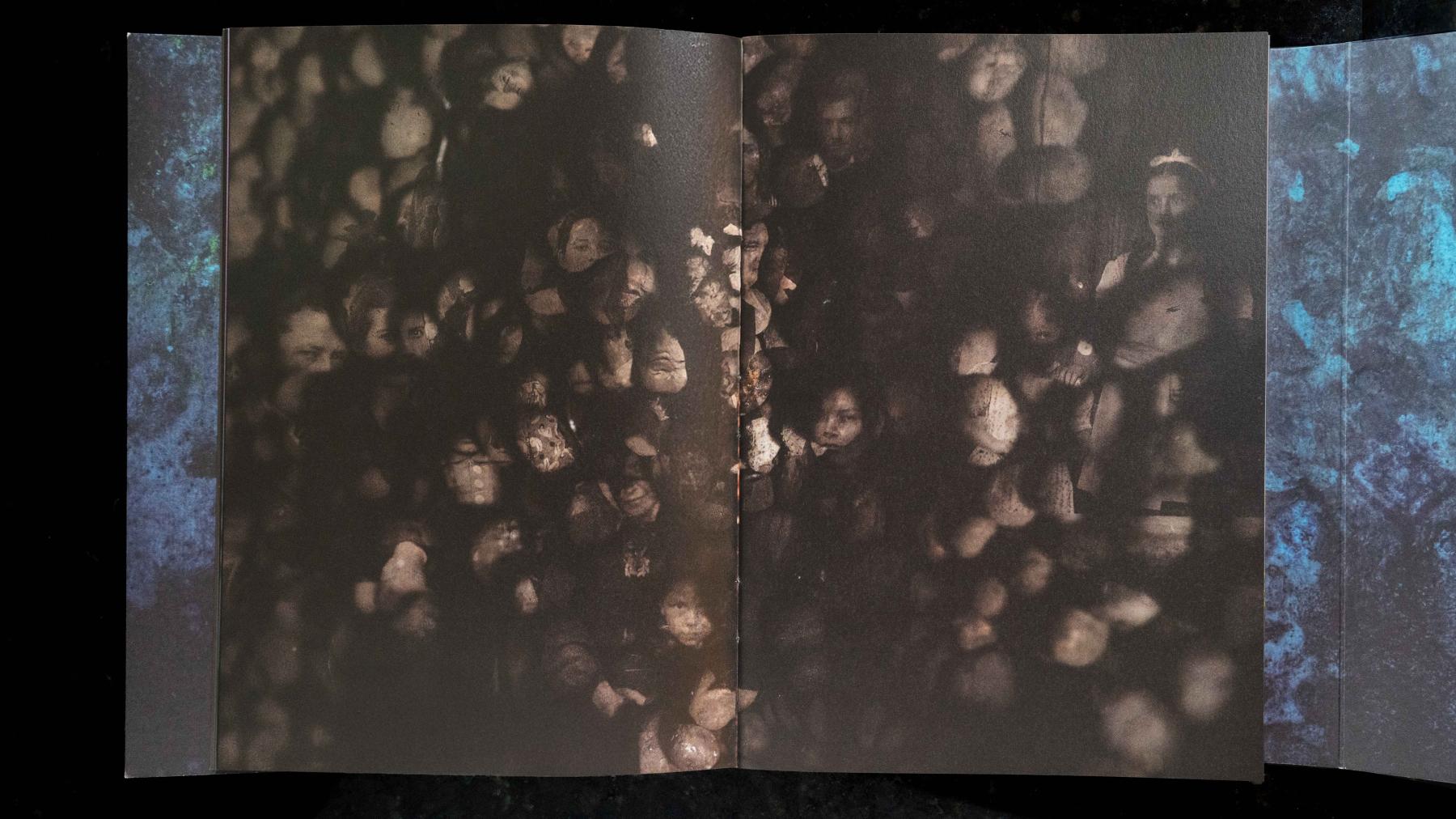
"If you lose a seed, you no longer name it; therefore, you also lose the language—that is to say, your identity." This quote by Alicia Amarilla (of CONAMURI, an organisation of peasant and indigenous women in Paraguay) reveals a core sentiment in Isadora Romero’s extensive research for Humo, Semilla, Raíz (Fume, Root, Seed), which deals with the cultural, political and social consequences of monoculture farming across Latin America. Curated by Tanvi Mishra, Humo, Semilla, Raíz is presented as four chapters that correlate with Romero’s journey through Paraguay, Ecuador, Colombia and Mexico. What started as curiosity about the loss of agrobiodiversity has, over seven years, become multi-faceted research into seed sovereignty and the consequences of the erasure of ancestral memory for indigenous communities.
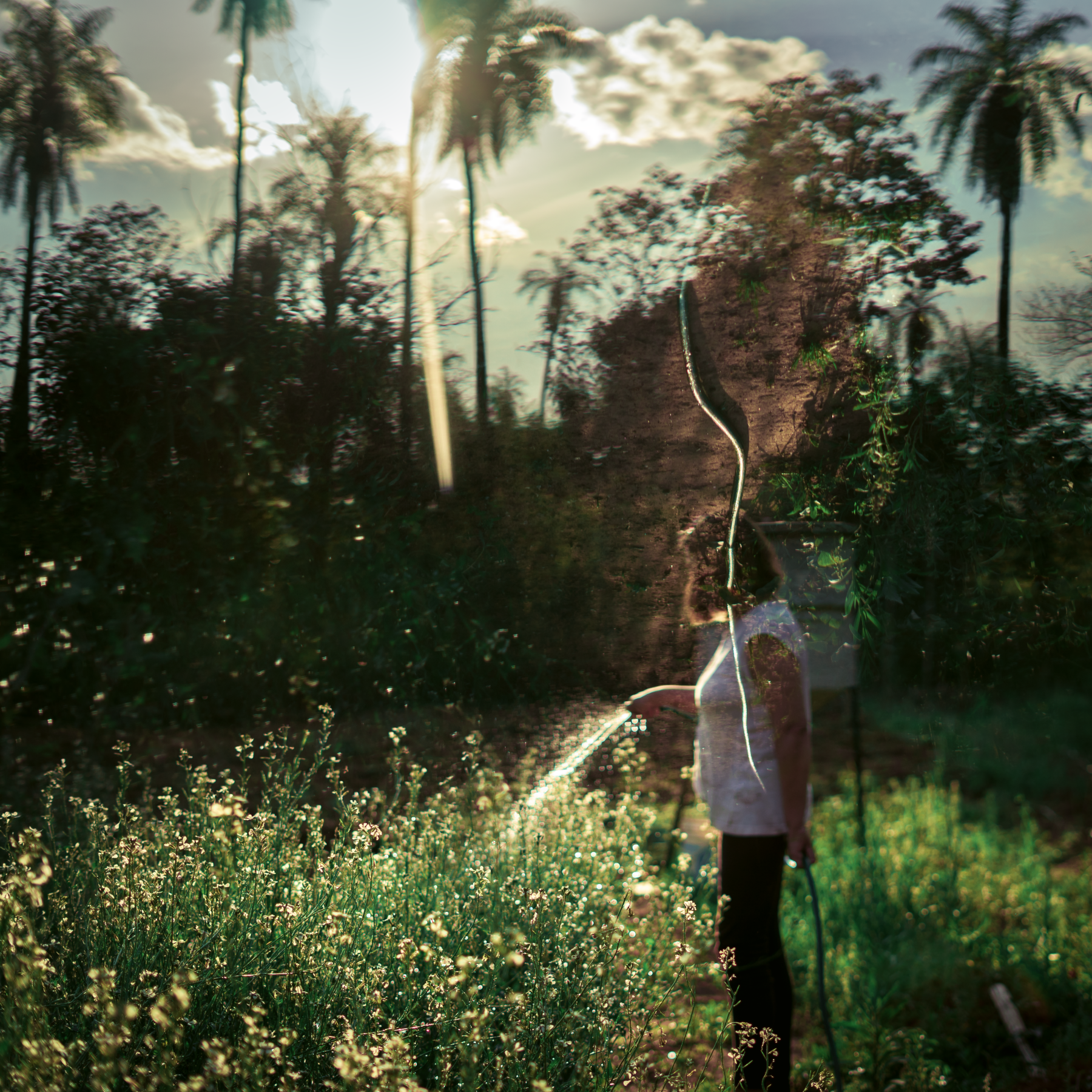
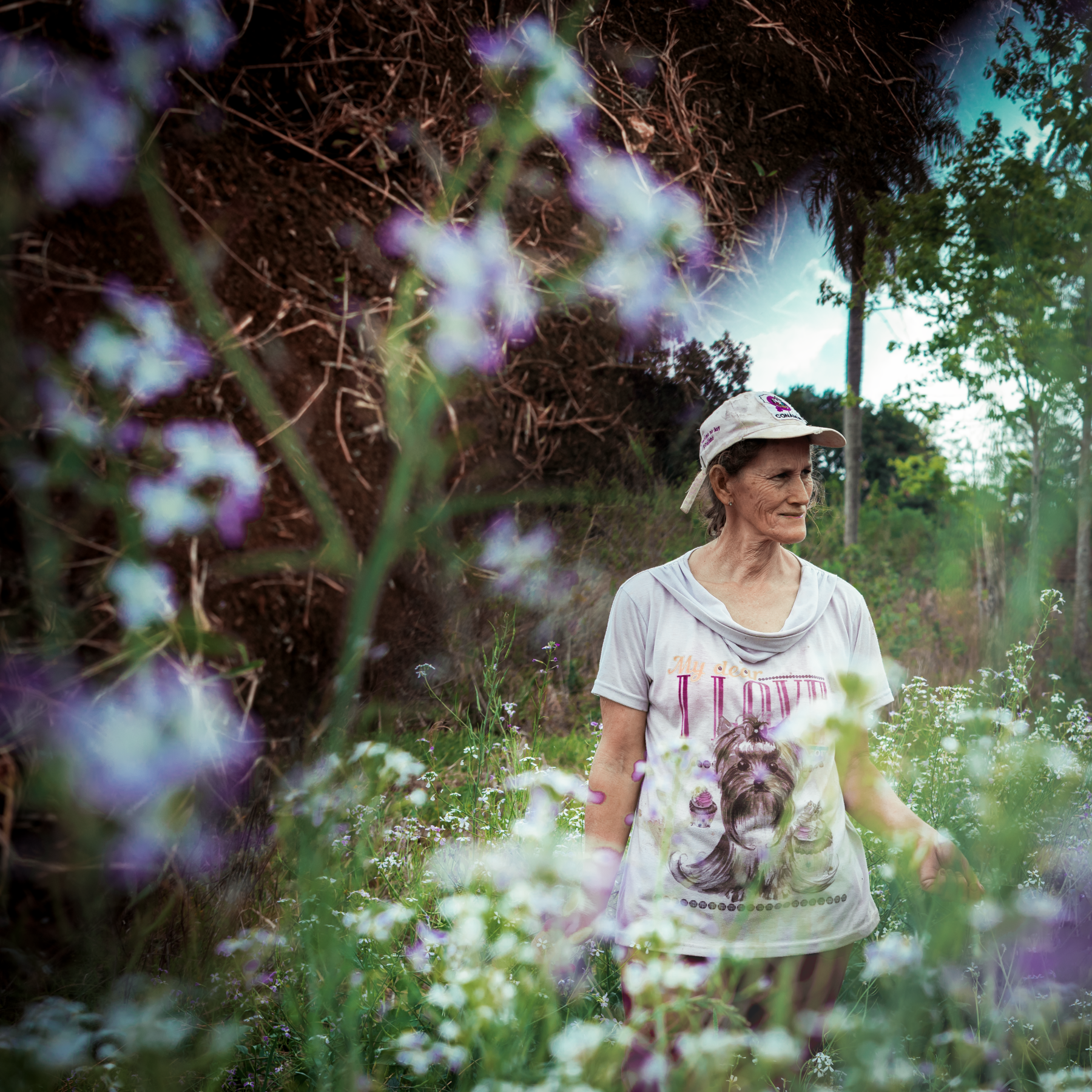
The project started in Paraguay in 2018, where only six per cent of all arable land is used to grow food that Paraguayans consume. The rest is used to grow soybean and wheat, which are exported to countries as far away as Russia. Here, Romero was working with CONAMURI, who have collectivised and worked for twenty-two years to defend their rights. From Paraguay, Romero went to her hometown, Quito, in Ecuador, where she witnessed ways in which scientists were working towards seed preservation and how it differed from the ways CONAMURI worked. Romero documented a seed bank here, where more than 28,000 samples of plants are preserved, while also spending time with the indigenous community of Camuendo Chico. For Romero, it was important to bring out the visuals of these sanitised laboratories—where every sample is carefully separated and labelled, and place this in contrast to the images of the community where people have a more embodied relationship with the seeds and the soil. When the seeds in these small tubes do not grow, the scientists change the plates and try again till they are successful. The indigenous community would simply throw the seeds into the ground. If the seed does not grow in two attempts, it means that the soil does not accept it and they must let it be. For them, agriculture and preservation is intertwined with mysticism and a direct relationship with the land.
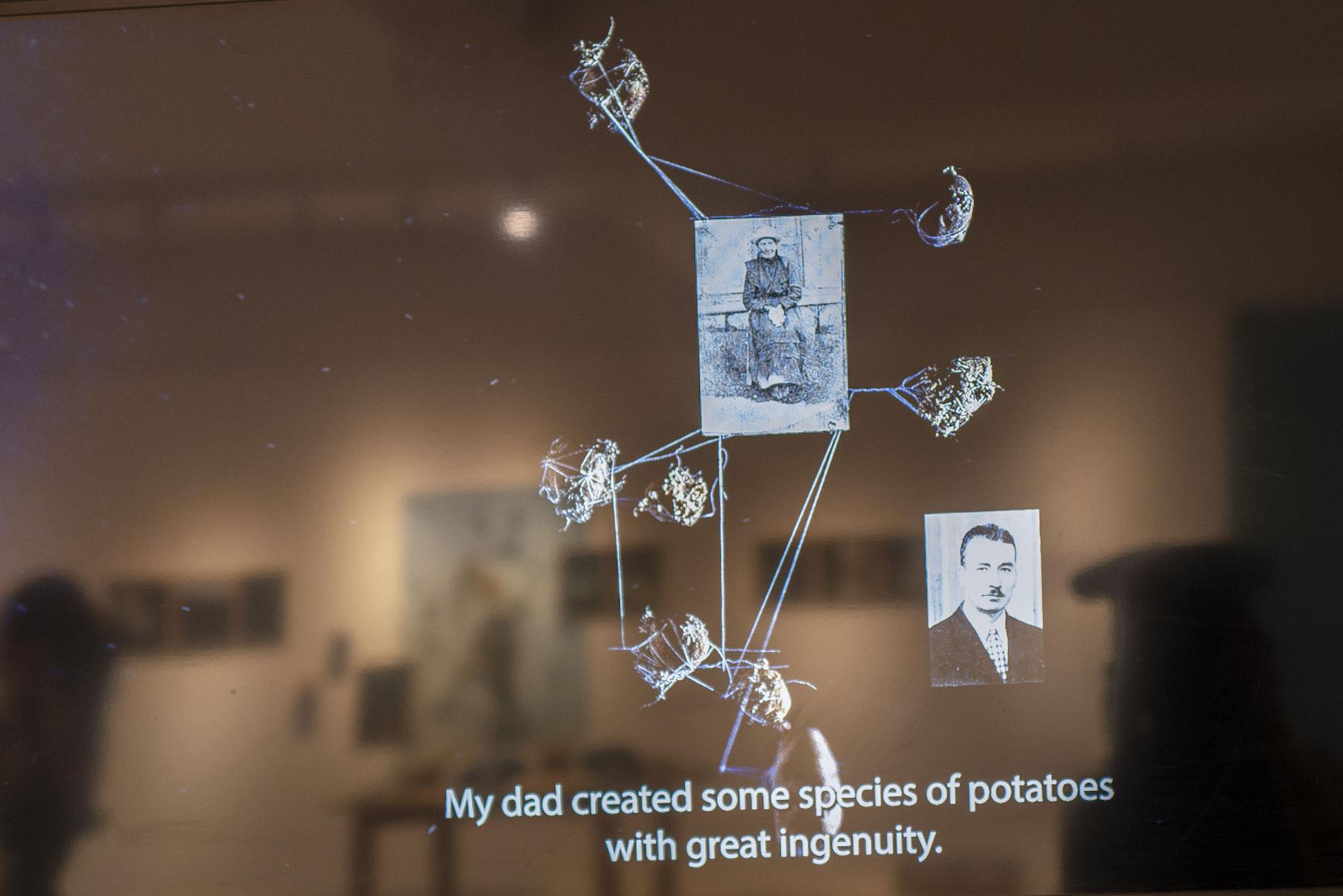
While working with the community in Camuendo Chico, Romero also discovered that her great-great-grandmother used to be a seed guardian. An attempt to trace this ancestral history led her to Colombia, where her father was originally from. She travelled to the town of Une, where her extended family grows a unique variety of potato. Unlike the communities that Romero had been working with so far, the farming here was unsustainable, which led to the video work Blood is a Seed, where she is in conversation with her father about his memories about the land and with what she was witnessing in the present moment.
These conversations about the planting and preserving of seeds resulted in Romero asking questions about the historical and cultural significance of food. For this, she travelled to Mexico to unpack multigenerational histories of humans and their relationship with agriculture. The Guilá Naquitz Cave in Oaxaca, Mexico, for example, is the earliest known place where corn was domesticated, almost 10,000 years ago. The growing of corn has always depended on ancestral knowledge, and specifically on humans opening the cob to sow the seeds, leading her to the question: Who domesticated whom?
At a moment in time when the climate crisis has crossed multiple tipping points, and there are constant images of its violent consequences, Humo, Semilla, Raíz does not seek clear answers. It does, however, draw out a visual representation of a complex ecological crisis outside the language of catastrophe. In the first part of this edited conversation, Romero and Mishra speak about how this body of work offers us a way of confronting the ecological consequences of neoliberalism through a different lens.
Prabhakar Duwarah (PD): You document and present both indigenous and scientific methods of seed preservation without privileging one over the other. But you do mention that there are differences. Can you please speak about this dichotomy, especially in the context of Ecuador, which was also the first country to constitutionalise the rights for Nature in 2008?
Isadora Romero (IR): Nature's knowledge is one kind of knowledge system that we do not often speak of. So, what this constitution article in Ecuador that declared that Nature has rights has done is revolutionary. Three lawsuits have already been won by communities against a local government or the main government on behalf of territories, rivers and mountains. The Machangara River—that flows through the city I live in—is the most polluted river, and this year we won this lawsuit against the local government. What is beautiful and very poetic about it is that people, artists or indigenous communities speak on behalf of this river or other natural beings that do not have a voice. When we made this constitution in 2008, it was a big constituent assembly where, for the first time, so many politicians but also citizens, activists and human rights people were seated together in a truly participatory manner. For example, for seeds, we have the right of food sovereignty—which is also why we do not have Monsanto in Ecuador. But the thing is that even though these rights have existed for years, we always have to keep fighting so that they are not taken away. The same is happening in Mexico every time. That is exhausting.
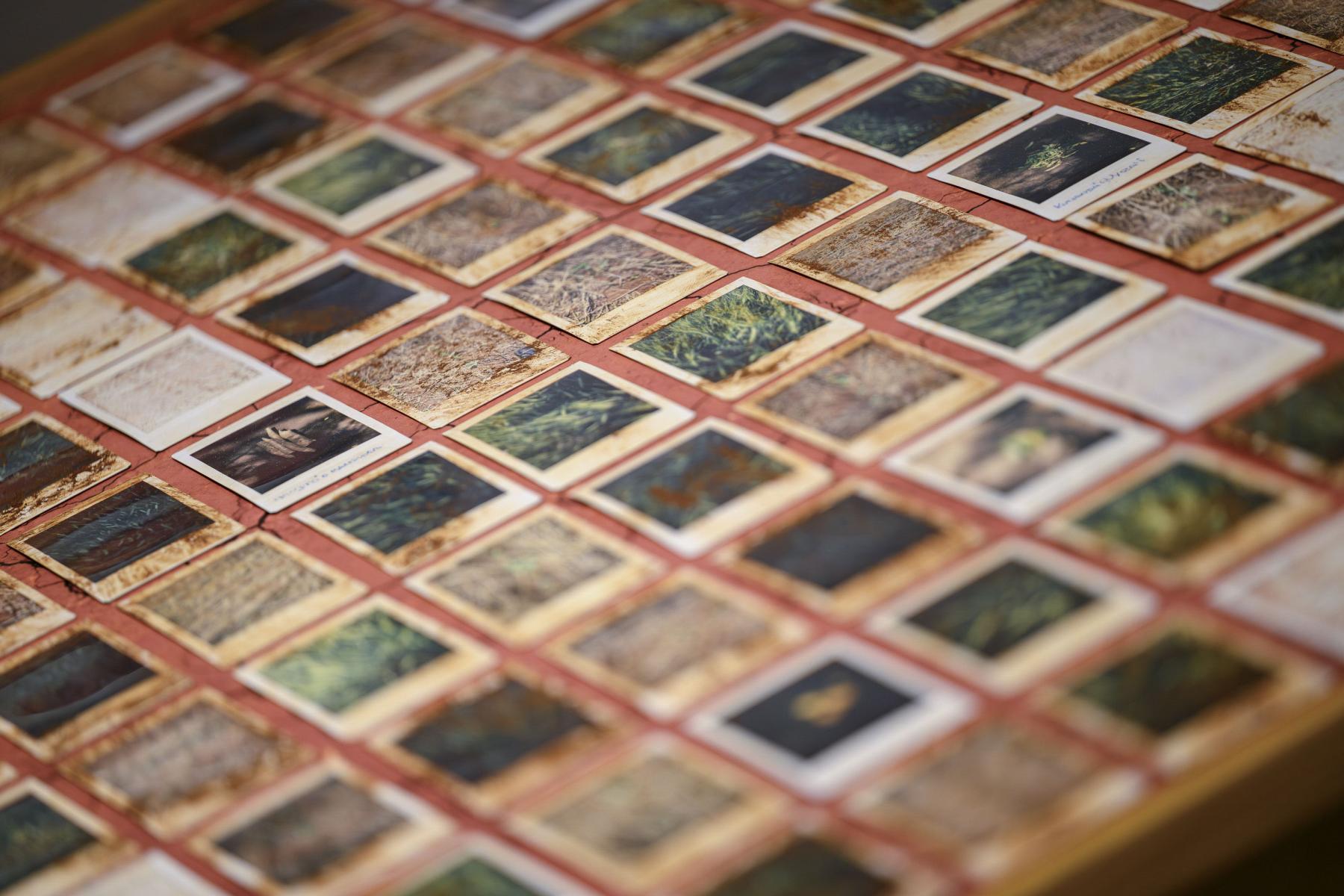
With respect to the imagery, I think about how coloniality resulted in the appropriation, labelling and separation of systems and ideas. But I really wanted to understand the core symbolism behind this scientific approach and to see how these two (scientific and indigenous) worldviews are so different. It is almost impossible for them to connect because science has been so harmful for the communities and indigenous knowledge systems that they do not want anything to do with it. They said to me, "We do not want them to come again and take our seeds and say that it is theirs." The seeds are not anybody’s to claim. This idea of ownership is philosophically very different. But again, what science has done with seeds is also good because they can be preserved for longer. They do not die from the weather changing so rapidly. I was hoping in the beginning of that chapter that there was going to be a moment in which maybe this project can hold space for both these worldviews together and that they can have a conversation. But the more I walk away from that project that was in 2020, the more difficult it seems.
PD: Whether in the exhibition or the book, the collaborative nature of the work stands out the most. Could you tell us your approach to collaboration, whether between the both of you or with everyone else involved in the process?
IR: Most of the work is made collaboratively with communities and with my family. The video was made with my editor friend, Michelle Gachet. My process involves having a lot of conversations. For me, that is very important because including more voices enriches the work. There is this idea of the artist as someone who just comes up with an idea magically, when it is not at all like that. When I met Tanvi, I was at a point where I had all the chapters (this was four years of research), but the Mexico chapter was not yet complete. I was still sure that I wanted to show the whole body of work to her. The Colombia part of it had already been shown a lot, but I wanted to put all four chapters together. So, when I showed it to Tanvi in my portfolio review, it was my first attempt at trying to make sense of it all. For me to collaborate with someone is to have trust and care for the work and the process. I found that in Tanvi, and so I continued to develop the work in different shapes with her.
Tanvi Mishra (TM): My practice started from photography and moved into the journalistic space. When I met Isadora, I was working as the creative director of The Caravan. In my role, I was interested in bringing in photographic works in the magazine that do not necessarily sit easily within the pages of journalism, but have a dialogue with the issue the publiscation was covering. For example, there was a work by Laia Abril titled On Abortion, which was speaking to an urgent issue using a photographic language that is part document, part still-life, part reconstruction of incident from memory. It is not photojournalistic work. I was interested in that tension.
When I met Isadora at the World Press Photo review session, I had recently left The Caravan, moving out of journalism and back into the borader space of working with photography in all its forms. My years at the publication convinced me of the social function of the image, but I was looking for something more from the medium than the image as a document.
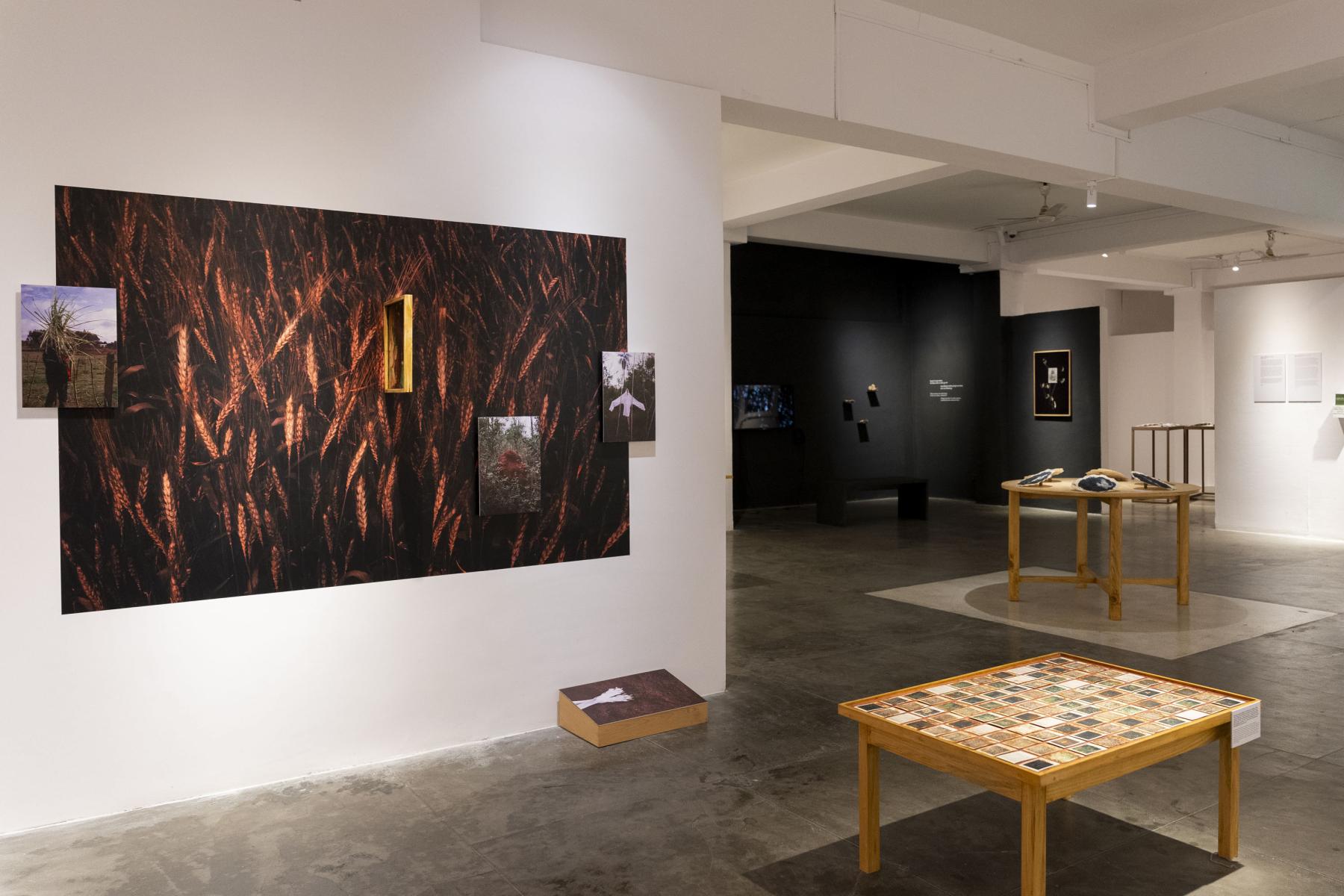
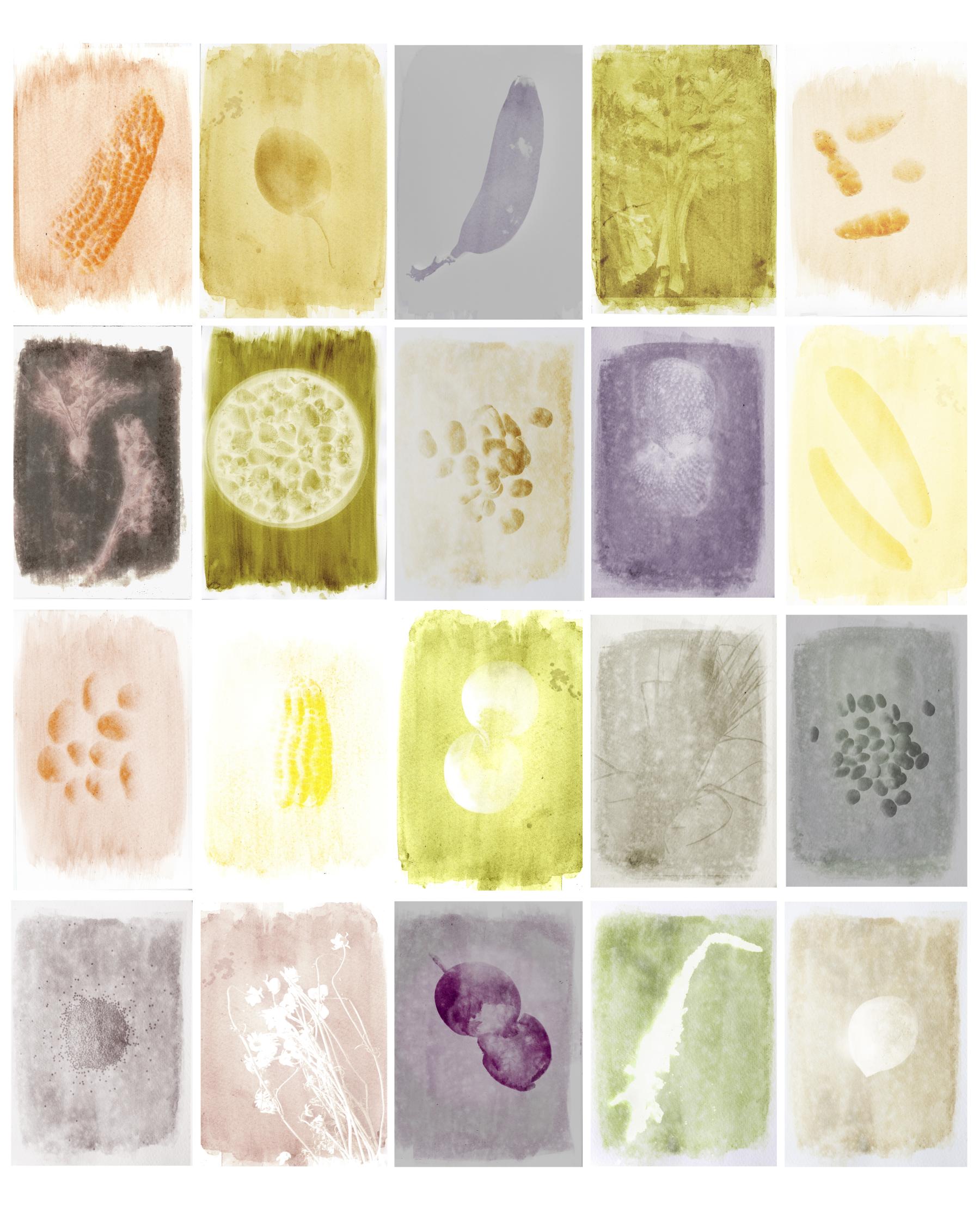
And Isadora had that in this expansive multigeography project. The diverse visual languages in the work, all identified for a specific purpose, really drew me in—for example, the anthotypes are made with the juice of different plants harvested in the community of Camuendo Chico. They all take different times to develop, gesturing to the different growth periods for various plants and vegetables. The research and data were translated into a suitable visuality, a vastness in the ways of seeing which the photojournalistic image clearly does not offer. I also appreciated this interplay between the documentary image and these "alternate" or "conceptual outputs," and that there is a possibility to accommodate for both in the same work. We often say that one body of work should not have too many languages of photography, and perhaps that restraint offers some cohesiveness. But here, these tangents were helping in incorporating the data and finding a creative way to speak from it, a facet that I was particularly drawn to.
To learn more about artists exploring seed sovereignties, read Shranup Tandukar’s reflections on Amar Kanwar’s The Sovereign Forest (2012-ongoing) on display at the previous edition of PhotoKTM, Ankan Kazi’s essay on Munem Wasif’s Seeds Shall Set Us Free II (2016–19) and an episode of In Person featuring Dayananda Nagaraju and Niranjan NB as they discuss their project The Everlasting River (2024).
To learn more about the ongoing PhotoKTM6, read Mallika Visvanathan’s interviews with yasmine eid-sabbagh about her work Possible and Imaginary Lives and Diwas Raja KC on the approach of the curatorial team as well as Birat Bijay Ojha’s reflections on public talks by Sasha Huber and Siona O’Connell.