

Music, Ritual and History: Mani Kaul’s Dhrupad
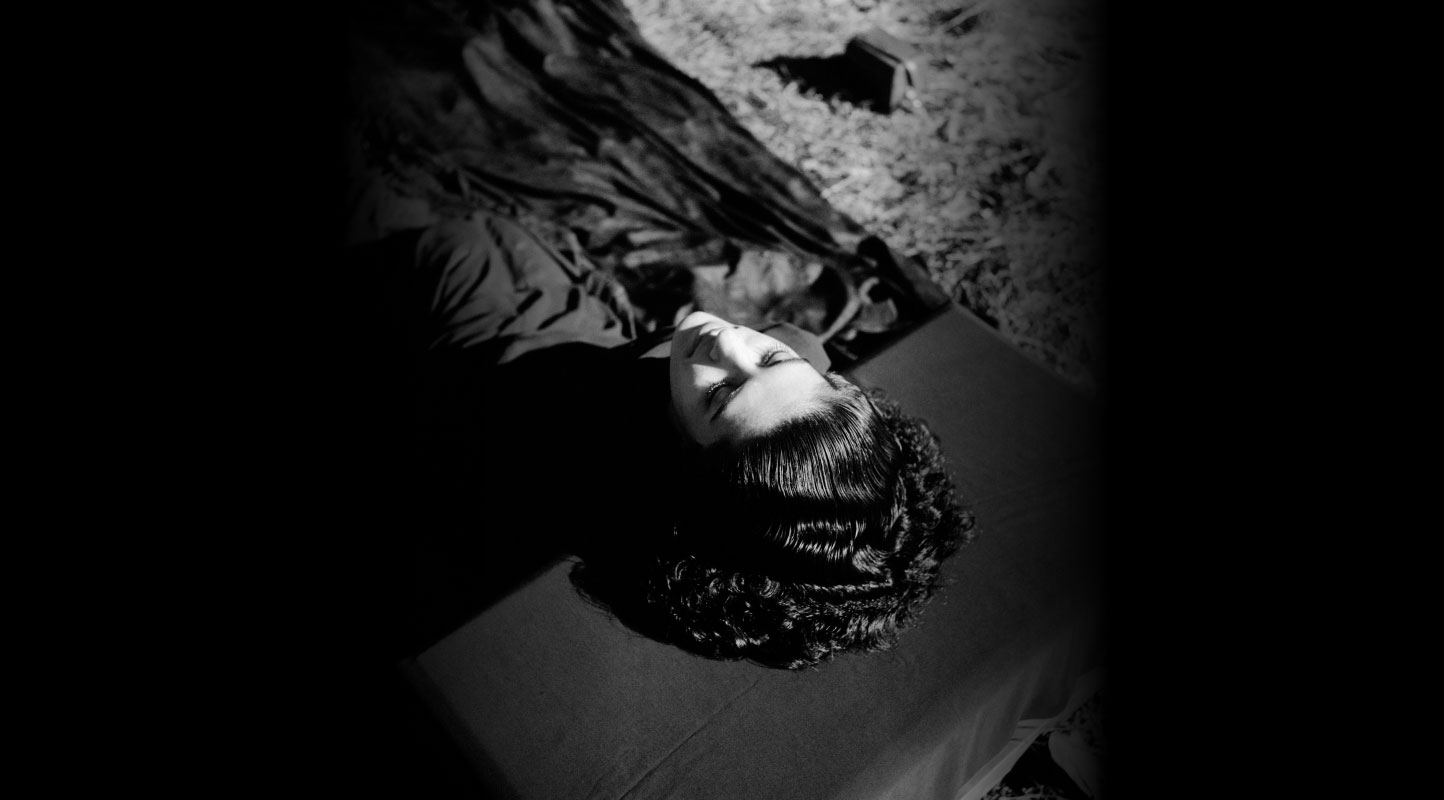
Mani Kaul's Dhrupad (1982) is a biographic film, it is a musical, and in certain ways, an ethnographic film. While determining its genre is slippery business, it is most certainly a historical film. At its beginning, Kaul references a foundational book on Indian classical music, Manakutuhala by Raja Man Singh Tomar written probably in 1488 AD, during his tenure as the king of Gwalior—a city located in modern day Central India. The title of the book roughly translates to “The Curiosity of Man”—the king. Soon after in the film, Kaul shows a painting of the King in front of the Gwalior Fort. Man Singh attracted many great musicians of the time to his court who sang Dhrupads in Indian raga. It is during his reign that Dhrupad music ascended in popularity, locally and across the region. Written in Hindi rather than in classical Sanskrit, no copy of Manakutuhala’s original manuscript is known to have survived, what we know of the book is based on its adaptive translation into Persian called Raga Darpana (that loosely translates to "A Mirror of the Ragas"), scripted in 1666 AD by Fakirullah Saifkhan when he presided as the governor of Kashmir.
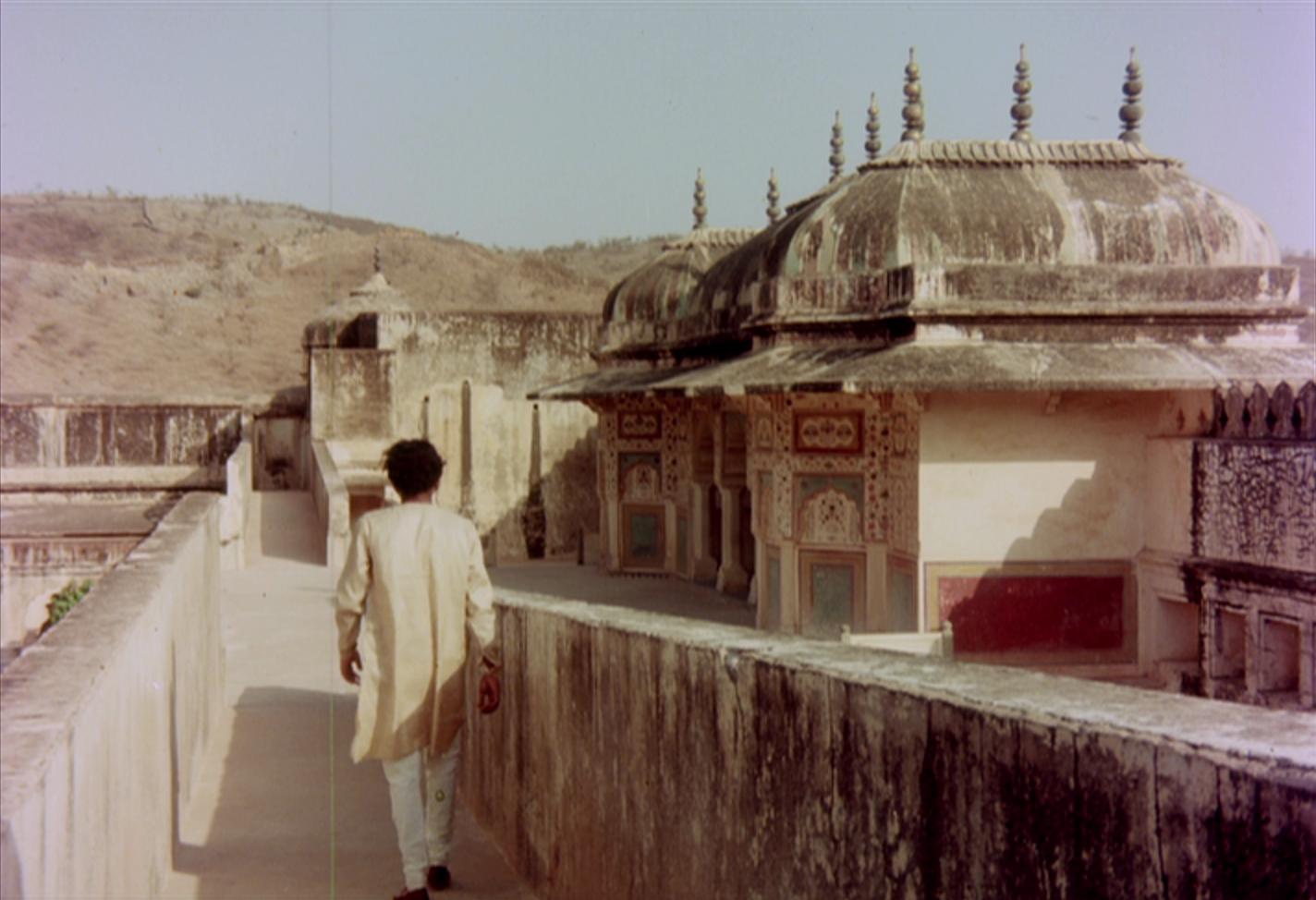
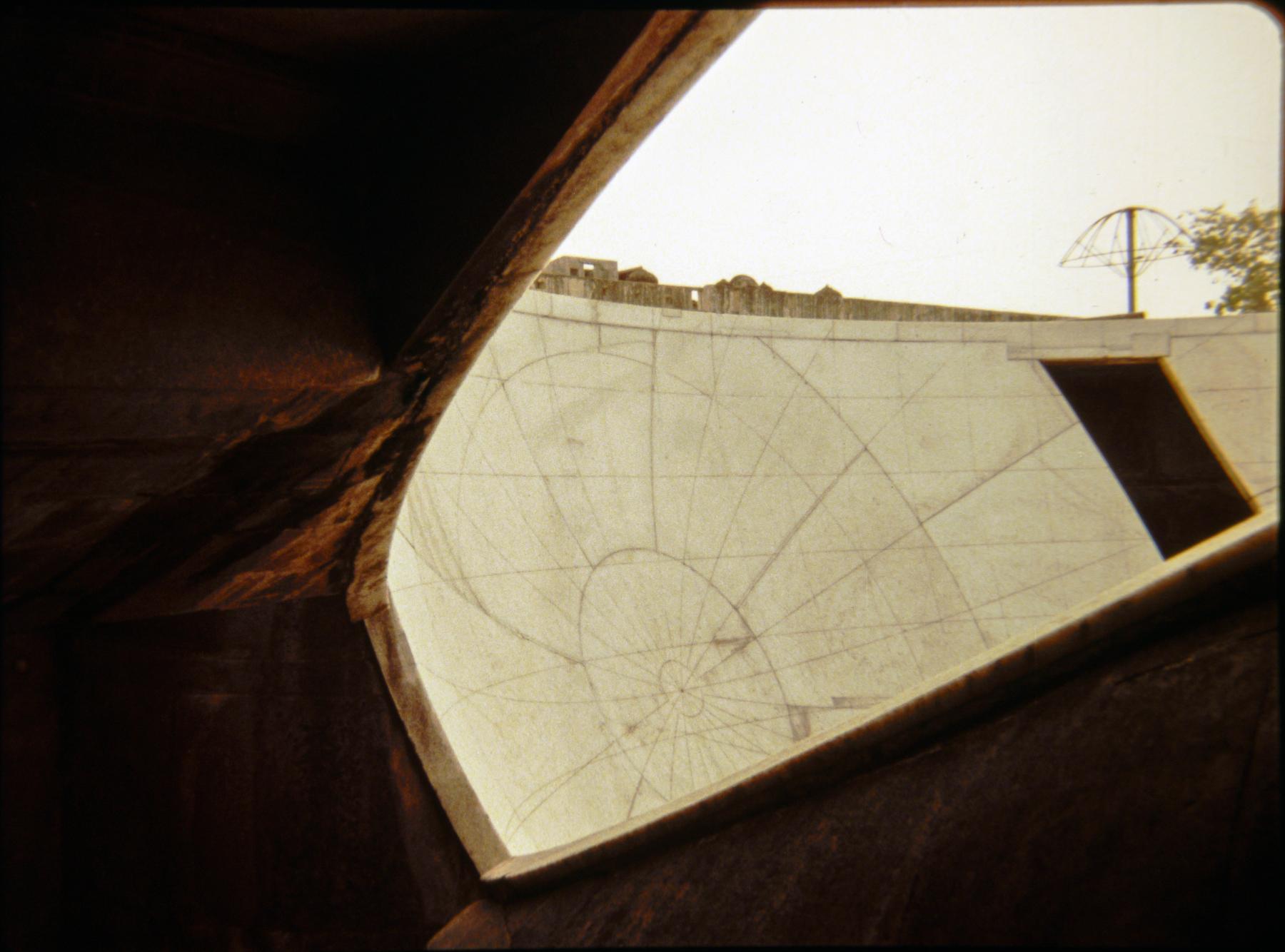
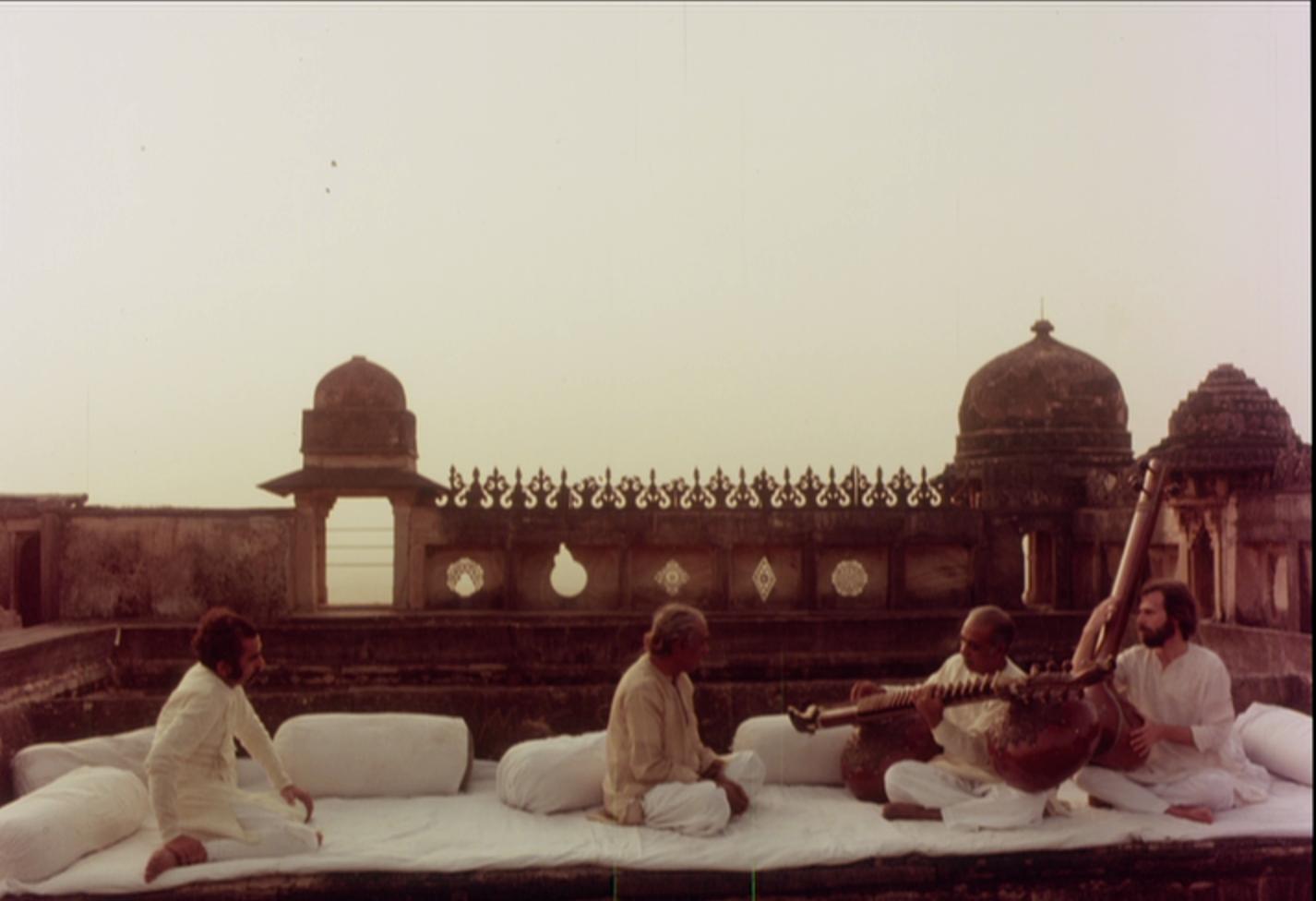
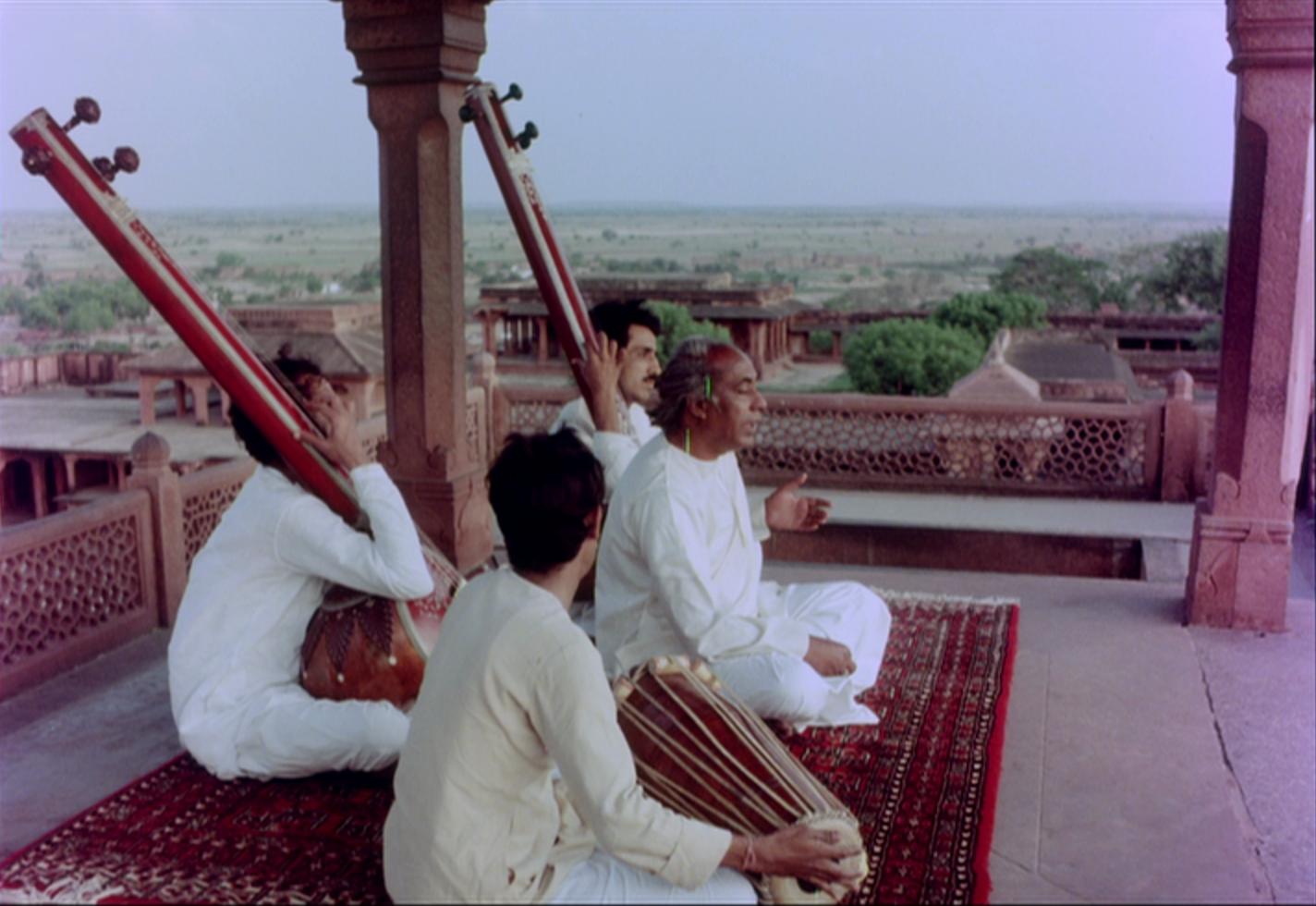
Dhrupad was shot in several locations, including the Man Singh palace in the Gwalior Fort; the city of Fatehpur Sikri near Agra, built by the Mughal Emperor Akbar in the sixteenth century; the Amber Fort in Jaipur, where the Dhrupad performances take place; and the eighteenth-century observatory Jantar Mantar in Jaipur, Rajasthan. All these locations have direct or diffuse significance in relation to the musical practice—Gwalior because of Raja Man Singh’s residence, Fatehpur Sikri due to Akbar’s patronage of Dhrupad music in his royal courts and Jaipur for the Dagars practising the eponymous Dagarvani form of Dhrupad, historically hailing from the city. Throughout the course of the film, we frequently meet a caricatured figure of Raja Man Singh wandering the courtyards, hallways and corridors of the fort while reciting poetic verses, played by a member of the Dagars’ musical troupe who, funnily enough, participates in the filmed music performances. This is not unusual for Kaul who was always suspicious of the empiricist claims of documentary, even though all of his films in the 1980s, barring one, were non-fictional. In a radio conversation with Serge Daney and Nicolas Saada on the eve of his retrospective in Paris in 1990, Kaul delineated that his discomfort with documentaries arose from its slavish relationship to reality situated in front of the camera. To circumvent that, Kaul, in nearly every film in the 1980s, would insert one or more deliberately staged shots with a pronounced sense of plasticity that would clearly contradict or undercut the documentary claim of the work.
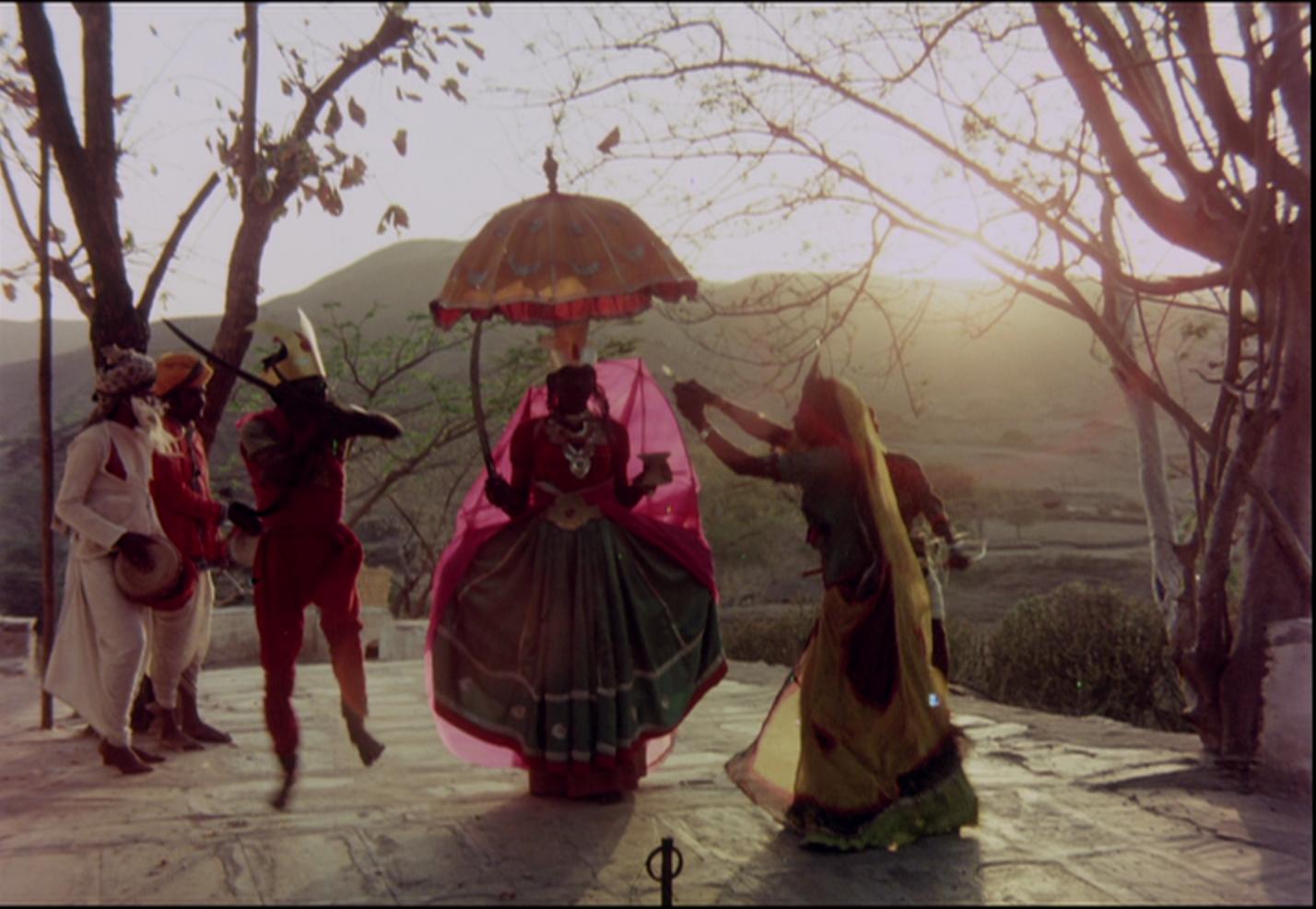
In Dhrupad, Kaul further explores the roots of ancient music; on the one hand, the celebration of nature and cycles of life, and on the other, music as accompaniment to rituals—the two contributing factors in the development of chhands (musical meters). The abolition of the old tribal social structures with the formation of kingdoms and the development of villages and city-states such as in Magadha (modern-day Indian state of Bihar) around 300 BCE was consequential. The aspect of music that related to life and climatological cycles transmuted into popular renditions in villages, while its communal facet was adapted in courts and thus led to the development of classical music. Such broad interest in the dynamics of political and social changes, and its impact upon Indian art history, had always been pivotal for Kaul. In featuring Gavari performances in the film, which are native to the Mewar region of Rajasthan, Kaul provides an instance of the ancient inseparability of dance and theatre from music under the rubric of ritualistic performances, in a tradition that finds its traces in modern-day India. But in limiting himself to that, Kaul misses out on an opportunity to make a sharper political observation—the present day incarnation of the attack-and-defense ritual in Gavari in 1980s India is also testament to the glossing of its belligerent roots. In her brilliant and ideologically charged essay, “Militant Origins of Indian Dance” (1980), Chandralekha argues:
"It will be seen that there is no dearth of militant traditions among the backward classes, scheduled castes and tribals of India who are the most exploited sections forming the lower strata of society. Almost all of them still retain their dances and martial art traditions but only as formal rituals without being able to transform them into real actions to change their condition of life. Progressive movements are guilty of overlooking this highly charged layer of material sub-culture in which militancy is integral to the various cultural forms in India and does not have to come through a mental/verbal process.”
Nonetheless, Kaul does provide a useful account of the musical element of these performances. He later separates them into, on the one hand, popular music, such as gaan vocal music, rooted in theatre, and on the other, the puritanical gandharva, the music of the gods. This division is evidenced in the two ancient texts that he references near the middle of the film: the Natya Shastra, believed to have originated around 200 BCE, and the Dattilam, a few centuries later. The pages of the manuscript that Kaul so tenderly shows us in the film is from yet another classic musicological book, Sangeet Ratnakara, loosely translated to “Ocean of Music,” written in the thirteenth century in Sanskrit. For Kaul, it establishes a link between the roots of modern Dhrupad dating back a millennium and musical forms known to us from 300 BC. The continuity of history, the modular shifts in form, and the evolution of traditional peculiarities were close to Kaul’s heart, expressed no better than at the end of the film where the tune of Dhrupad penetrates the modern Indian city of Mumbai, conveyed through the most languid of tilt shots followed by a pan, contrasting the verticality of the skyscrapers with the horizontality of the city’s slums. Kaul’s films have always been pregnant with anthropological curiosity.
But Dhrupad, the film, is hardly pedagogical, not in a conventional sense anyway. Aside from being a filmmaker, Kaul was a prolific writer and lecturer on films. In a lecture titled “Communication” delivered in 1977, Kaul had cheekily quipped that “Any work true to the form of personalised expression, must fail to communicate.” The narrative elements in Dhrupad are fleeting and fragmented. Instead, what sustains the experience of the film are the impressions of the architectural finesse of its locations; the intricate design of the forts’ interiors; the fractured space observed through the astronomical instruments made of concrete and marble; the poesy of geometric pans, tilts, and zooms; and mostly the fixity of Kaul’s camera and the Dhrupad performances of the Dagars and their pupils. The music churns, in its juxtaposition with architecture, it attains a peculiar consonance in the company of the many gorgeously filmed shots of daybreak.
Thanks to Vani Jain for insights into the Gavari performance and the locations in the film.
To learn more about parallel cinema in India, read Koyna Tomar’s essay on Ritwik Ghatak’s Amar Lenin (1970) and Kshiraja’s reflections on Saeed Akhtar Mirza’s Arvind Desai Ki Ajeeb Dastaan (1978). Also read Apoorva Saini’s English translation of an extract from Ramesh Bakshi’s Atharah Sooraj Ke Paudhe, the novel that inspired Awtar Kaul’s film 27 Down (1974).
All images are stills from Dhrupad (1982) by Mani Kaul.