

The Land and Its People: Nepali Artists at PhotoKTM6
“The history of the people is the story of their survival and growth on the land. Though their history deals with their conflicts; their social, political and economic growth; and their intellectual and religious evolution, these developments are rooted in the land and take much of their proper tone from it,” writes Ludwig F. Stiller in The Rise of the House of Gorkha (1995), a book that analyses the political and social atmosphere of Nepal during 1740–1816. Like everywhere else in the world, the intertwining of the people with their land continues in Nepal and was the thread connecting All That the Land Holds at PhotoKTM6, hosted at the Nepal Art Council (NAC) from November to December 2025.
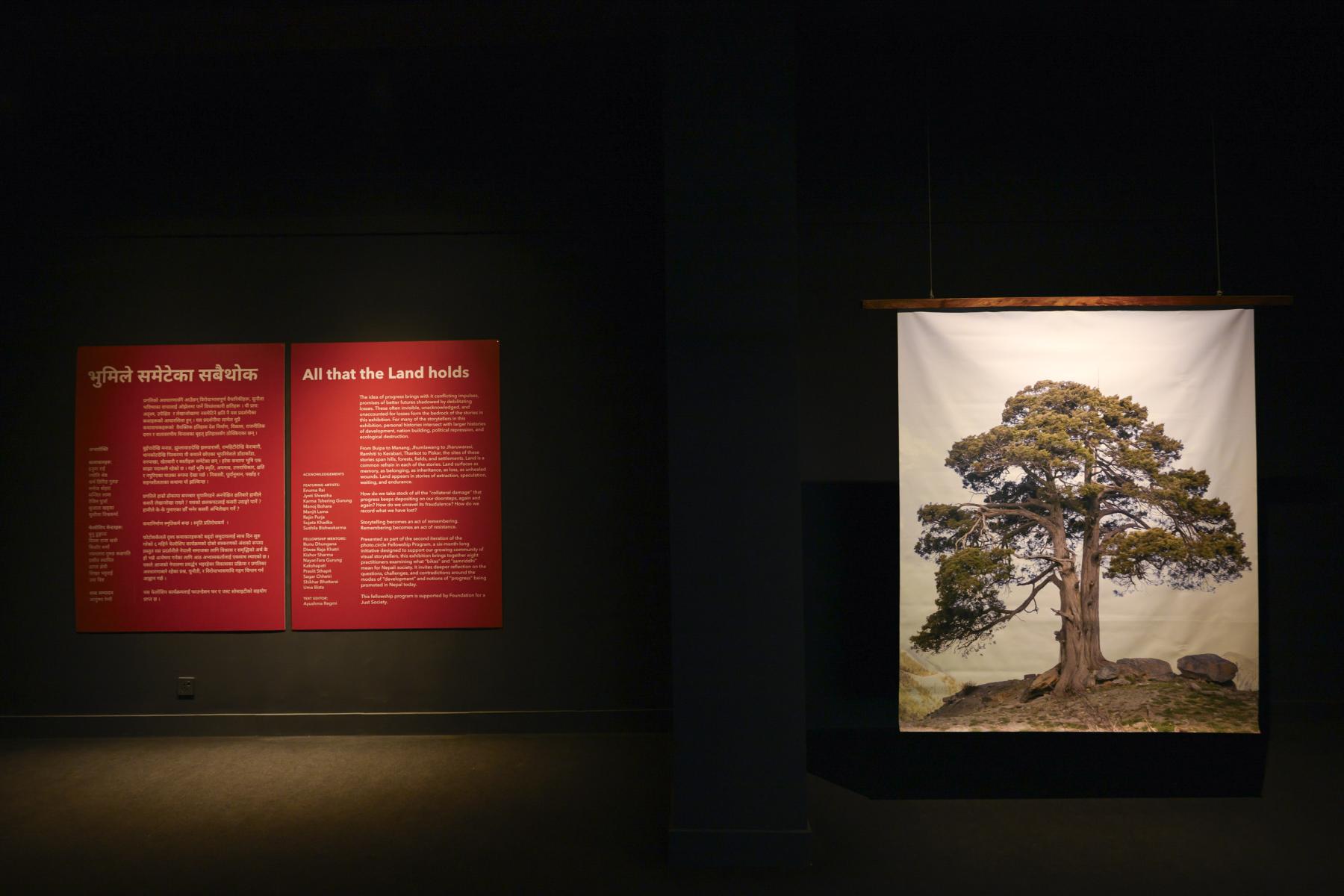
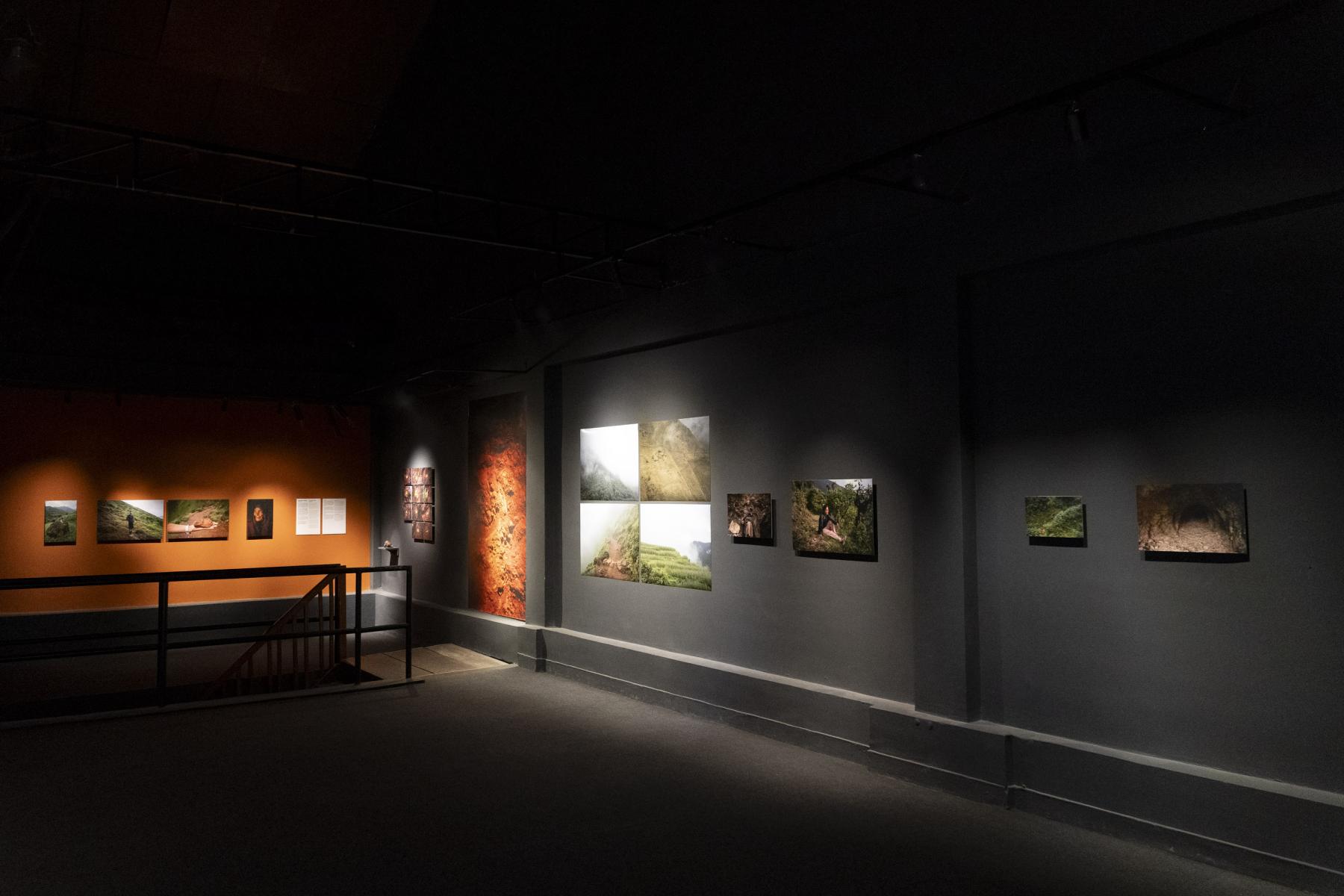
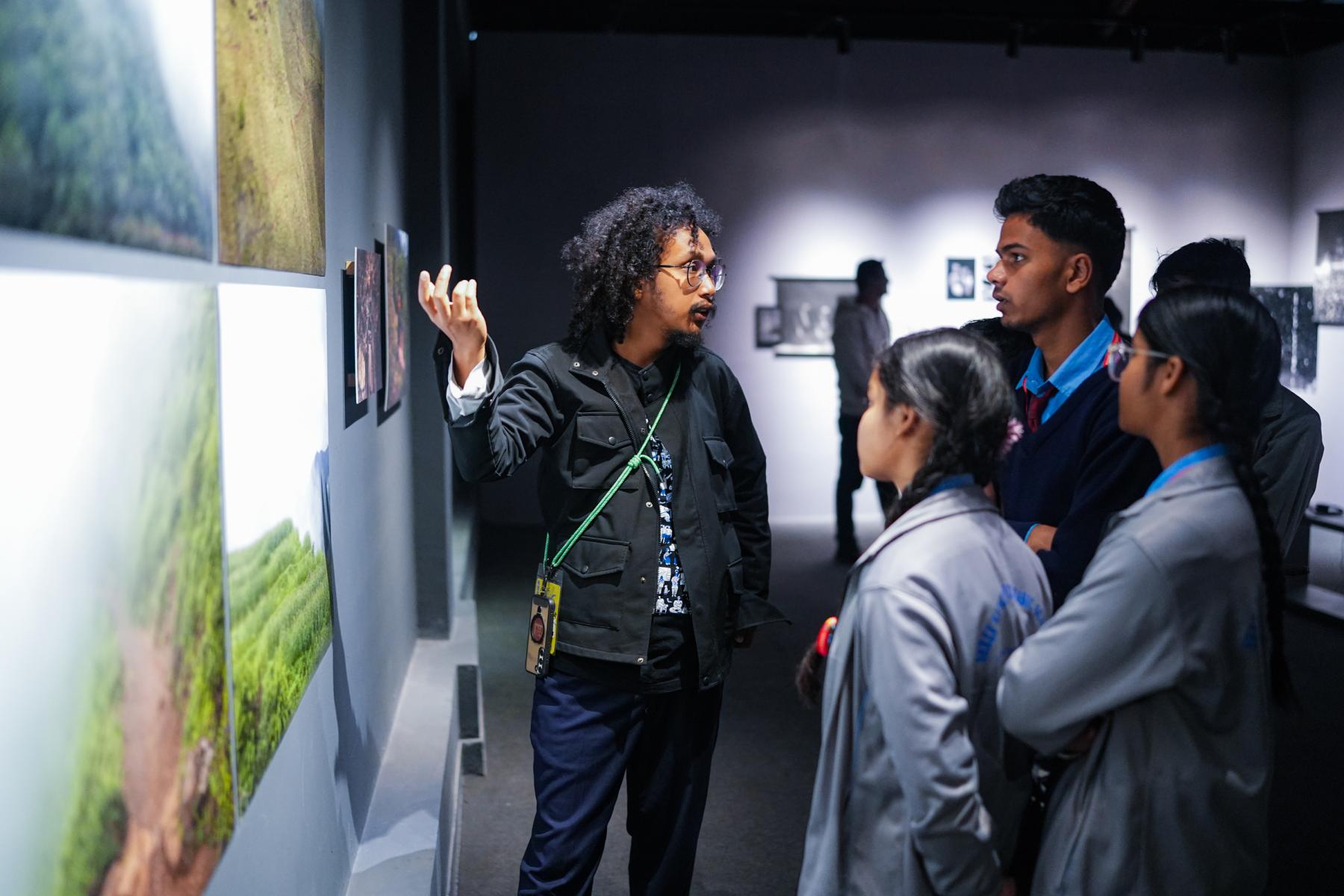
Housed at the top floor of the NAC and emerging from a six-month long initiative as part of the second iteration of the photo.circle fellowship programme in 2025, All That the Land Holds featured eight visual artists from Nepal: Enuma Rai, Jyoti Shrestha, Karma Tshering Gurung, Manoj Bohara, Manjit Lama, Rejin Purja, Sujata Khadka and Sushila Bishwakarma. Right at the entrance, the first photograph by Karma Tshering Gurung featured a portrait of a tree from Manang that is over 400 years old. “The tree is the witness,” Manjit Lama shared when I visited the exhibition. Big sturdy branches that spread across the skies with roots deep into the earth; what could have been a better symbol of our relation with land than a tree that had withstood four centuries of becoming and unbecoming? Sri Aurobindo’s poem “A Tree” comes to mind:
"Like fingers towards the skies they cannot reach,
Earth-bound, heaven-amorous.
This is the soul of man."
The exhibition uncovered deeper layers of what progress and development mean for present Nepali society. The first part of the essay focuses on the works of four artists as they explore these issues and questions.
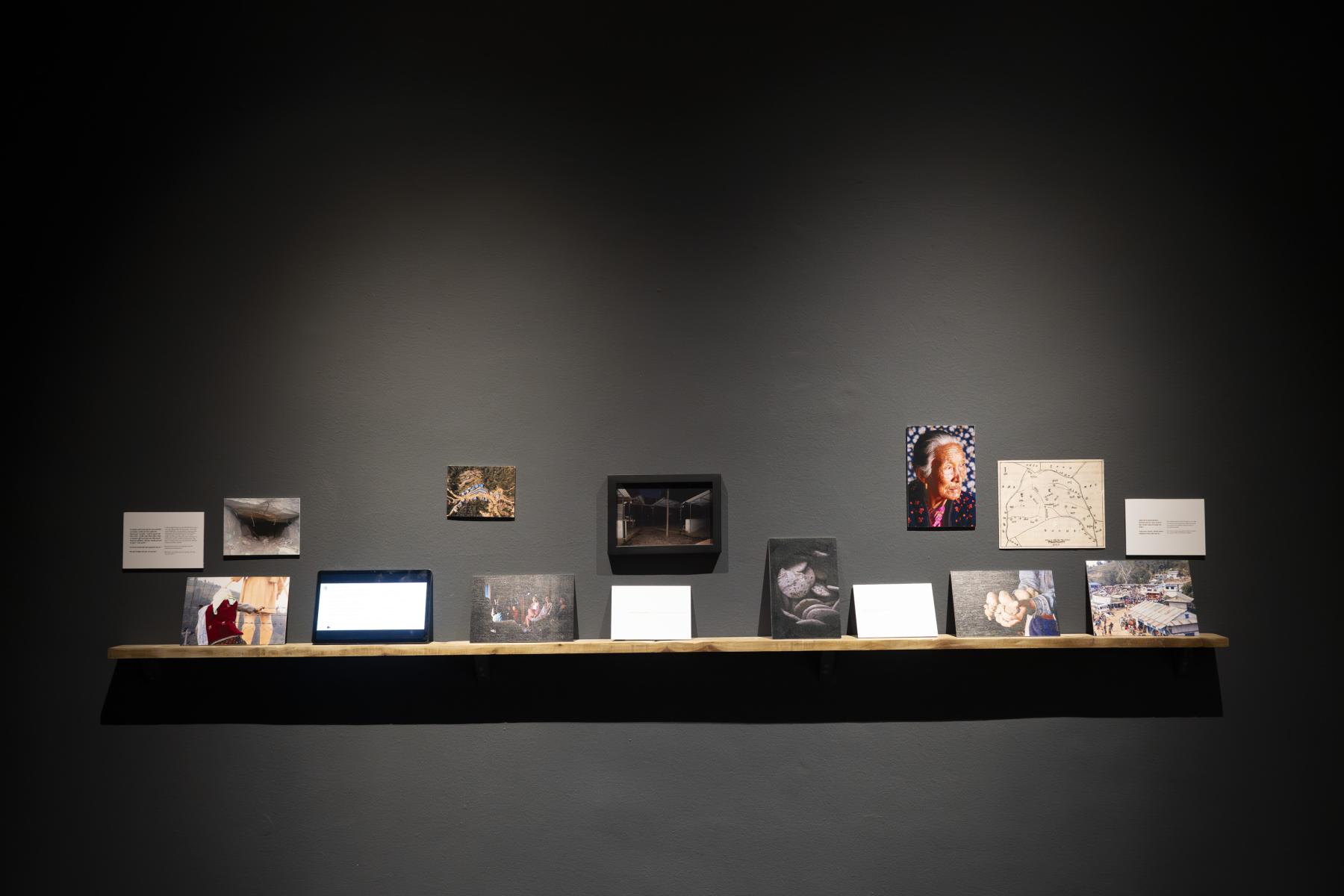
The exhibits were a crossroads between the personal and the political. In Enuma Rai’s Panchardobato, new progress clashes with Indigenous values as a 110-foot-high statue of Yalambar, the first Kirat king who ruled five thousand years ago, has been erected over sacred land that served as tombs for the Kirati community. “My grandmother’s tomb was almost destroyed during the road construction,” Rai writes as she questions the necessity to build monuments in lieu of preserving cultural customs and traditions—a stark irony as the very construction that was supposed to represent their culture damaged the cultural sentiments of the community.
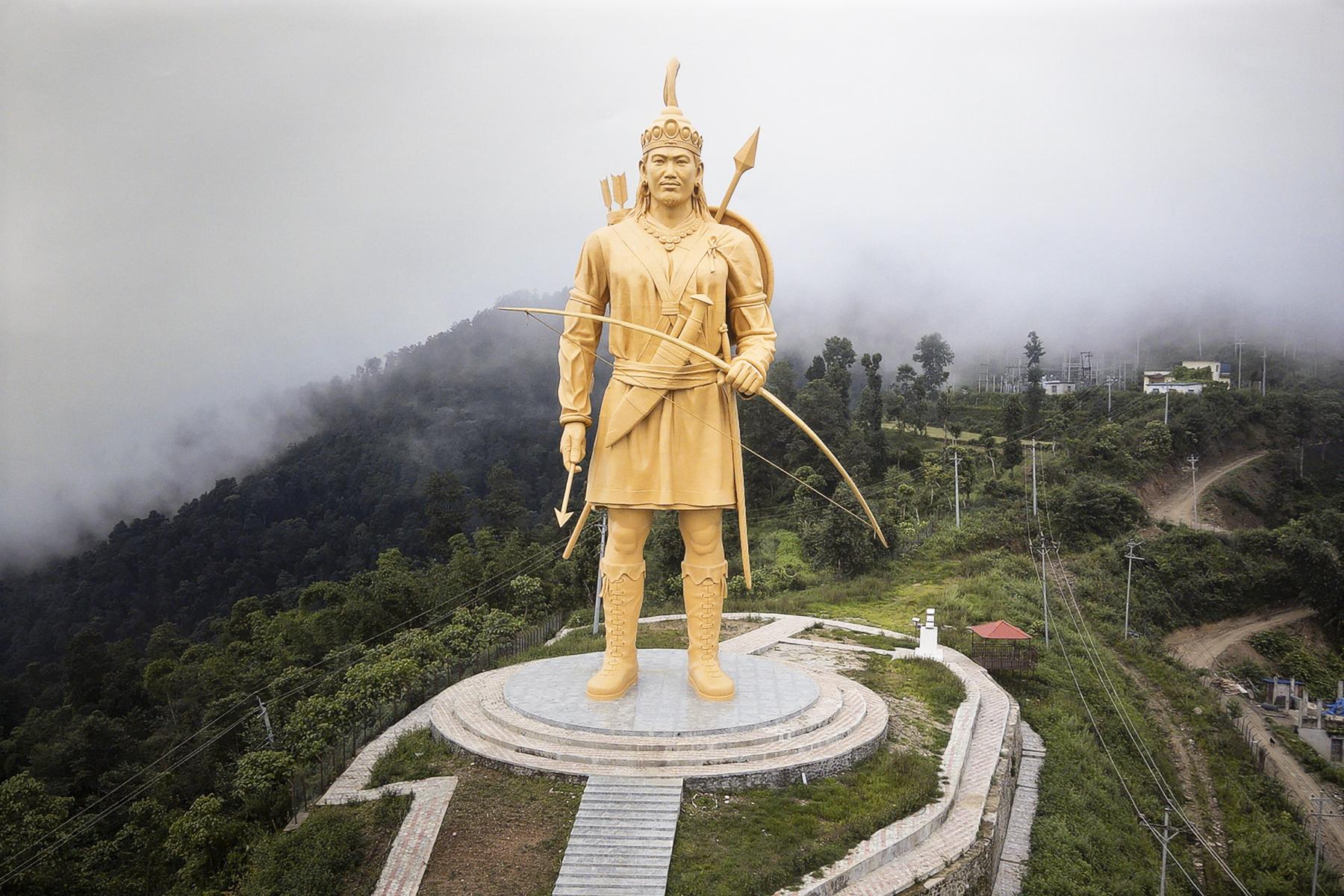
Panchardobato is a village in Buipa, Khotang, in the east of Nepal. Alongside photographs of the site and her village, Rai documents anecdotes from her community members. One of the anecdotes reads, “Beneath this statue of Yalambar lie the tombs of our ancestors.” The statue of Yalambar is towering even in a photograph, and the depiction of modern boots on the statue is both hilarious and concerning at the same time. How do we depict a culture, and how do we protect it? Is symbolism required or can living practices represent them better? There are no clear or easy answers as Rai’s photo series continues to question.
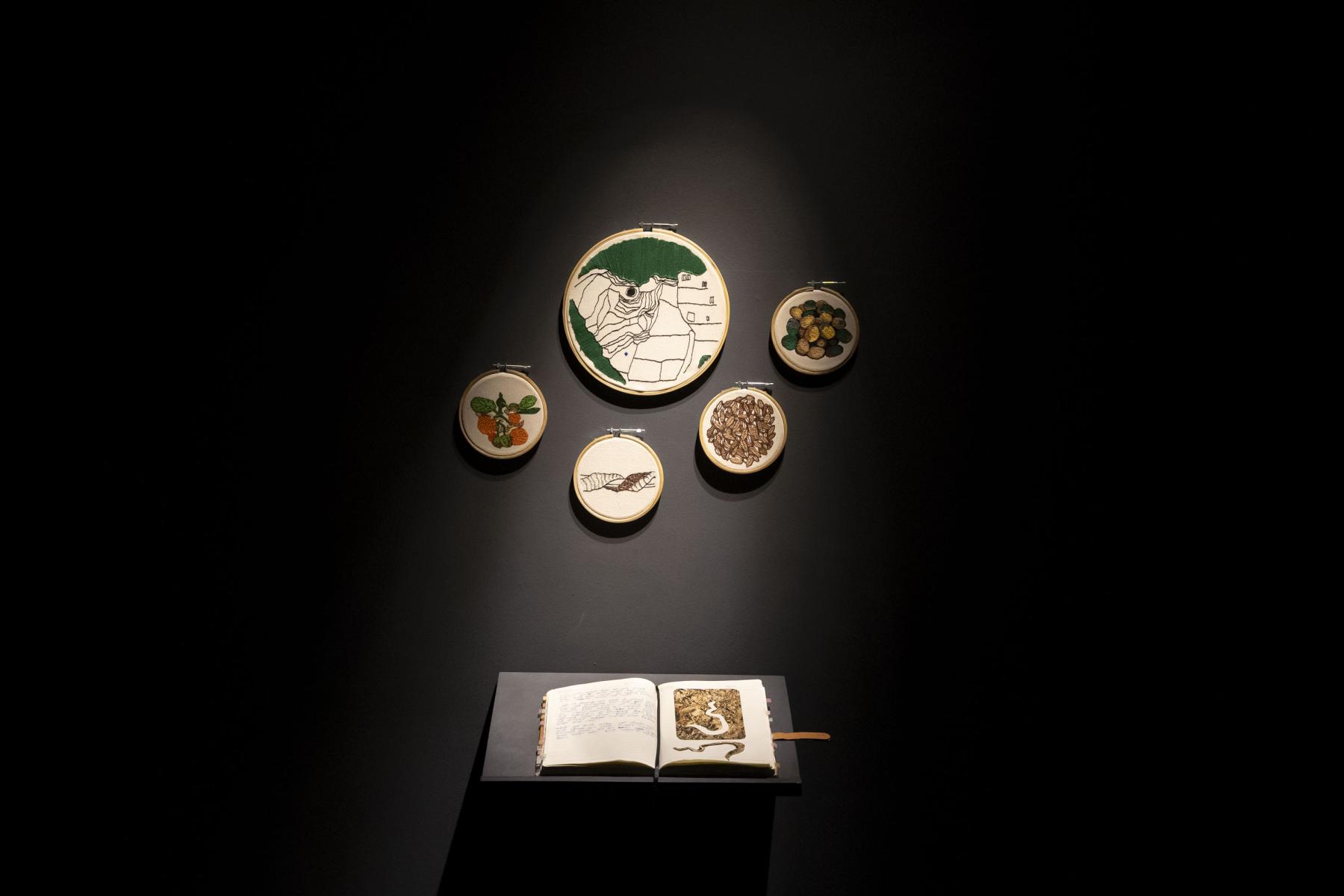
Adjacent to Rai’s uneasy tussle with progress is Sujata Khadka’s Fragmented Land and Me—an exploration of the suspended situation of the land she grew up in. Khadka’s ancestral home lies in Godawari municipality, Lalitpur district, south of Kathmandu. After the 2015 earthquake, the landscape around her dramatically shifted. Fields that grew food, where Khadka remembers playing as a child, were turned into plots of land to be sold. People began levelling the land by pouring in soil. However, when the land was levelled, its size decreased as compared to its legal documentation, thereby posing a challenge when attempting to sell it. Even today, a decade later, the land remains in a state of suspension—neither a field that people can grow crops in nor a town where houses are emerging.
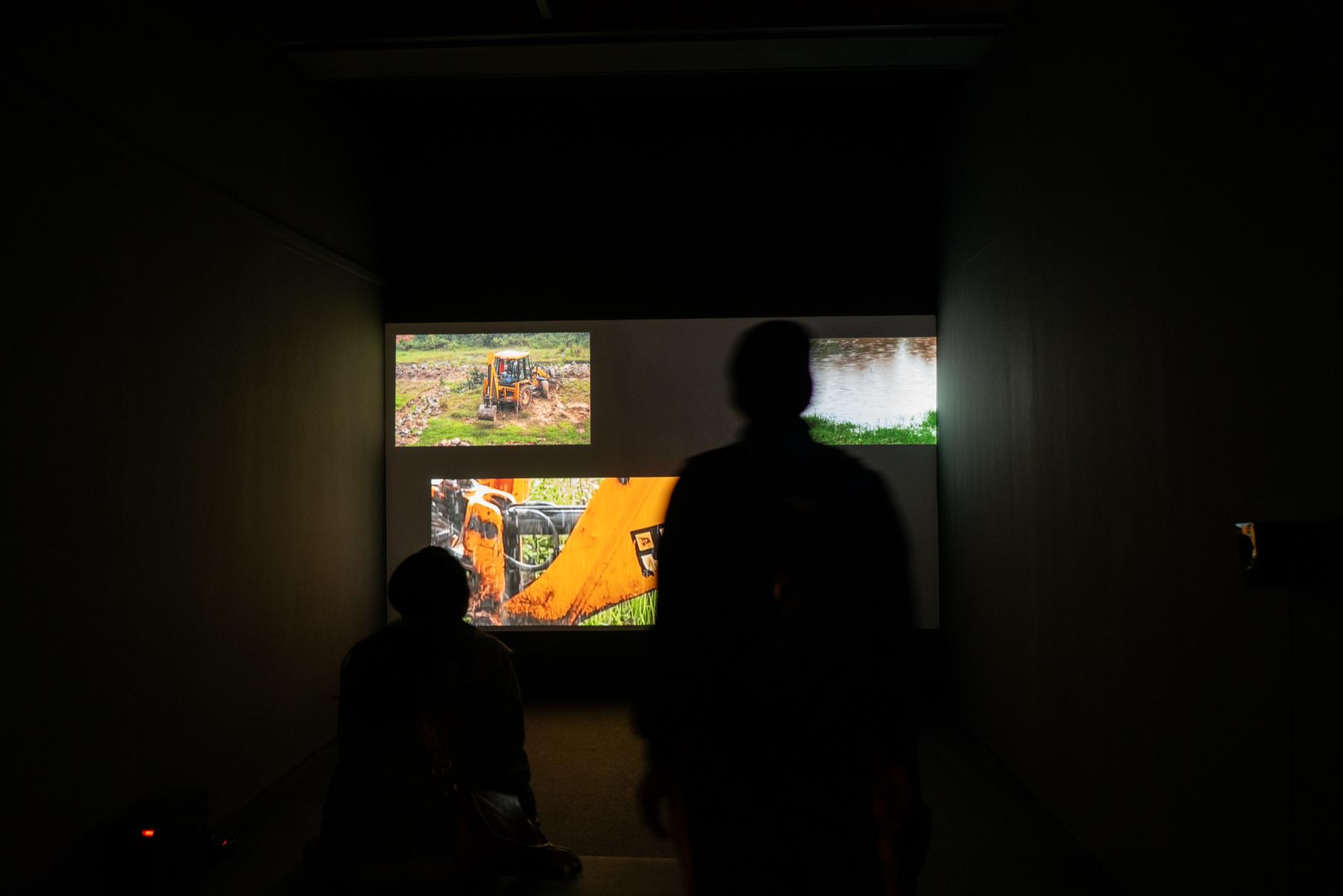
Through a journal, embroidery and video clips that Khadka took from her window, she becomes a spectator and documentor of change, an audience-in-waiting to see what becomes of the land she holds dear to her heart. But even in this suspended situation, children in her community have returned to the land. The barren soil has once again become their playground. She writes, “This misshapen land feels like a stage where a cast of characters performs an ongoing act.”
Elsewhere, Rejin Purja takes us to western Nepal in Jhumlawang, East Rukum, where Nepal’s largest iron mining project is set to start. In The Land Remembers Our Name, Purja shakes the delicate balance between nature and development. When he first hears about the project, he is optimistic, hoping that the project could end the country’s dependence on foreign steel. But the longer he took to understand what the project could actually do, the darker it appeared. If the project continues, most residents in the area will lose everything: their houses, land, forests, roots, culture and autonomy. They are increasingly being reduced to “bare life”—a concept put forth by Giorgio Agamben where people are stripped of their political and social life and have their being reduced to mere biological existence. Purja’s exhibit displays photographs of iron ores with numbers marked over them—a display of how nature has simply become a numeric resource to extract from.
The bifurcation of nature-culture continues in Sushila Bishwakarma's poignant series Tender. Bishwakarma’s work is an encounter with the paradox we are living through. Does development require destruction of nature and land? Does wanting to save the environment mean one is against progress? Cannot both exist at the same time? Bishwakarma leads us through these questions to stay with the troubling dichotomy.
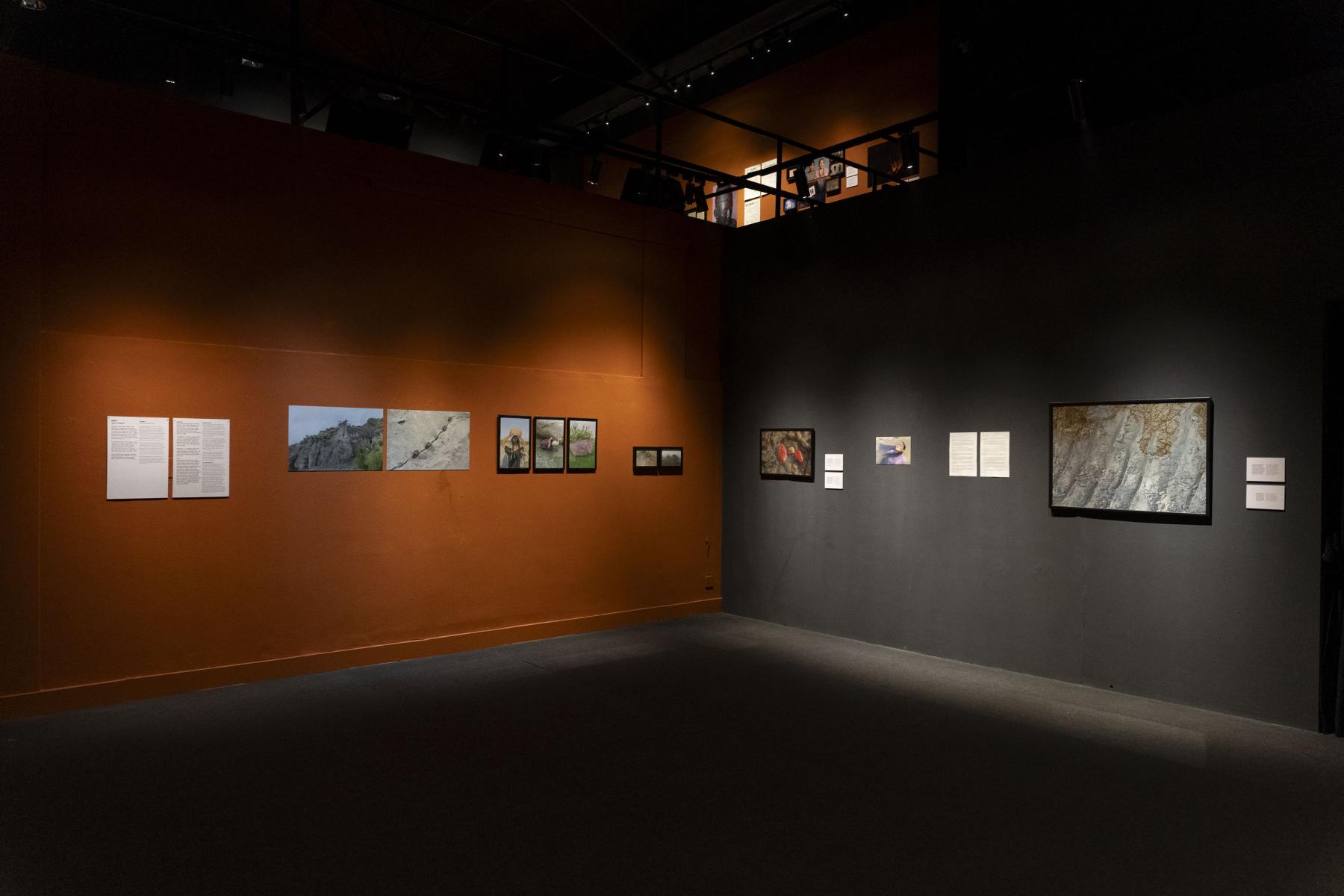
Her photo project is based in the Chure Bhawar area of the former Yangshila (Kerabari Rural Municipality) between the Mahabharata and the Terai. As modern roads, markets and buildings make their way to her village, there has been some respite from hard village life. But this has come at a cost—the disappearance of stones, thinning forests and falling boulders. She writes in one exhibition note,
"I, too, want my village to develop, the basic needs to be met, smooth roads to be paved. When I was a child, people said, ‘You can’t find anything in your village, not even a dot pen.’ My hope is that the generations after mine won’t have to experience the same humiliation that afflicted my psyche as a child.”
She laments not being able to understand her land earlier on, as the education she received did not prepare her to appreciate the landscape of her village.
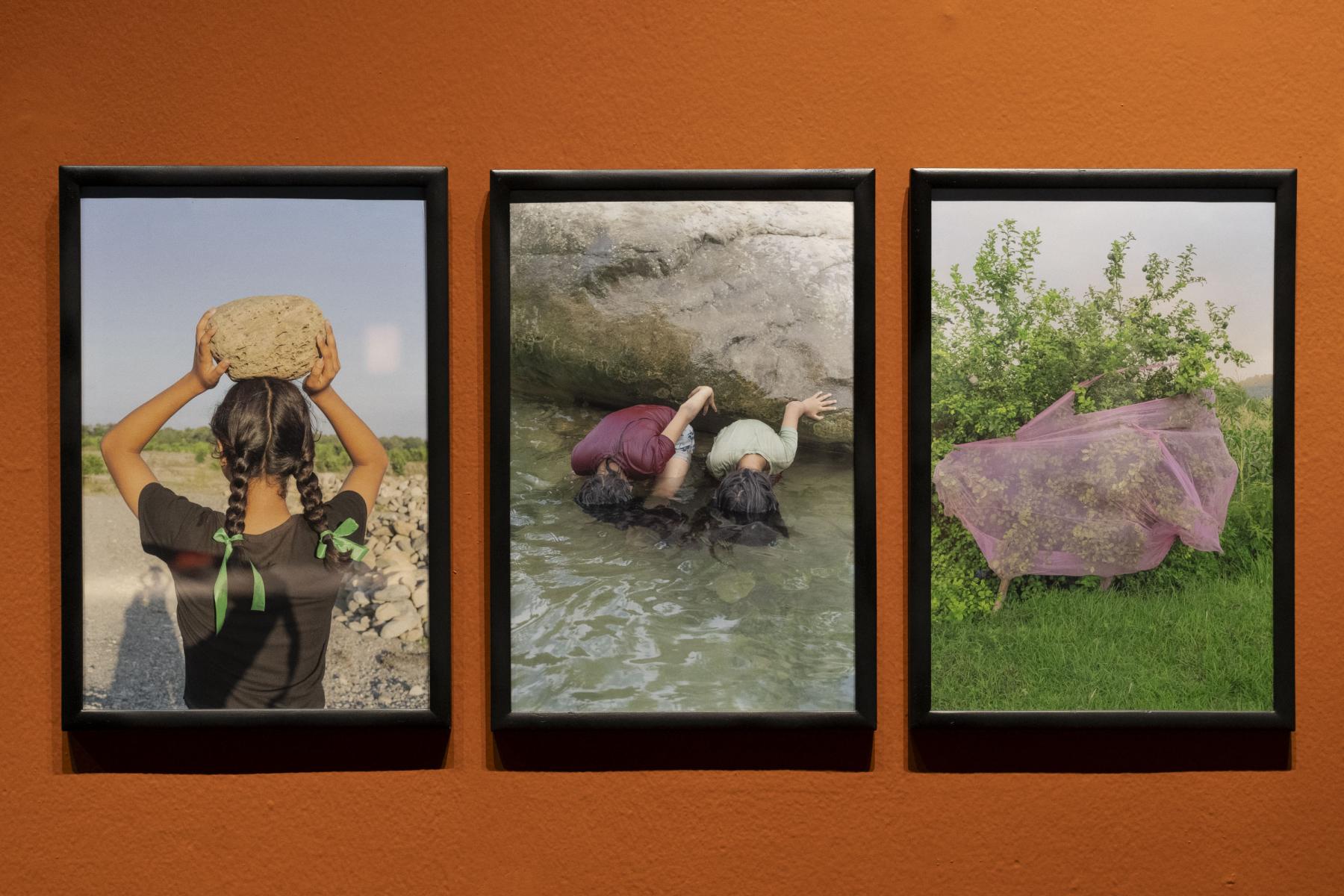
All four of these projects directly engage in the conversation about our relationship with land and nature. Over a phone conversation, Bishwakarma shared, “What does the soil say? We haven’t been able to listen to it.” This is true of all these artists’ works as they invite us to build a bridge between humans and nature that we seem to have disregarded. Right now the bridge is made up of questions rather than answers. The second part of the essay examines the work of the remaining four artists and their attempts at building this bridge.
To learn more about the sixth edition of PhotoKTM, read Prabhakar Duwarah’s reflections on the conversation between Ahmad Alaqra and yasmine eid-sabbagh titled “The World is Blind” and the two-part interview with Isadora Romero and Tanvi Mishra on seed sovereignties as part of the work Humo, Semilla, Ráiz. Also read Birat Bijay Ojha’s reflections on public talks by Sasha Huber and Siona O’Connell and Mallika Visvanathan’s conversations with yasmine eid-sabbagh about her work Possible and Imaginary Lives and with Diwas Raja KC on the approach of the curatorial team.