
Moving Ground: Informal Infrastructures and Curatorial Praxis in Indonesia
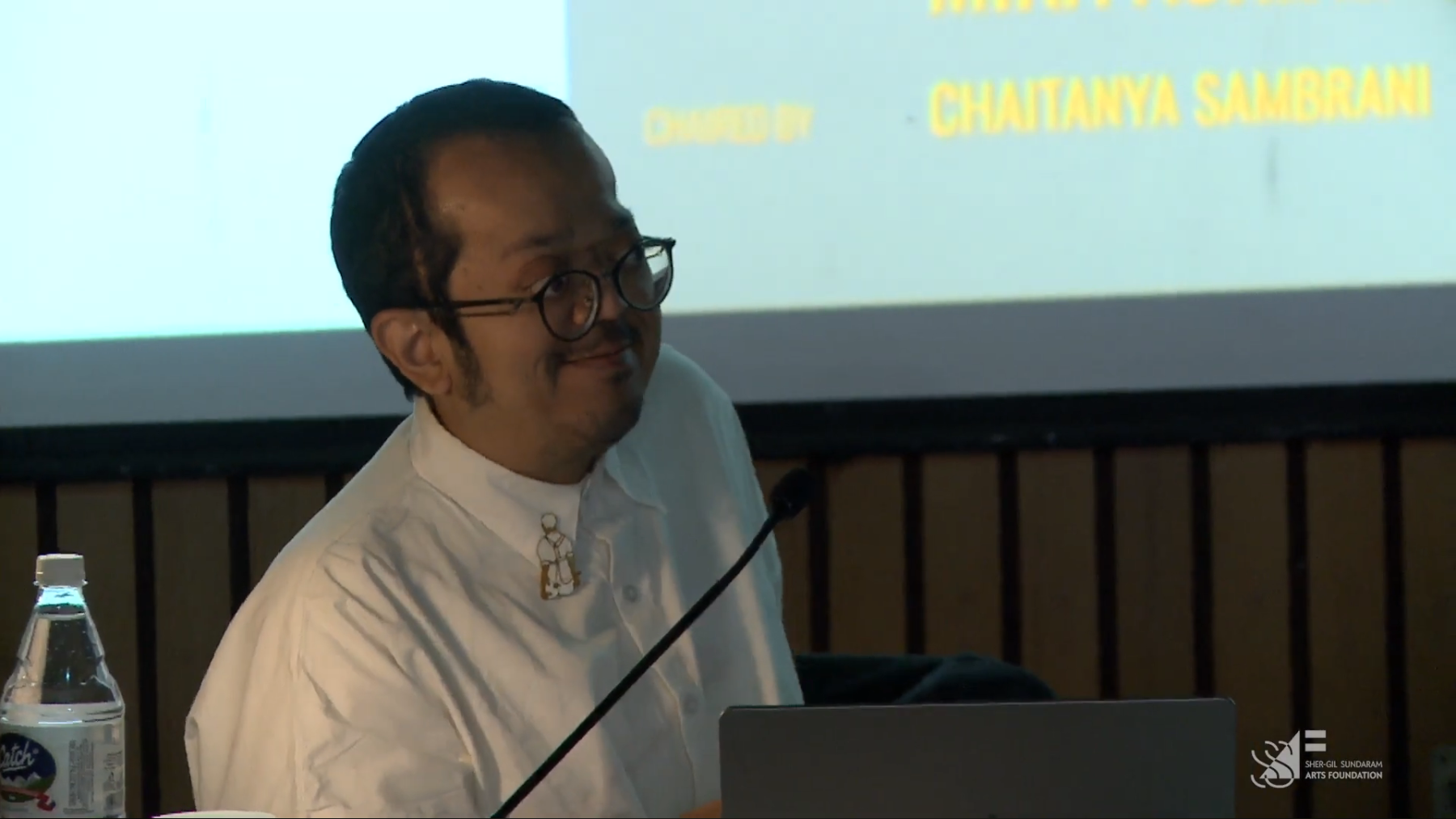
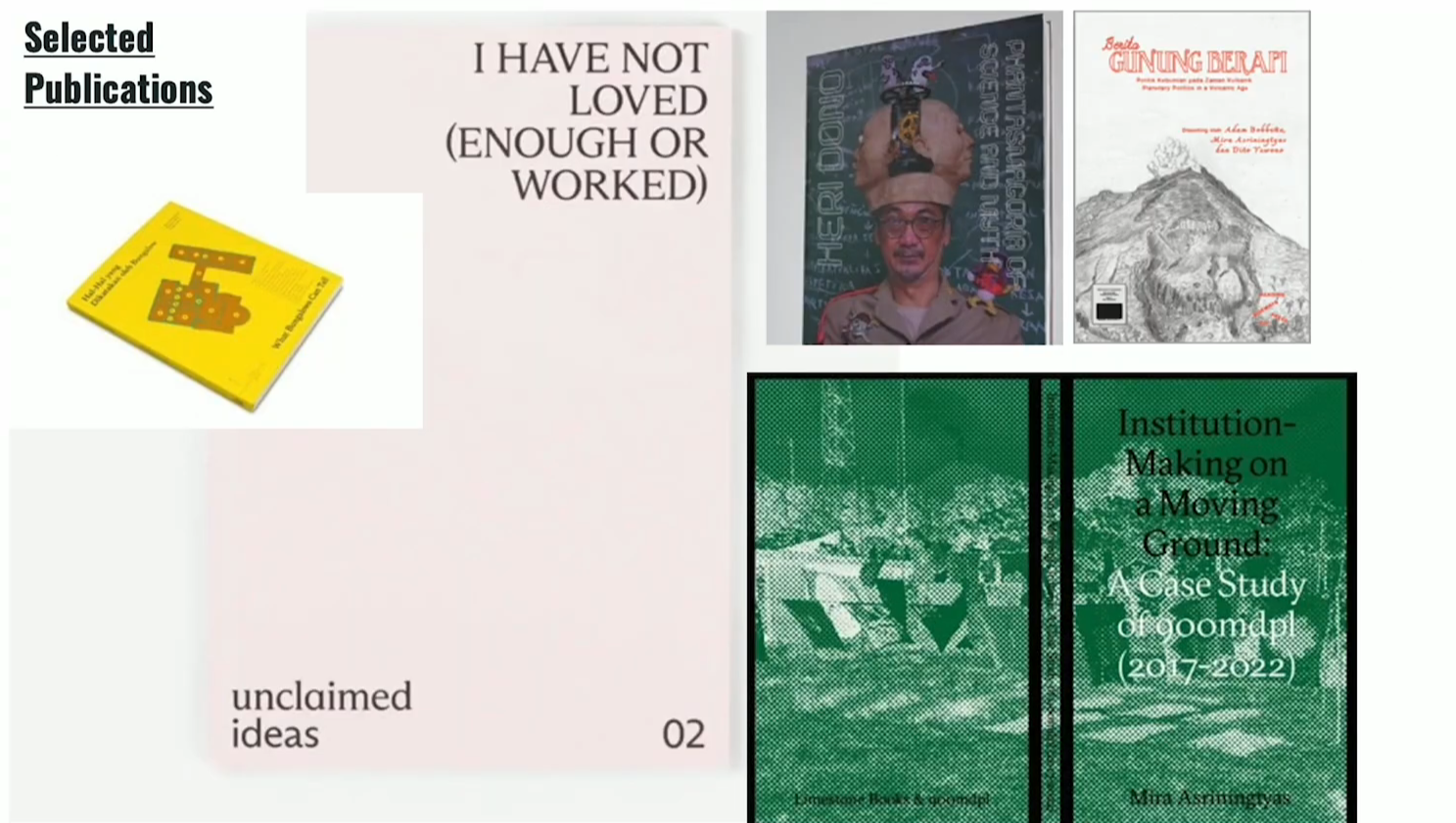
The fourth Tushar Joag memorial lecture, organised by the Sher-Gil Sundaram Arts Foundation on 16 January 2026, was titled “(Curatorial, Artistic and Institutional) Practice on a Moving Ground.” Delivered by Indonesian art practitioners Dito Yuwono and Mira Asriningtyas, the lecture staged a critical discussion about the role of community building and friendly cooperation in sustaining independent art practices amidst unfavourable economic and political situations. Art historian and curator Chaitanya Sambrani launched the discussion by introducing several cultural interactions between India and Indonesia; for example, Rabindranath Tagore’s visit to Java and Bali and the introduction of Batik in Santiniketan’s curriculum, apart from the longer cultural histories connecting both the countries across multiple terrains. Yuwono and Asriningtyas then elaborated on the role of instability as a catalyst and generative framework for opening up new possibilities for the creation of art, which they consider as part of a haptic infrastructure that builds engagement, solidarities and justice.
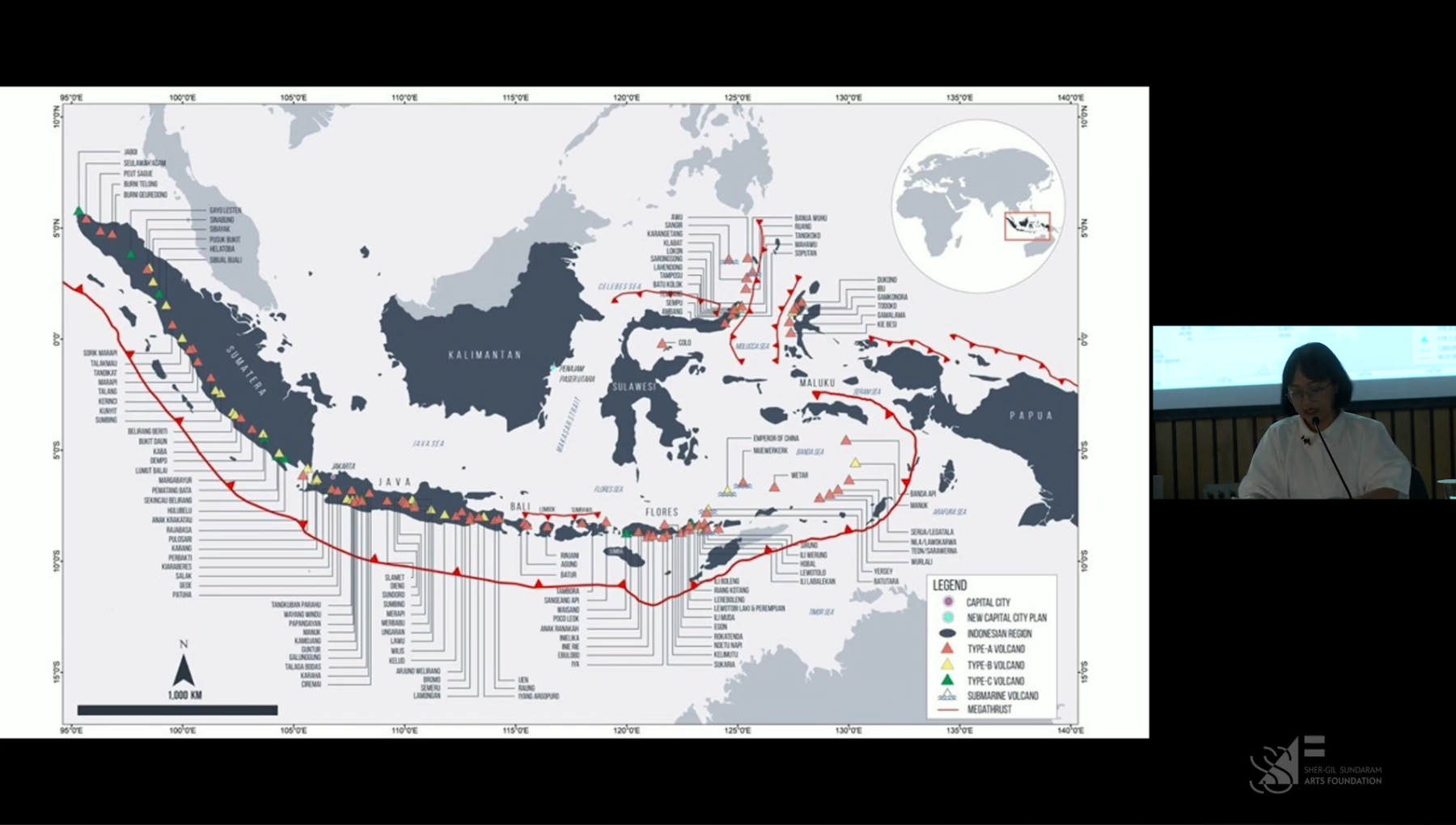
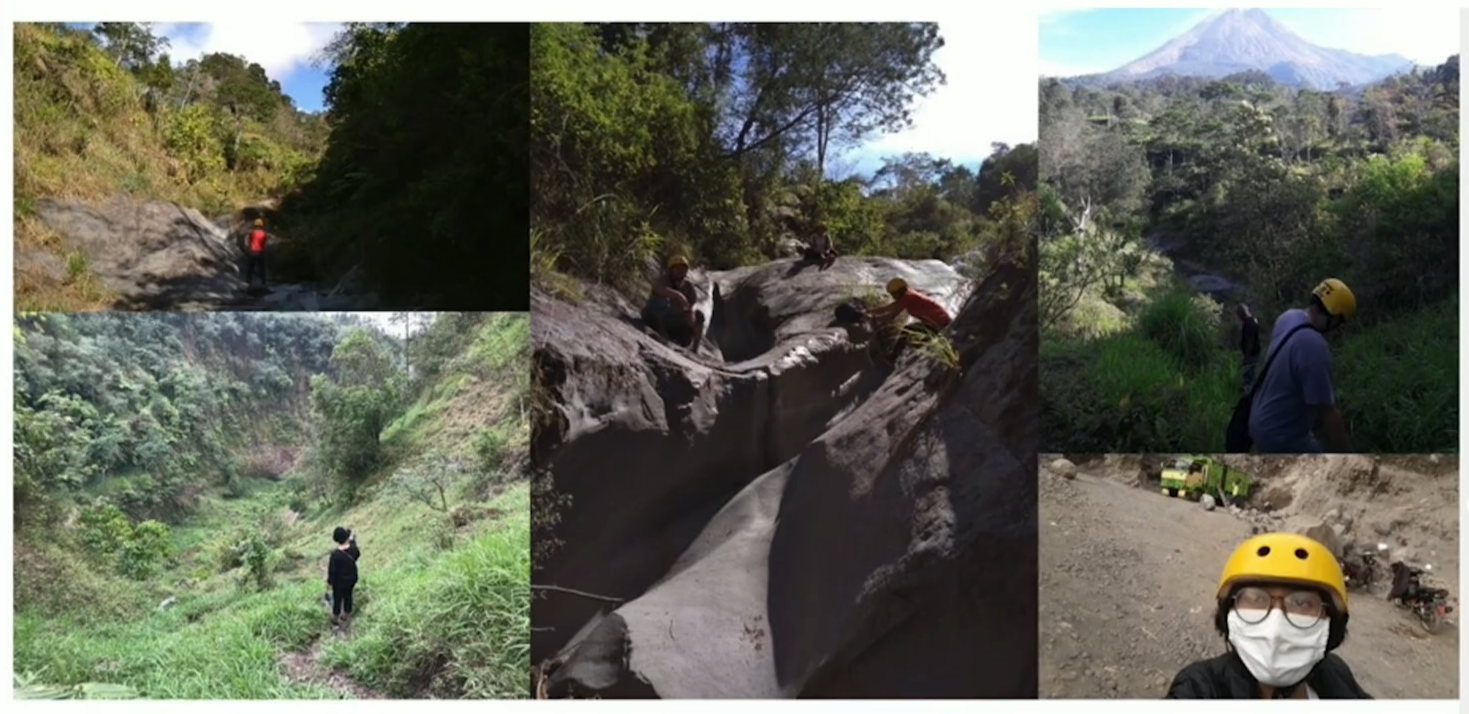
Framed through the metaphor of “moving ground,” their presentation foregrounded both the literal instability of their homeland—Java’s geological terrain, marked by earthquakes, volcanic activity and tsunamis—and the broader uncertainty shaping Indonesia’s contemporary art ecosystem. This dual sense of movement, they argued, informs not only their artistic and curatorial methodologies but also the wider structure of art production in Indonesia, which has historically relied on informal, artist-led and self-organised infrastructures. With the lack of any state-sustained art support, Indonesian contemporary art has developed through networks of mutual aid, horizontal collaboration and collective experimentation.
Yuwono and Asriningtyas emphasised that what may appear externally as a lack of institutional structure is, in practice, a dynamic system rooted in resilience, adaptability and community-driven organisation. Their own journey, beginning in 2011, exemplifies this ethos: emerging from non-traditional educational backgrounds, they cultivated hybrid practices that blur distinctions between artist, curator, organiser, researcher and citizen. This fluidity, they suggested, reflects a broader cultural logic in which roles remain porous and responsive, allowing practitioners to adapt to shifting contexts and needs, thus not getting affected by an organised system of art production. In this view, instability is not deficit, but a generative condition that opens possibilities for new forms of collaboration, pedagogy and cultural production.
Central to their narrative was the establishment and evolution of LIR Space, an independent, artist-run initiative founded in 2011 as a collective learning platform. Conceived as both a physical exhibition space and a site for alternative education, LIR Space functioned for eight years as a laboratory for curatorial experimentation, hosting over a hundred exhibitions, numerous public programmes and collaborative projects. The closure of its physical venue in 2018 marked not an end but a transformation into LIR Curatorial Collective, a nomadic, research-driven entity capable of responding more flexibly to diverse contexts. Through this shift, Yuwono and Asriningtyas articulated a model of institutional practice that privileges mobility, interdisciplinarity and long-term engagement over permanence and infrastructural stability.
Their curatorial projects are characterised by performative and dialogic modes of exhibition-making, foregrounding intimacy, trust and sustained conversation with artists and communities. These practices are embedded within what they described as a “culture of generosity,” shaped by informal exchanges, collective memory and shared labour. Drawing on Southeast Asian curatorial discourse, they underscored the role of the curator as mediator and facilitator, attentive to the social, political and historical textures of the place. In their account, learning occurs not only through formal education or institutional frameworks but also through proximity, companionship and long-term relational work. They argued that such processes generate forms of situated knowledge that resist universalising theoretical models and instead privilege polycentric, context-sensitive epistemologies.
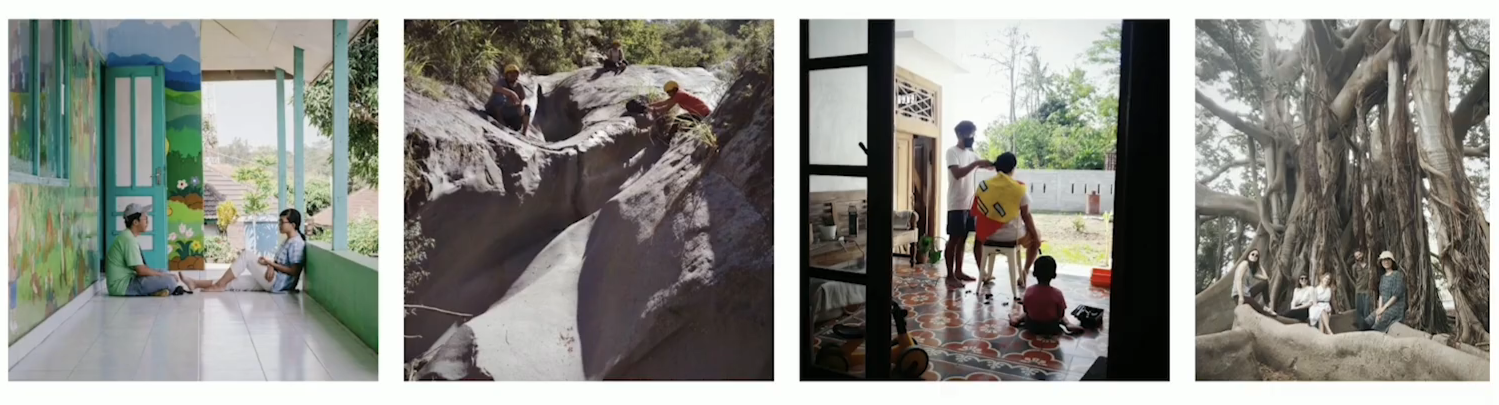
The lecture also traced the genealogies of Indonesian contemporary art through the pioneering example of Cemeti Art House, founded in 1988 during the authoritarian New Order regime. By transforming a domestic living room into an exhibition space, Cemeti enacted a form of institutional resistance, offering a platform for critical artistic expression beyond state surveillance and censorship. Yuwono and Asriningtyas acknowledged their own formative experiences within this ecosystem, highlighting Cemeti’s role in shaping their early professional development and curatorial sensibilities. Their recent appointment as co-directors of the institution, in 2024, was framed as a continuation of its ethos of porosity, relationality and social engagement. They reflected on the architectural and conceptual openness of Cemeti, emphasising its resistance to the isolated “white cube” model in favour of an embeddedness within everyday life, where sensory and social elements intermingle with artistic practice. This porosity, they argued, reflects a broader cultural logic of Gotong royong (mutual cooperation/working together) and nongkrong (informal gathering), through which knowledge circulates organically and collective participation is sustained.
Concluding their lecture, Yuwono and Asriningtyas proposed “moving ground” as both a descriptive condition and a methodological orientation, suggesting that resilience lies not in permanence but in continual transformation. Within this framework, art institutions are understood as living, adaptive systems, sustained by human relationships rather than fixed structures. Their account ultimately advanced a vision of artistic and curatorial practice as a form of civic engagement—responsive to uncertainty, attentive to local histories and committed to building solidarities across shifting social, political and ecological landscapes.
To learn more about arts movements in Indonesia, read Fathimah Fildzah Izzati’s essays on Bachtiar Siagian’s Turang (Comrade, 1957) and the afterlives of Indonesia’s Lekra.
To learn more about public programmes organised by the Sher-Gil Sundaram Art Foundation, read Dev Saraswat’s reflections from the Umrao Singh Sher-Gil Grant for Photography Annual Lecture titled “In Search of Home” by Palestinian photographer Ahlam Shibli, Ayushi Koul’s observations on Mritunjay Kumar’s House of Blue, Madhubanti De’s essay on the radical vulnerability of Navina Sundaram’s archive made available as The Fifth Wall, Shivani Kasumra’s notes from the India launch of The Fifth Wall and Ankan Kazi’s piece on the launch of a few films from the Fifth Wall archive in 2022.
All images are from the fourth Tushar Joag annual lecture 2026, titled “(Curatorial, Artistic and Institutional) Practice on a Moving Ground,” by Dito Yuwono and Mira Asriningtyas. Images courtesy of the Sher-Gil Sundaram Arts Foundation.