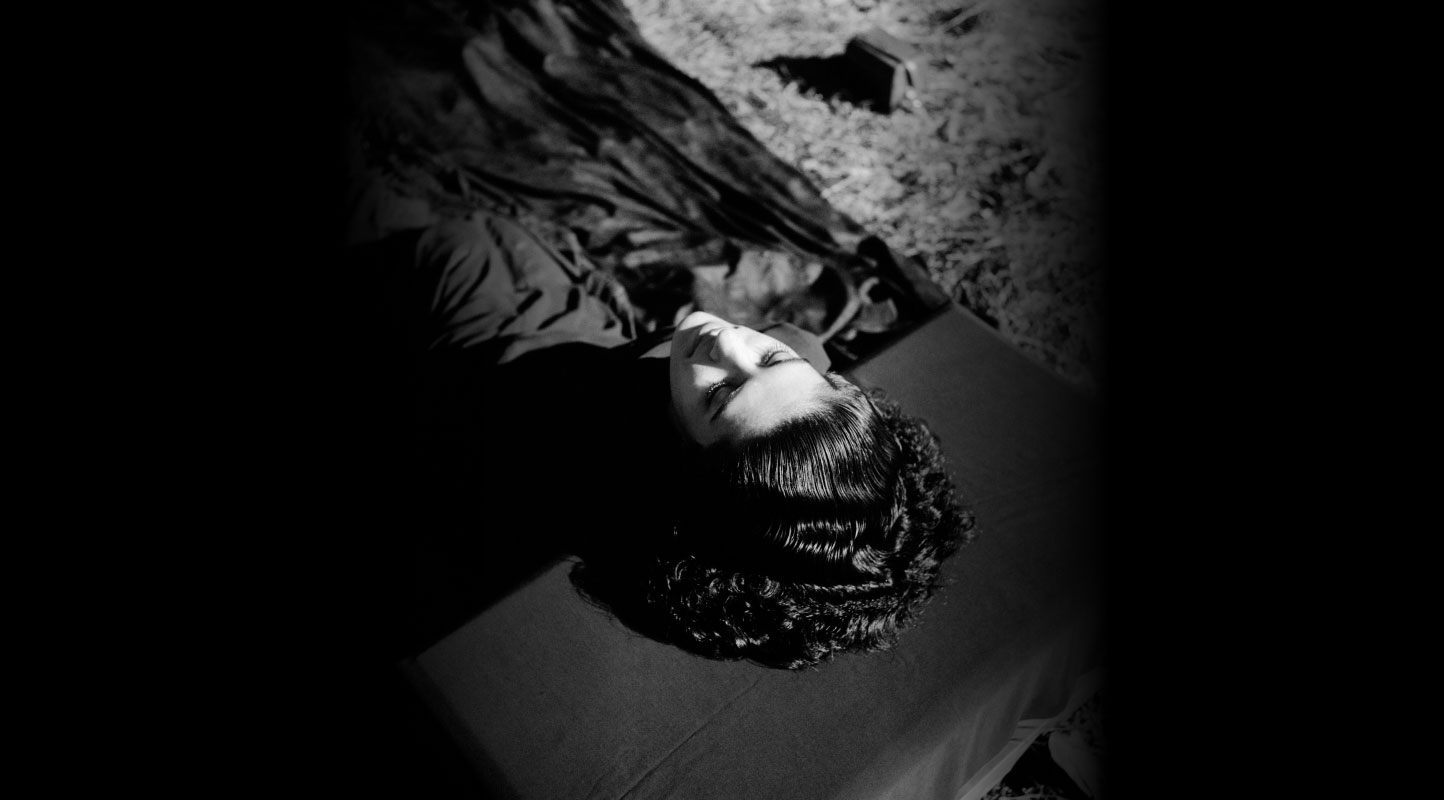


On the Parotta Shops of Tamil Nadu: In Conversation with Sumaiya Mustafa
A recipient of the Serendipity Food Matters Grant in 2024, Sumaiya Mustafa’s project Culinary Cosmopolitanism Through Parotta Shops of Rural and Coastal Tamil Nadu (2025) was on display at the tenth edition of the Serendipity Arts Festival, held in Goa from 12–21 December 2025. The work takes us through the fascinating history of the now ubiquitous parotta in the Thoothukudi and Chennai regions of Tamil Nadu and the complex dynamics that underlie the iconic flaky bread. In the first part of this edited conversation, Mustafa shares what drew her to studying this phenomenon, the labour flows that facilitated the growth of parotta eateries across the rural and coastal parts of the state, and her process of research.
Mallika Visvanathan (MV): As a food ethnographer who chronicles the histories and semiotics of food in your town, Kayalpatnam, and district, Thoothukudi, why did you decide to look at the parotta specifically?
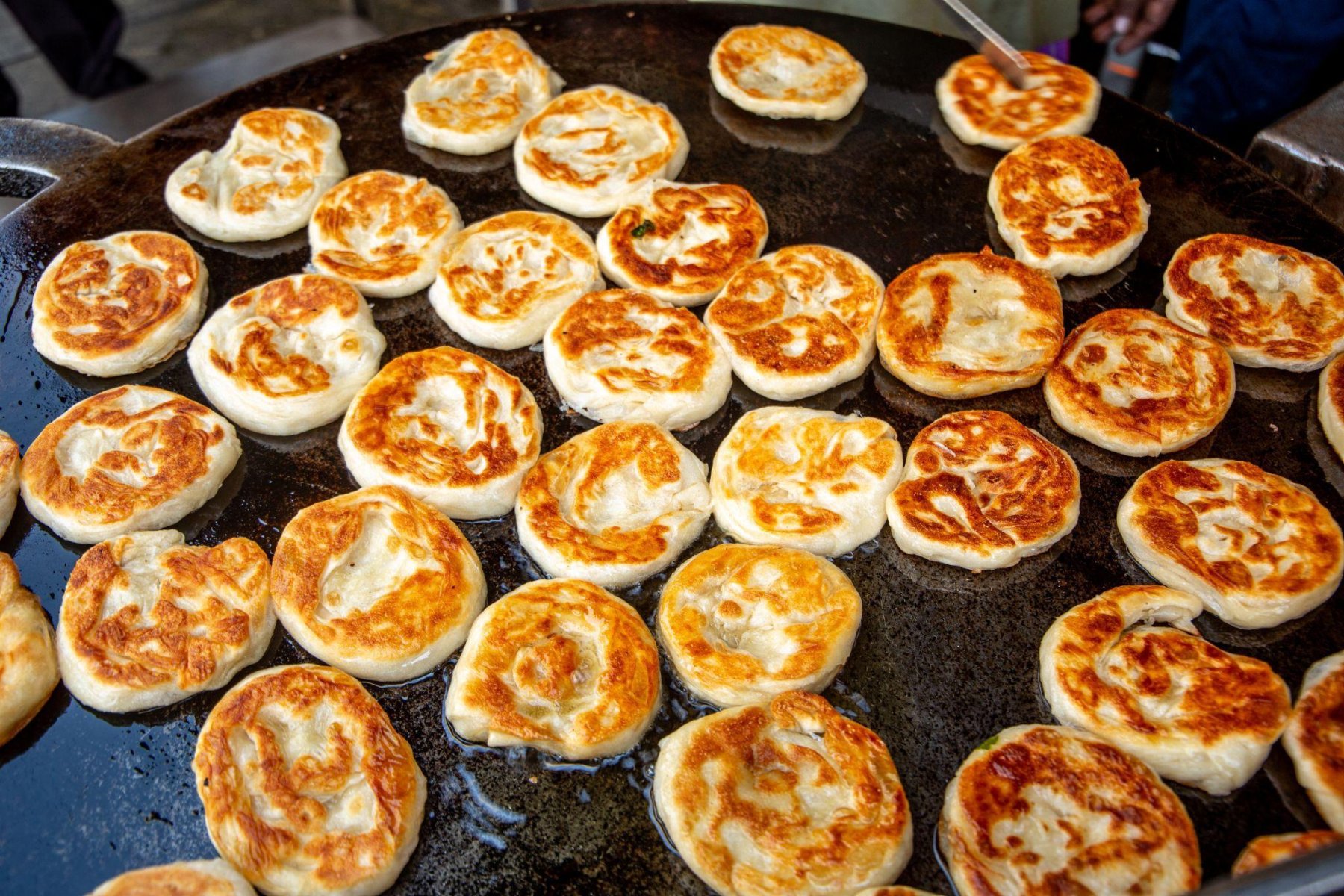
Sumaiya Mustafa (SM): In the southern regions of Tamil Nadu, there is a significant culture of parotta eateries. Given that ours is a predominantly rice-eating state, I was curious about why there are so many of these eateries. I got a cue about the sense of expansion from a seminal work called “Reviving Religion” (2003) by Susan Elizabeth Schomburg. In the chapter discussing Tamil Islam, she describes Kayalpatnam as a place whose bazaar has nothing but two parotta eateries, where men would go sit and perhaps a woman would take away a couple of parottas with an omelette. Today, in 2026, this bazaar is a different place. It has bloomed to its fullest commercial potential; now almost every second establishment is an eatery of some kind. You will still find parotta eateries here, but I wanted to trace when this shift happened.
Parotta eateries continue to remain highly gendered spaces, where women usually prefer takeaways. I saw this in Dharavi among diaspora Tamils as well. Once, while I was doing field work with my friend Pooja Ashokkumar—who runs a walk by the name “Bombay Tamil History” in Dharavi and Jarimari—we were chatting with a middle-aged Tamil woman. She sent her older boy, in his late teens, to get her takeaway from a parotta eatery in Dharavi. This act is very similar to what I have seen growing up in Tamil Nadu. Aunts and female cousins preferred takeaway, while male cousins were always delegated the task of running for parottas. It is almost a faux pas for the parotta eateries to serve women and girls in the shop. This is currently changing and on the cusp of transition. However, I was curious to map these dynamics and shifts.
MV: At the Serendipity Arts Festival, the exhibit consisted of photographs by Noor Nisha taken collaboratively during your field visits. Can you talk about your process of research and what it revealed?
SM: For the Serendipity Food Matters Grant, I had proposed a monograph as the final outcome. I wanted to have images, so I reached out to M. Palani Kumar, who recommended his student, Noor Nisha. She lives in Chennai but would come down to Kayalpatnam, and we would go together to the field.
I had been working with the assumption that there were going to be a lot of parotta masters—the makers, the older ones—who had been doing this for a while. I also wanted to figure out how old parotta eateries are in Tamil Nadu. So we set out in search of old parotta masters in Thoothukudi.
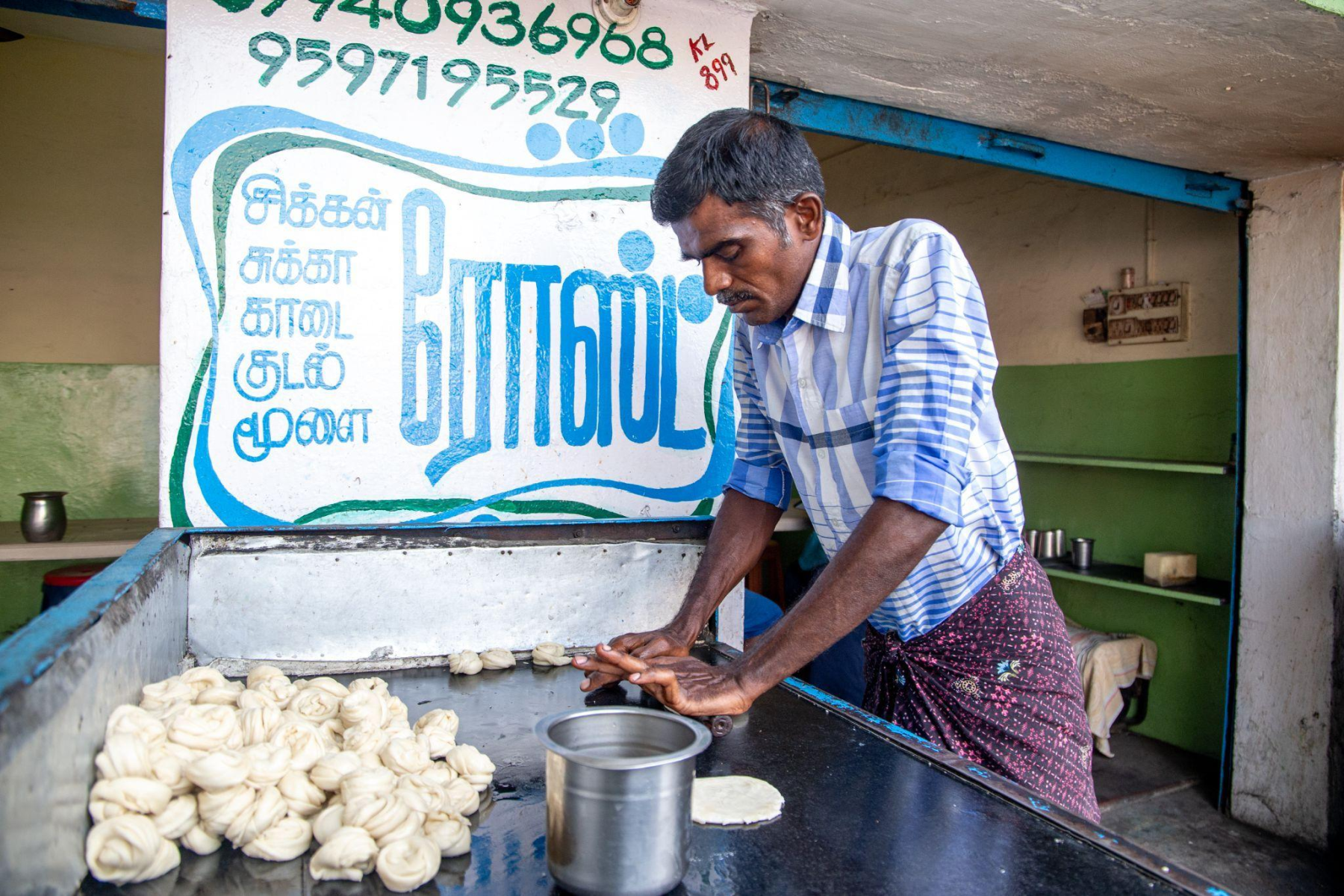
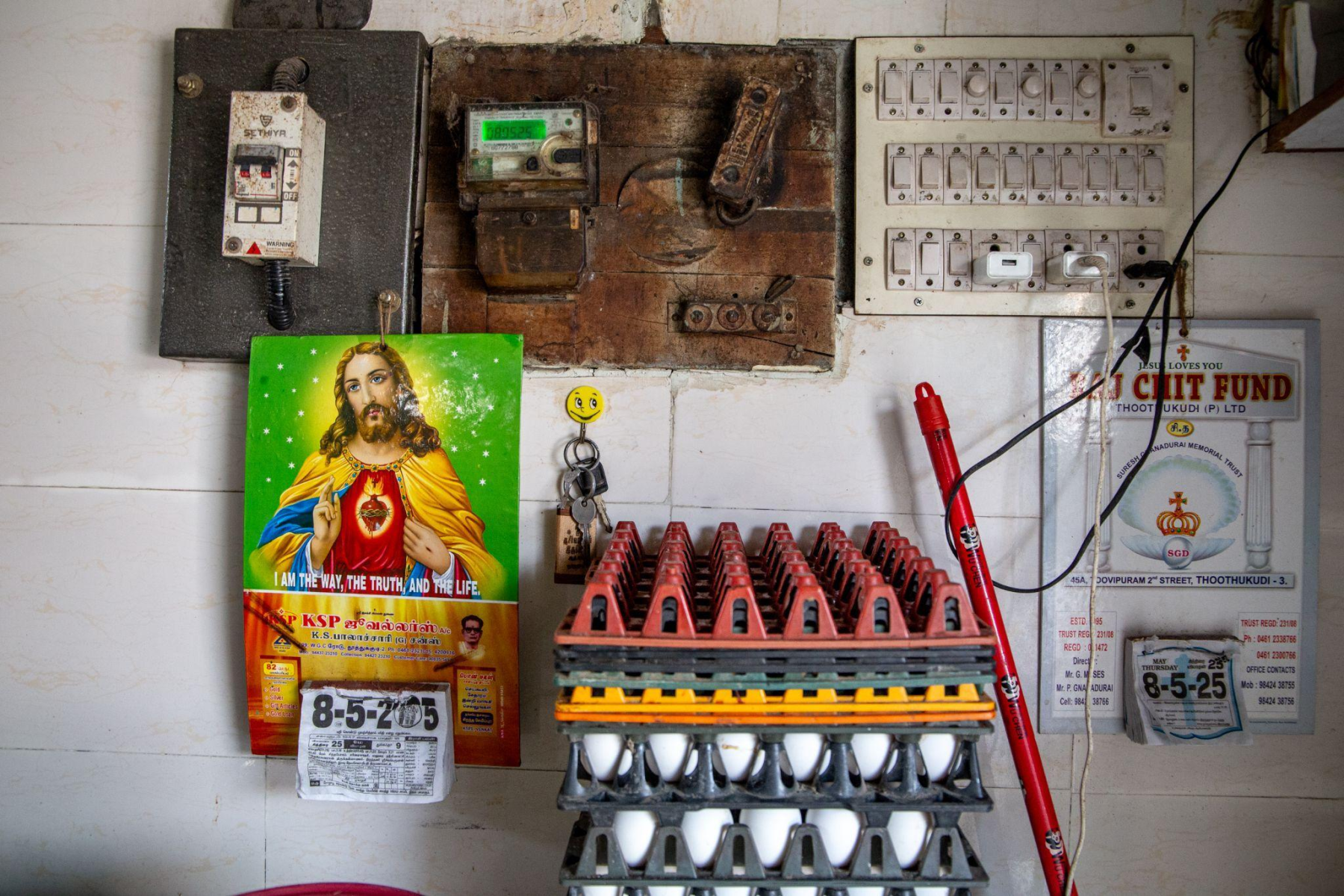
The earliest we were able to date the introduction of the parotta in Thoothukudi was the late 1960s. From my own fieldwork, I could not find any person who had been doing this before 1968. I had also thought there would be a lot of Muslim parotta makers in the field, but I was very wrong. In Thoothukudi district city alone, there are more than 450 parotta eateries. Out of my sample of fifty interlocutors across different neighbourhoods, nearly forty-five were Protestant Christians, hailing from the toddy-tapping community of Nadars, who belonged to the village of S Kailasapuram (meaning “abode of God”).
Historically, within the Nadar community, some were well off and owned palmyra groves, while others from the same community, who were known as Shanars, worked for them. To escape caste violence and persecution, the Shanars converted to Protestantism and moved to the hinterlands. This is a pattern that scholars like Schomburg and Robert Hardgrave have observed in southern Tamil Nadu. After moving to S Kailasapuram, this section of the community did not toddy-tap from palmyra. Instead, they grew millets and cotton. However, for many in the community, when farming failed, they sought employment as cooks for the British officials or those in bureaucratic positions in Madras, Madurai and other districts.
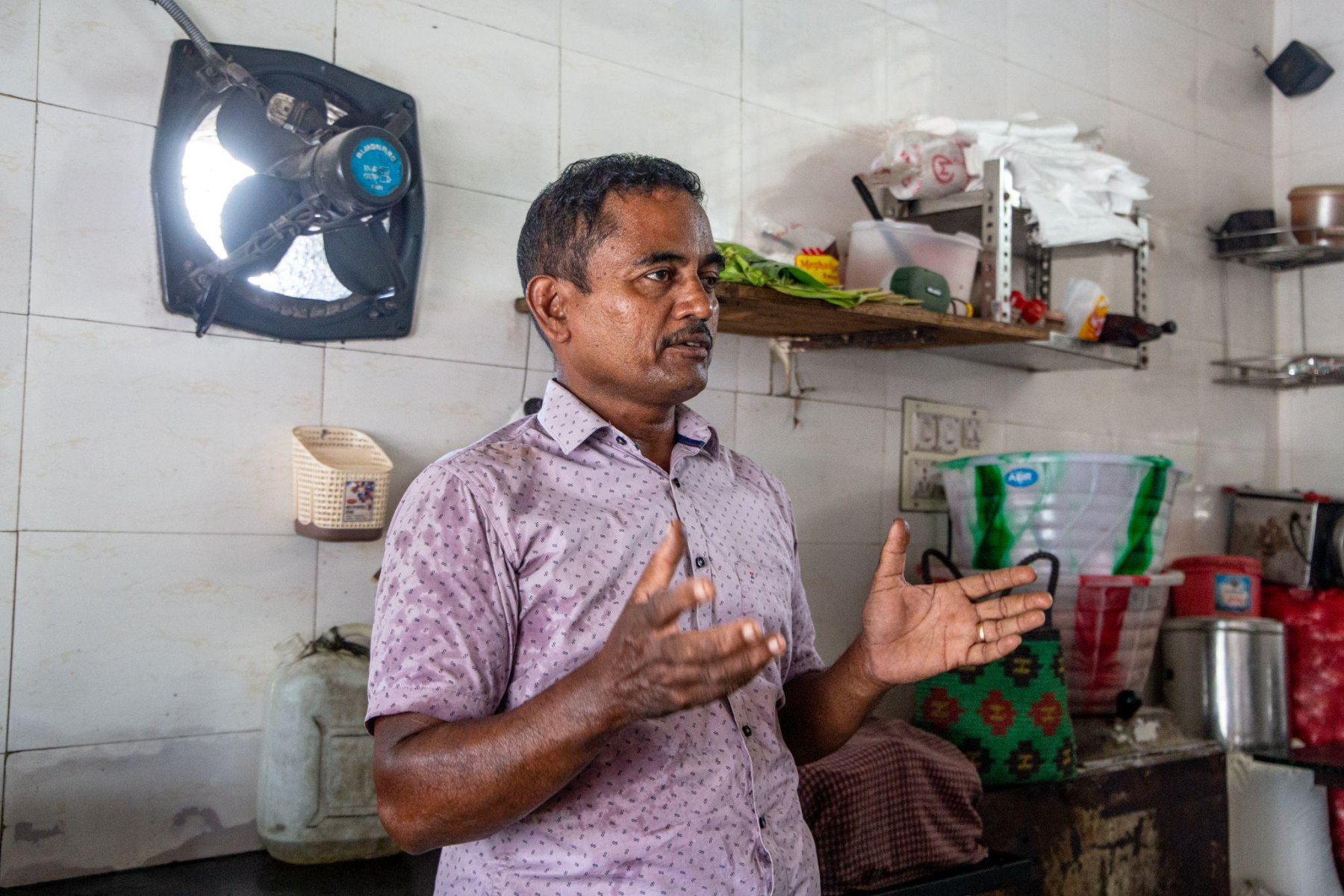
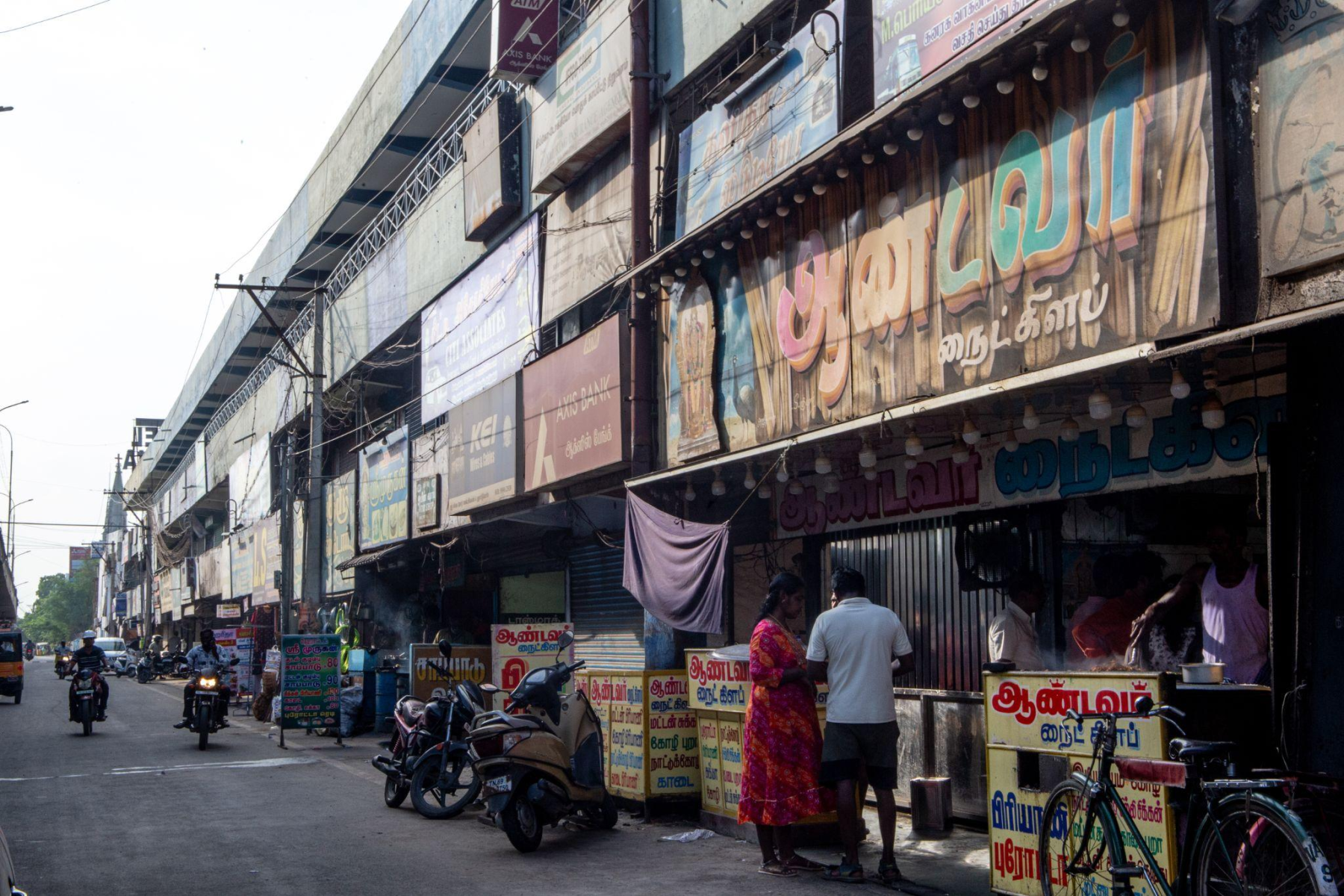
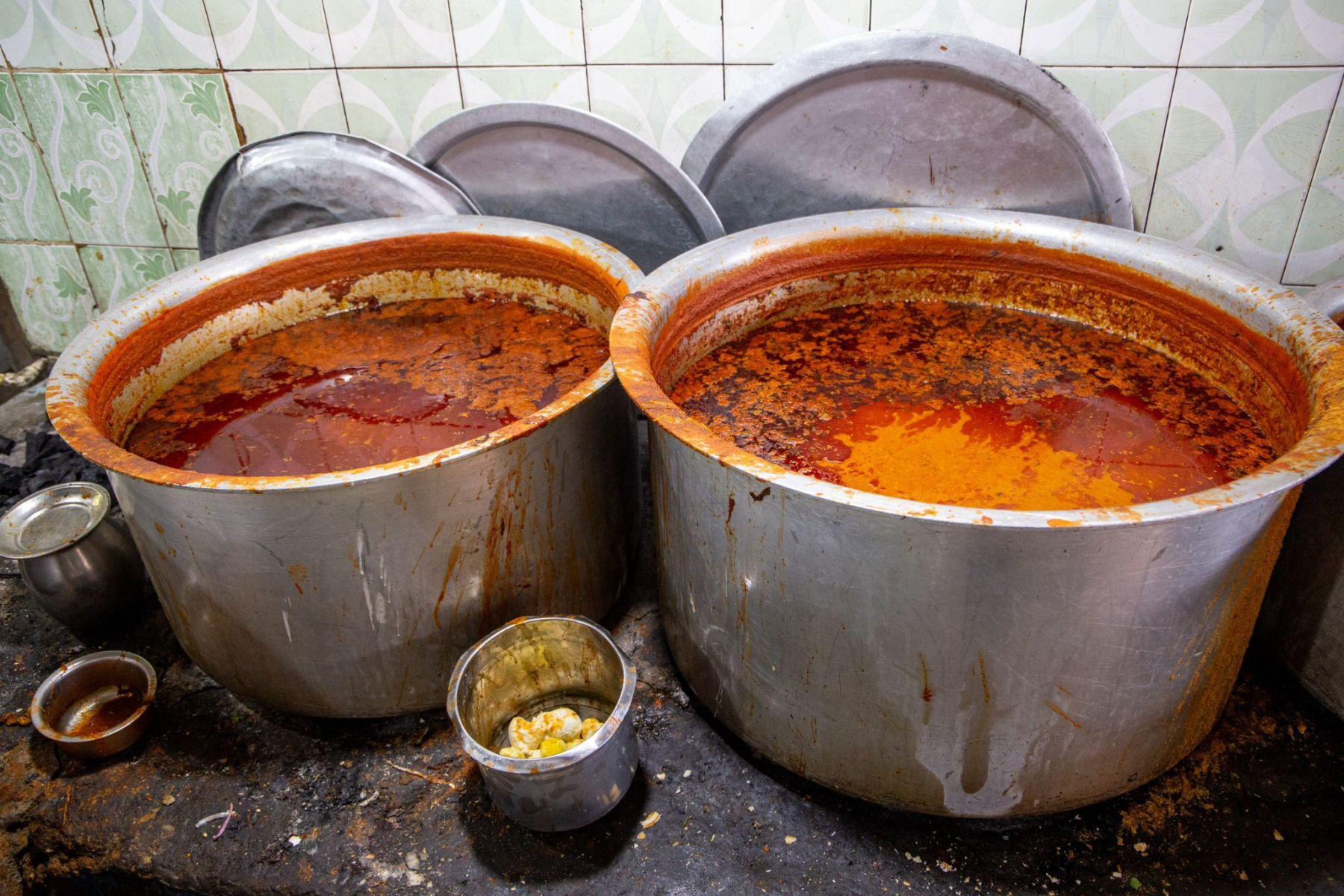
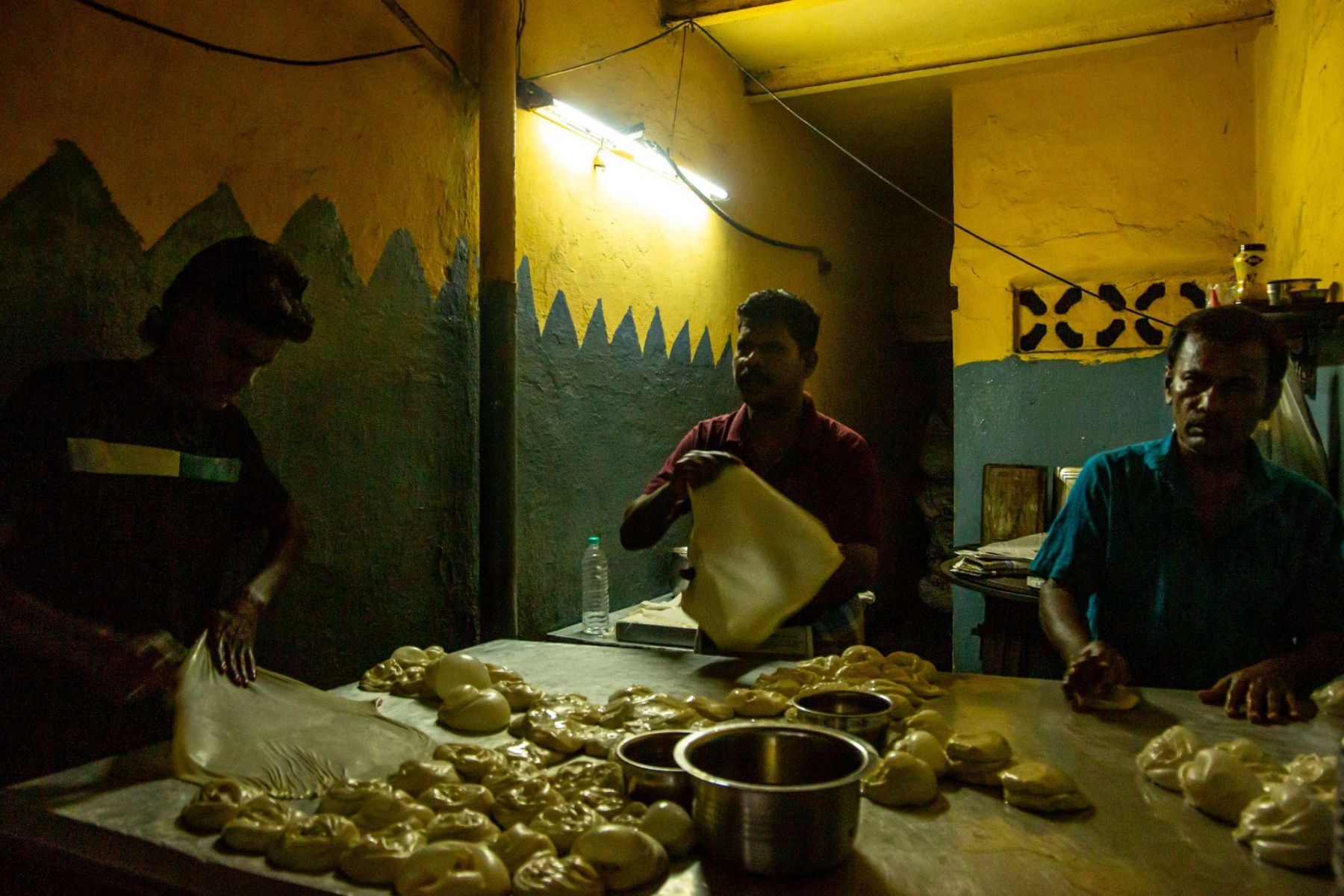
One person from this community, named Rajamani, was the first to introduce parotta making in Thoothukudi in the early 1960s after having trained in the craft from a Kerala master at a restaurant. Rajamani’s son and grandson told me that he established the format that we see now—where only parottas and salna (spiced, coconut-based gravy) are sold in a shop that opens post 6 pm, with a protruding counter for parotta making in the front and with a kitchen at the back for salna and other tasks. He named the shop “Nightclub,” and the term is now synonymous with parotta eateries across the district.
The fieldwork in Chennai told a different story. Chennai does not have as many parotta eateries as one would imagine—it is primarily considered a rural phenomenon. But interestingly, most of the ones that you find in the north of Chennai have parotta masters that hail from Paramakudi in the Ramanathapuram district. All of them have at some point worked in Malaysia.
The direction of labour in a parotta ecosystem is diverse but also crystallised and stems from the state’s larger socio-political factors and history. For example, Protestantism and the movement of Tamil labour to Malay archipelagos indirectly became reasons for new tastes to become part of the region. A significant work that helped establish a connection between Malabar’s parotta culture and Tamil Nadu’s was the work of Waseem Nizar whose PhD looked into Malay Tamil Muslim communities from the Ramanathapuram and Tenkasi districts of Tamil Nadu. The labour Muslims from Tenkasi mostly worked as cooks for the business-owning Ramanathapuram Muslims in Malaysia. Indeed, this one episode in history was instrumental to today’s parotta culture in both Tamil Nadu and Kerala as it played a part in the creation of Mamak restaurants in Malaysia and Singapore. It is notable through Wasim’s work that Malabaris were also involved in trade in Malaysia in the early twentieth century alongside these Tamil Muslims. Honestly, the route that parottas—from both Malabar and Tamil Nadu—took to reach the southern coasts was complex. The more one researches, the more it becomes multi-directional.
To learn more about artists exploring culinary histories, read Kshiraja’s conversation with Sudha Padmaja Francis about her film Ginger Biscuit (2024), Sumaiya Mustafa’s reflections on the cookbook Neidhal Kaimanam (2025), Annalisa Mansukhani’s observations on Reliable Copy’s exhibition at the kitchen table (2021) and Radhika Saraf’s conversation with Dayananda Nagaraju and Niranjan NB about their project The Everlasting River (2024).
To learn more about the tenth edition of the Serendipity Arts Festival, watch an episode of In Person featuring Shaima Al-Tamimi as she discusses her film Don’t Get Too Comfortable (2021), which was featured as part of the show Displacement curated by Rahaab Allana, and engage with an album from Kunga Tashi Lepcha’s series Children of the Snowy Peak (2019–ongoing), which was featured as part of the show Murmurations curated by Ravi Agarwal.
All images are from the project Culinary Cosmopolitanism Through Parotta Shops of Rural and Coastal Tamil Nadu (2025) by Sumaiya Mustafa, with photographs by Noor Nisha. Images courtesy of the artists.