


Shape-Shifting: Stories from South Asia Now
“South Asia Now,” a film programme curated by producer and programmer Anu Rangachar and hosted by Cinema House, G5A Foundation for Contemporary Culture in Mumbai from 23–25 January 2026, put a spotlight on how filmmakers have responded to manifold crises in the region, including ethnic conflicts, marginalisation of minorities, economic crises, rising militancy, border skirmishes and regional realignments.

The “South Asia Now” programme began with two episodes of the horror series Dui Shaw (2024) by Bangladeshi director Nuhash Humayun, which entwines horror within a South Asian politico-religious context. Humayun’s first entry in the series, Pett Kata Shaw (2022)—an evidently less politically charged set than the second outing—retold Bengali folktales featuring Indian ghosts. It included stories like one where a petni (female ghost in Bengali folklore) follows a man home, lured by the fish he has just bought from the market, or another where a djinn (supernatural creature in Arabian mythology and Islamic theology) visits a sweetshop at night for sweet treats, giving its forgetful proprietor the gift of memory with inevitably twisted consequences in return.

The first episode in Dui Shaw, titled “Prayer Time,” is a story where youths face graphic retribution symbolically during the call of azaan (Islamic call to prayer) for desecrating a Hindu temple and its trident-wielding deity. In the second, titled “Good Luck,” a palmist foretelling futures does the forbidden—lifts the veil on his own future and drastically reverses his fortunes, making increasingly immoral choices. In the episode’s final futuristic-but-not-really image, we see him ensconced in his riches and comforts in a soaring high-rise that stands alone in a land that goes up in flames all around him.

Humayun’s images are not subtle, his themes of communal conflict and the capitalist exploitation borrowing from the horror genre’s own traditionally blatant approach. Horror “allows” heavy-handedness, Humayun admitted during the post-screening discussion. The episodes suitably rollick in the genre’s lurid tendencies, with a dead mother uttering pronouncements like “judgement claws out of the grave” as her ghost goads her son with a meal of stones and glass in the first episode; or repeated images of hands, its shape appearing in palmistry books, its shadows on curtains and walls underscoring the loom of fate in the second.

Humayun’s short Moshari (2022), which was also shown during his segment, weaves a story of familial protection in a post-apocalyptic wasteland of paranoia and individualism around that quintessential marker of the tropics—the mosquito net. An expository Public Service Announcement (PSA) informs the audience early on that the West has fallen, implying that it is the humble mosquito net that has thus far protected and equipped the more mosquito-prone East. The mosquito becomes a convenient symbol in this tale, which borrows from vampire lore to present a story about a plague-ridden land, where nights are full of danger, entry must be refused and there is much giving and taking of blood. That the film concludes with the idea of the family turning into the enemy—capable of preying on one’s own—creates space to layer political readings such as the recent attacks on minorities in Bangladesh.
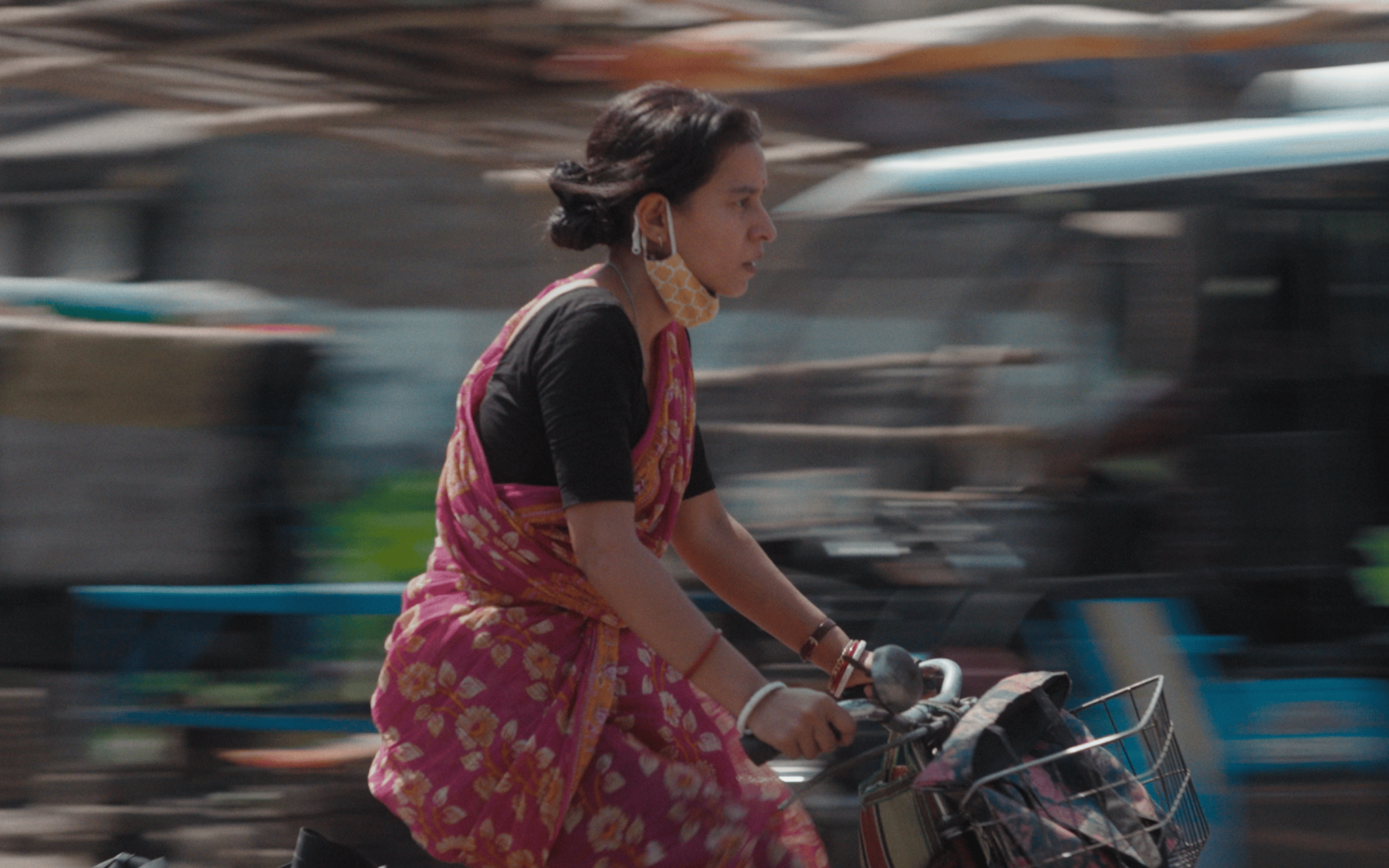
Baksho Bondi (Shadowbox, 2025), co-directed by Tanushree Das and Saumyananda Sahi, which closed the weekend, examines class, and the way it intersects with marriage and ethnicity. It does so through the story of Maya (Tillotama Shome), who struggles to make ends meet with multiple jobs as her family falls upon hard times, presumably after her husband Sundar’s (Chandan Bisht) dismissal from the army following a head injury. We get peeks, through photographs and conversations, into Maya’s earlier life—a comfortable middle-class existence, an English-medium education and early happy days of marriage—all of which starkly contrast with her present circumstances that are steeped in emotional and financial strain. Maya is estranged from her mother and brother—a fact that pushes her out to the social periphery—because of her decision to marry an “outsider.” Sundar is a Pahadi (hills people) from Uttarakhand, such that his features and Hindi stand out sorely in their Barrackpore suburb of Kolkata. This separateness is further compounded by his PTSD symptoms and unusual job of catching frogs for science colleges. Facing constant humiliation which her husband’s condition coupled with her working-class existence makes her vulnerable to, and spurred on by incredible resilience, Maya powers her family’s life and, by extension, Shome powers—by the muscularity of her performance—the film itself.
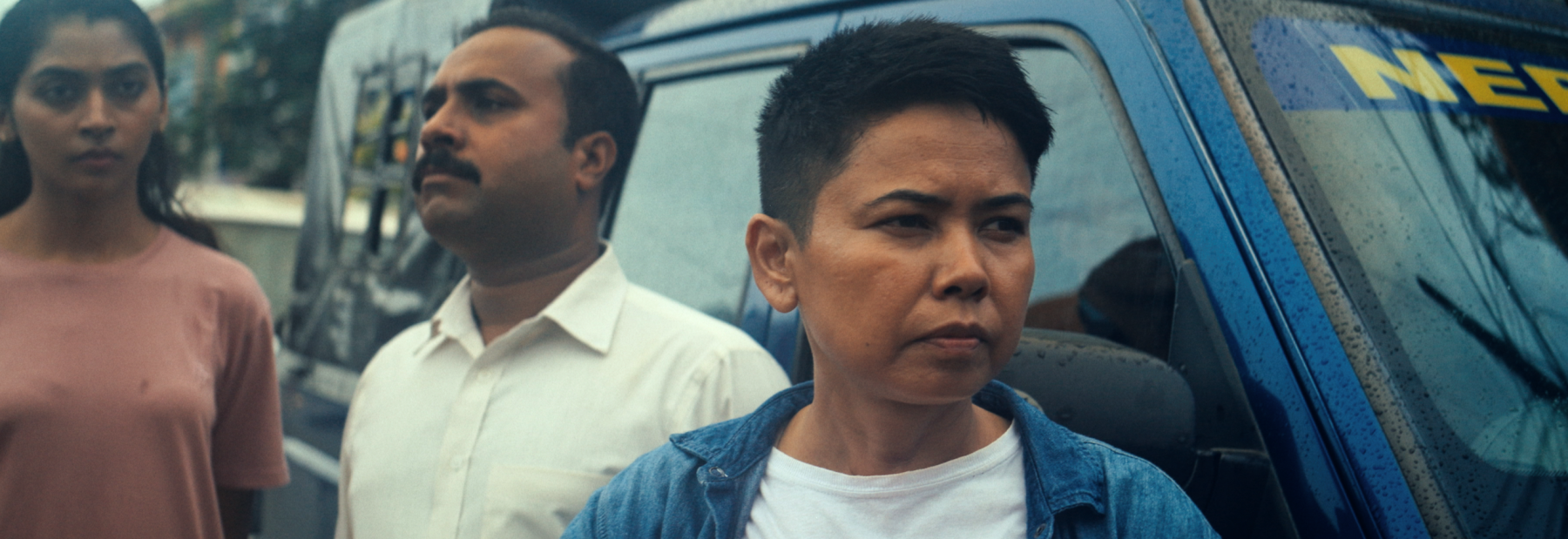
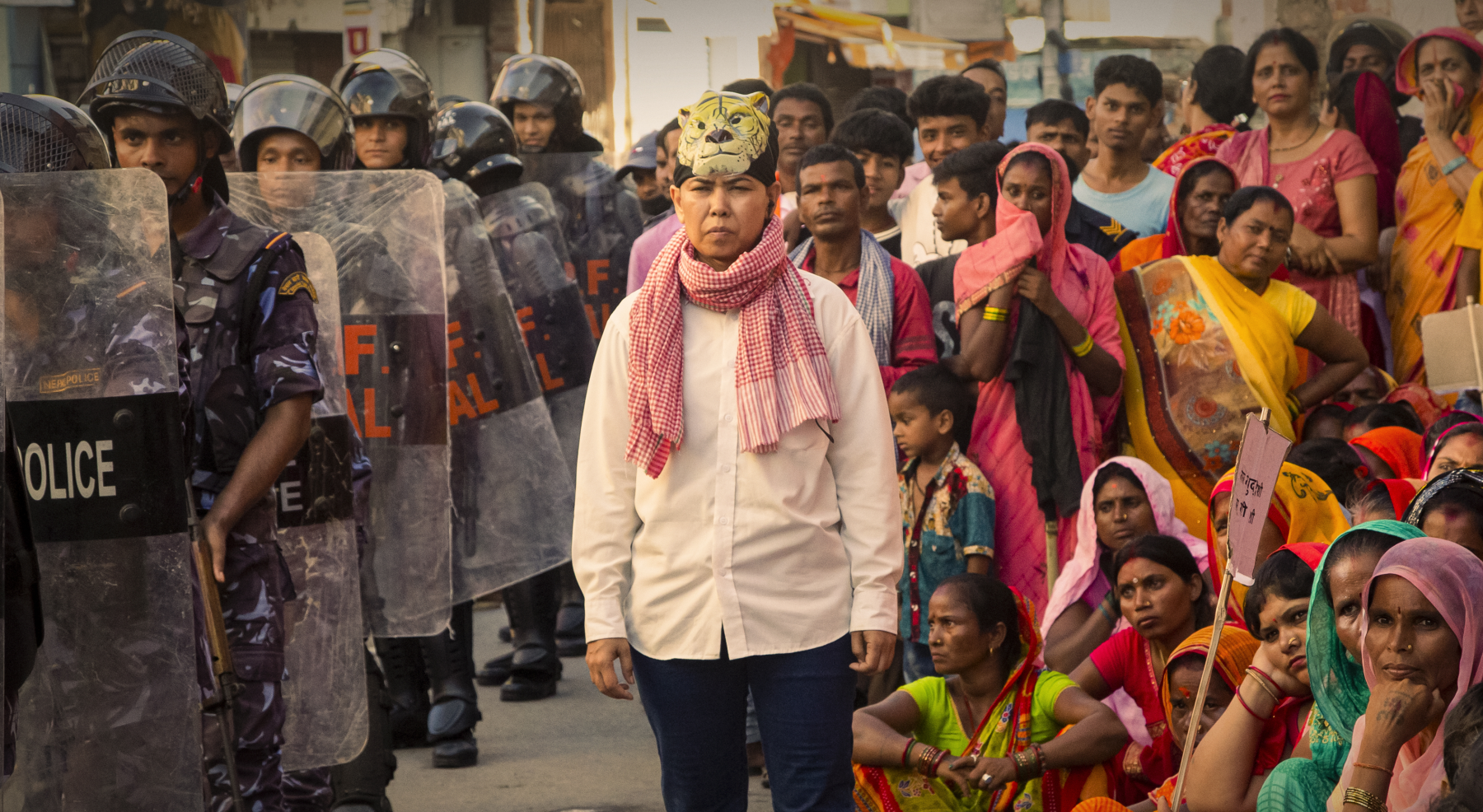
If Baksho Bondi glances at the casual everyday insults faced as a result of ethnic difference, Deepak Rauniyar’s Pooja, Sir (2024) stares it in the face with a dense thriller that exposes the marginalisation that the minority community of Madhesis have faced in Nepal through a story of two children. Rauniyar, a Madhesi, joining on a video call from the US after the screening, detailed how many of his own experiences found their way into the film, including one scene where a Madhesi couple is denied service at an eatery.
Against the Madhesis’ 2015 mass protests targeted at the country’s new constitution, the film lays out some of the questions underlying its ethnic turmoil in the microcosm of the dynamic between its two main characters: Pooja, a Pahadi queer police detective, and her local Madhesi subordinate Mamta. The titular Pooja is played by actress, producer, co-writer and Rauniyar’s wife Asha Magrati. Pooja binds her breasts and states early on in the film that she prefers to be called “Sir." She is unflappable in the face of intimidation at work, while bound to the care of a curmudgeonly father at home. She also secretly romances a girlfriend who is not publicly shown as such. Pooja and Mamta’s apparent differences—fair versus darker skin, masculine versus feminine demeanour and Nepali versus Maithili—serve to concentrate the larger questions of alienation and discrimination within the Nepalese state in their equation so that we see these playing out up close rather than from a distance. This idea of foregrounding systemic issues is used again in the way in which they inform the very nature of the crime this police procedural attempts to solve.
The second part of this review examines themes such as that of the failure of institutions and individuals bravely exposing them in documentaries like Ibrahim Nash’at’s Hollywoodgate (2023) and Arun Bhattarai and Dorottya Zurbó’s Agent of Happiness (2024), and fictional features like Ilango Ram’s Tentigo (2023) and Abdullah Mohammed Saad’s Rehana (2021), which were also screened as part of this film programme.
To learn more about film programmes responding to the current political landscape, read Anaïs Farine, Karim Naamani, Mariz Kelada and Sara Mourad’s three part conversation on curating “Visions of Capture” (2025), Steevez’s essay on the censorship at the PK Rosy Film Festival (2025) and Bishal Roy’s conversation with Labanya Dey on the programme And Cinema Goes On: Making Films in Challenging Times (2025).