

Visions of Capture: On Violence and Visuality
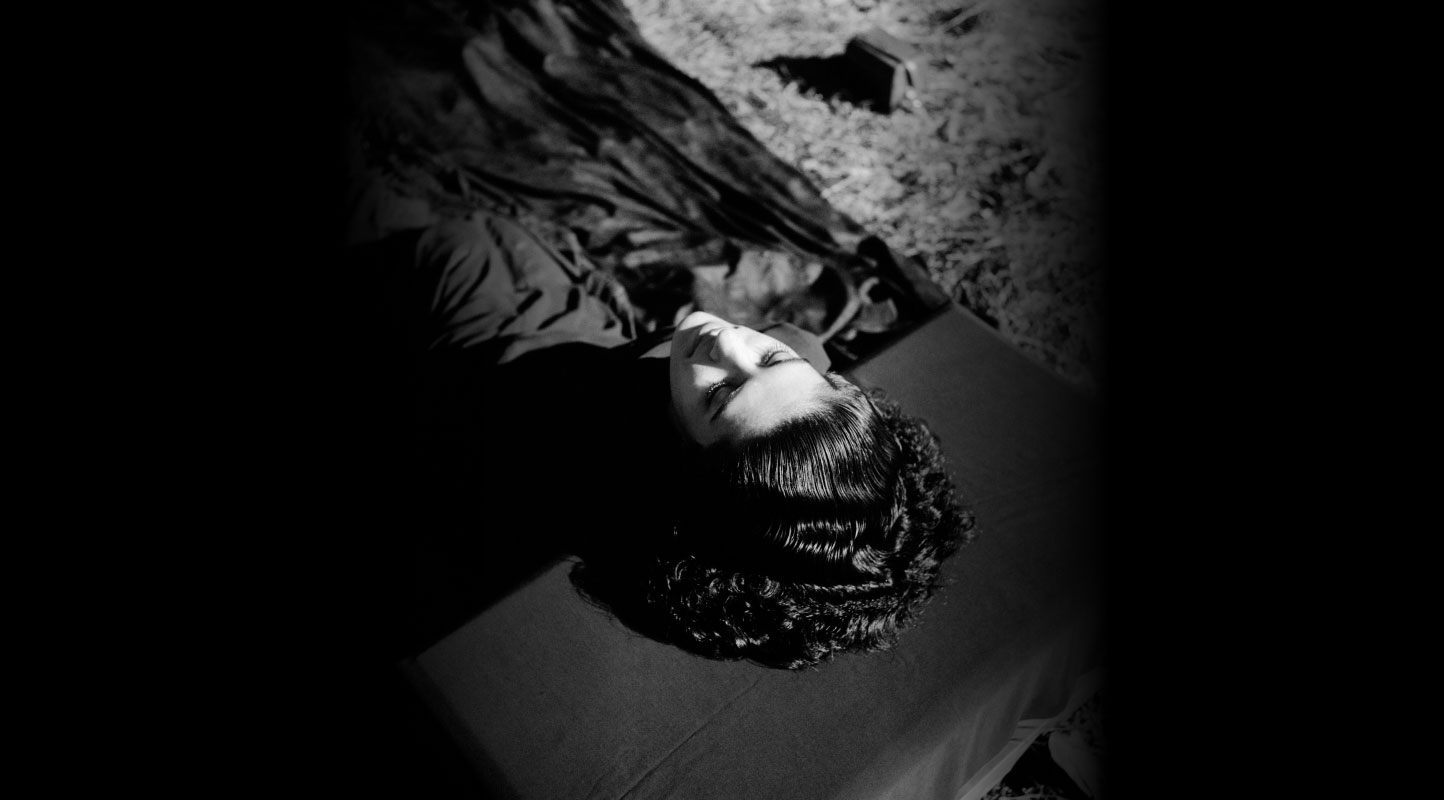
Curated by the Cinematheque Beirut team, the film programme “Visions of Capture” was presented on 25 October 2025 at the Arab Image Foundation. It was part of the “Violence and Visuality” conference organised by the Media Studies programme at the American University of Beirut (AUB). Spurred by the enmeshment of violence and visuality that is baked into filmmaking, the film programme was an attempt to locate the violence of visuality: first in medium, second in form and third in content. We find it on film grain and through the poor image, and watch it manifest in ecological disaster, life under incarceration and colonial violence. The programme featured artworks by Tomonari Nishikawa (sound of a million insects, light of a thousand stars, 2014), Mahmoud Alhaj (Control Anatomy, 2024), Mohamed Bourouissa (Temps Mort, 2009) and Oraib Toukan (Offing, 2021). Nishikawa's experimental film is the result of a 35mm negative film's exposure to the soil of a country road located 25 kilometres from the Fukushima Daiichi nuclear power plant site where a massive nuclear explosion happened in 2011. Control Anatomy examines the evolution of technological and military visual control and violence that the Israeli occupying state has imposed on Palestinians and on Gaza over the years. Part of a larger multimedia project, Bourouissa's video is the result of an intimate and virtual conversation between the artist and his incarcerated friend Al. Offing presents a second dialogue in the programme and is made of the dialectical editing between Toukan’s images and Gaza-based artist Salman Nawati’s voice. The screening was followed by a discussion with Anaïs Farine, research consultant at Cinematheque Beirut, and Karim Naamani, database coordinator at Cinematheque Beirut, moderated by Mariz Kelada and Sara Mourad from AUB Media Studies. The following is the first part of the adapted transcript of their conversation.
Mariz Kelada: The films in this programme collectively achieve a multifaceted insight into a range of relationalities between violence and visuality as well as the consequent variations: the violences of visuality and the visualities of violence. Just the mere order of words shifts our reading subtly, the same way the films collectively do. When we think through the violences of visuality, we tune into the inherent colonial violence of “capture,” of freezing, isolating, externalising and/or exceptionalising a segment of lived reality. This violence, in general terms, is inescapable once one chooses to hold up a camera regardless if the image they produce is accurate, radical, authentic, oppressive, or hegemonic—it is always already a form of “extraction” or even an ontological rupture by virtue of how the technology operates and the individual act of “point and shoot”—it is kind of ironic and revealing that “to shoot” carries both connotations: that of filming and of firing.
On the other hand, if we think of the second variation, the visualities of violence tunes us into the varied tactics that correspond to the urge and the need to also “capture” violence, to—not so ironically—also freeze, isolate, externalise and/or exceptionalise it as a segment of lived reality in order to either document, radicalise, testify or witness, or even just to process it or metabolise it, that is, to resist it. In my view, the films collectively bring us into the nuances of these tactics, urges and needs of “capture.” What stood out to me is that there is a key visual technical accent to each film that indexes or perhaps orients their distinct moods of capture; the (analogue) grain in Nishikawa’s film is most suited for the “capture” of the deep materiality of nuclear violence, while the glitch in Alhaj’s acts as an emblem of every day Palestinian resistance to Israeli surveillance technologies. Then we have the pixel in Bourouissa’s film—as the smallest programmable and isolatable unit of digital visuality—the pixel seems to mirror and embody the violence of confinement and carcerality, while the extreme close up in Toukan’s work seems like a fitting manoeuvre to both soften and amplify the experience of violence in Gaza.
Well, that is my read so far. Can you tell us more about how you conceived this programme and the resonances you find in your selection?
Anaïs Farine: Initially, Karim and I both collected ideas and suggestions of films without having the specific notion of “capture” in mind. We shared around twenty films, watched them separately, and then discussed how to build a programme based on what we had seen and felt. It was a very organic process. We came together around this notion, each starting from a different understanding of the conference title “Violence and Visuality.”
Karim’s selections had a strong focus on police violence. My own current interest lies in the environmental turn in film studies. This interest started after the blast on 4 August 2020, when ammonium nitrate exploded in the Beirut port. In its aftermath, I began to understand differently the research on nitrate film that discusses the material’s latent violence. Nitrate-based film, as we know, is highly flammable and has caused many deaths in the history of cinema. The chemical decomposition of 35mm nitrate film appears as a physical trace of the medium’s instability and toxicity. In her research, Susan Schuppli analyses the toxic encounter that Vladimir Shevchenko filmed in Chernobyl in 1986. Her writing on the role of evidence and the “speech acts” of materials—which can be summoned to appear before the courts of history—resonated with my new perception of nitrate’s active role in film history. I began to look for films that capture this kind of toxic encounter: sound of a million insects, light of a thousand stars by Tomonari Nishikawa is one of them. I suggested other films that examine the history of nitrate-based film or that investigate the invisible violence of radioactivity in Fukushima.
What was clear from the start was that Karim and I were both looking for films dealing with the fact that cinema and images do not only represent but also (re)produce violence. However, after the programme was finalised and we had agreed on employing the notion of capture, I realised that when film becomes a material witness to violence by recording it, the medium can somehow capture that violence and thus take it away from those who were initially targeted by it. Here, capture refers to film as a medium intercepting the violence itself. In Temps Morts by Mohamed Bourouissa, we can say that the camera also captures violence in the sense that it bridges the inside and the outside of the prison and resists the violence of incarceration.
Karim Naamani: Following Anaïs, my interests were largely pointed in the direction of police violence, incarceration, and also the sorts of new technologies that are developed and employed by Empire on its subjects, both surveillance and military. I am really inclined towards how this violence itself is “captured,” so to speak, by the camera as an apparatus and also as a non-human agent. There is this sense that the function of film in this programme is bi-modal in how it deals with bio-politics and its twin necro-politics, and also at the same time how the (violent) image is capable of escaping from the hands of power that seeks to maintain the structure of its own violence. I think the films themselves speak on this matter, but I wanted to give an example to really bring the idea home here. In the war that occurred last year in 2024 in Lebanon, the Israeli Occupation was capturing and sharing drone footage of resistance fighters, partly done under the guise of a “victory lap.” This is just another instance as to how the image of the Arab is totally reduced to a set of pixels and numbers denigrating threat levels, another way in which the Israeli Defense Force (IDF) and Israel at large assume a complete domination of the resistance. What is fascinating here is what happened to those images, actually, where they found themselves back on to our “shores” returning to the families and communities those fighters belonged to and how they held ownership to that image. It is radically transformed from this top-down, dehumanising, necropolitical apparatus to an image of political resistance and martyrdom.

To learn more about artists documenting and exploring the lives of Palestinians amidst the long history of settler colonialism and the ongoing genocide, watch Bhumika Saraswati in conversation with Yazid Anani, Santasil Mallik’s reflections on Maha Haj’s Upshot (2024) and Mohammad Bakri’s Jenin, Jenin (2002). Also watch the talk “Unlearning Photography” by Ariella Aisha Azoulay as part of ASAP | Art’s public programming.