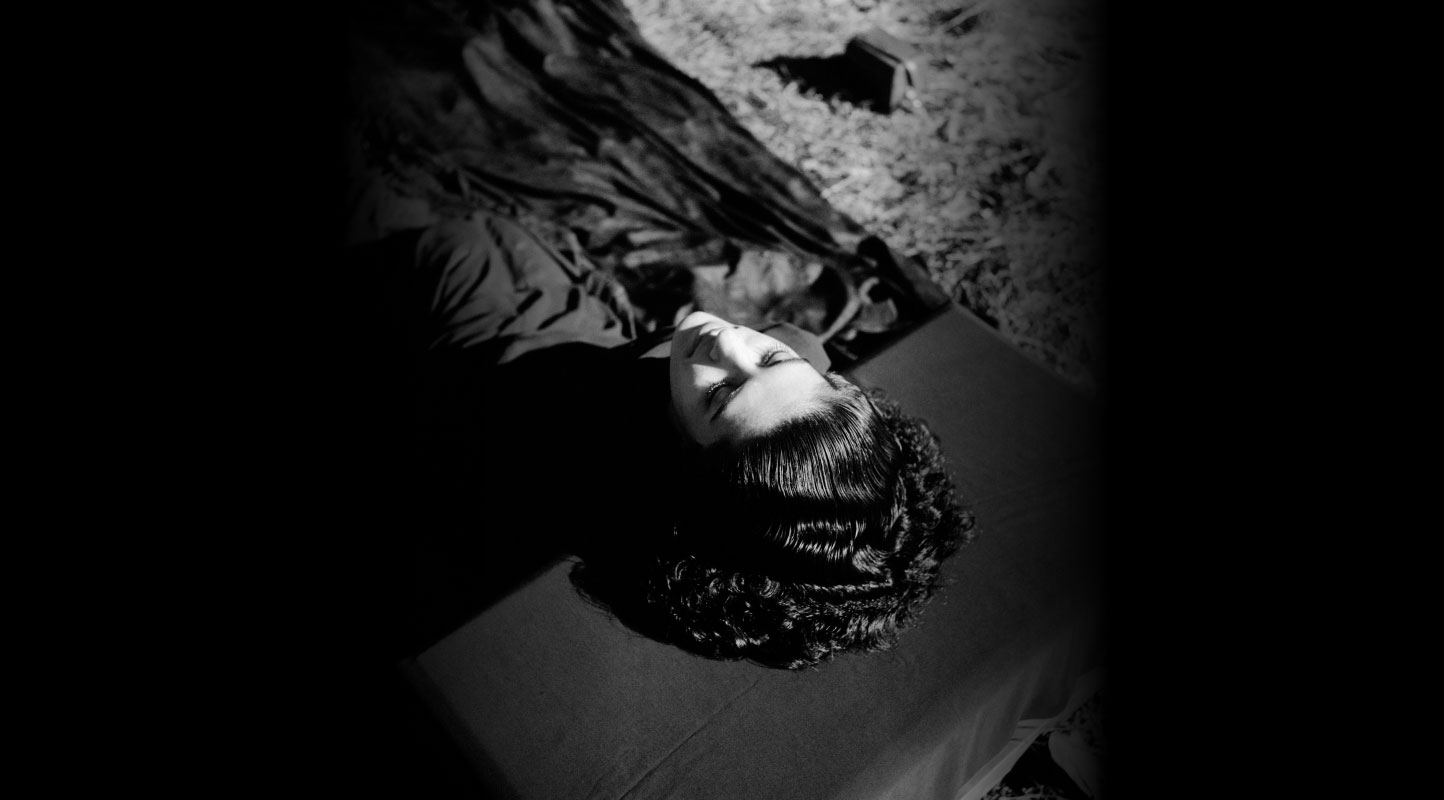


Fragmented Lives in the Himalayas: Kesang Tseten’s The Lama’s Son
“A basket of needles flew into the sky, where there appeared a walnut tree. Then the village came into existence,” Lama Tsultrim narrates the mythical story of how the village at Lubra in Mustang, Western Nepal, came into being. Situated 3000 metres above sea level, Lubra is a significant centre of Bön culture, which came from Tibet. With fifteen households, it is the only village in Mustang that wholly follows this religion. “Bön, on which Tibetan culture is based, was founded by Tonpa Sherab Miwo before the Buddha’s time in the Kingdom of Zhangzhung,” Kesang Tseten, the director of The Lama’s Son (2025), shares. The film was recently screened at the twelfth edition of the Kolkata People’s Film Festival (KPFF), held from 23–26 January 2026, marking the film’s India premiere. With Covid disrupting filming in between, the project took Tseten five to six years to complete.
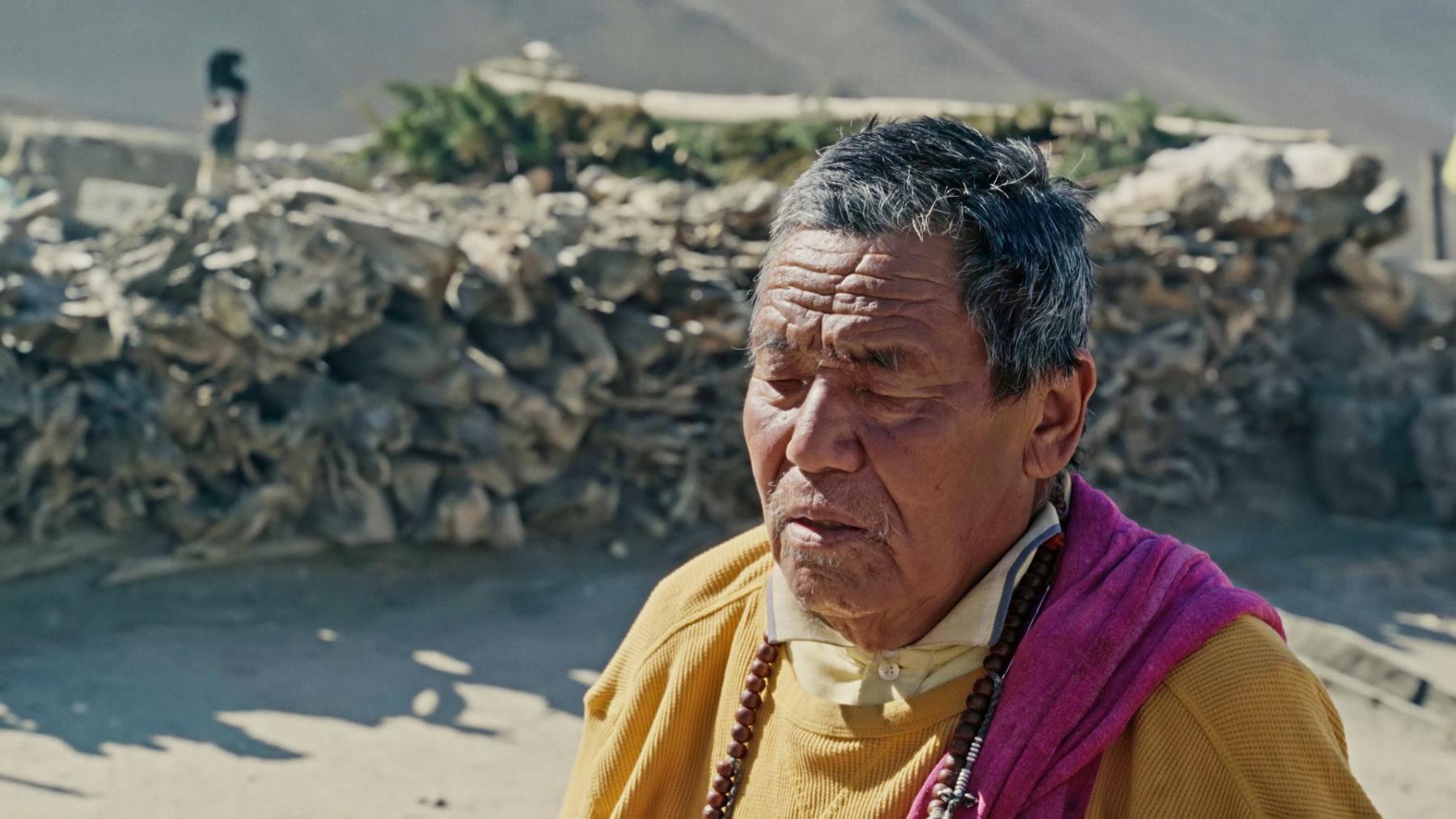
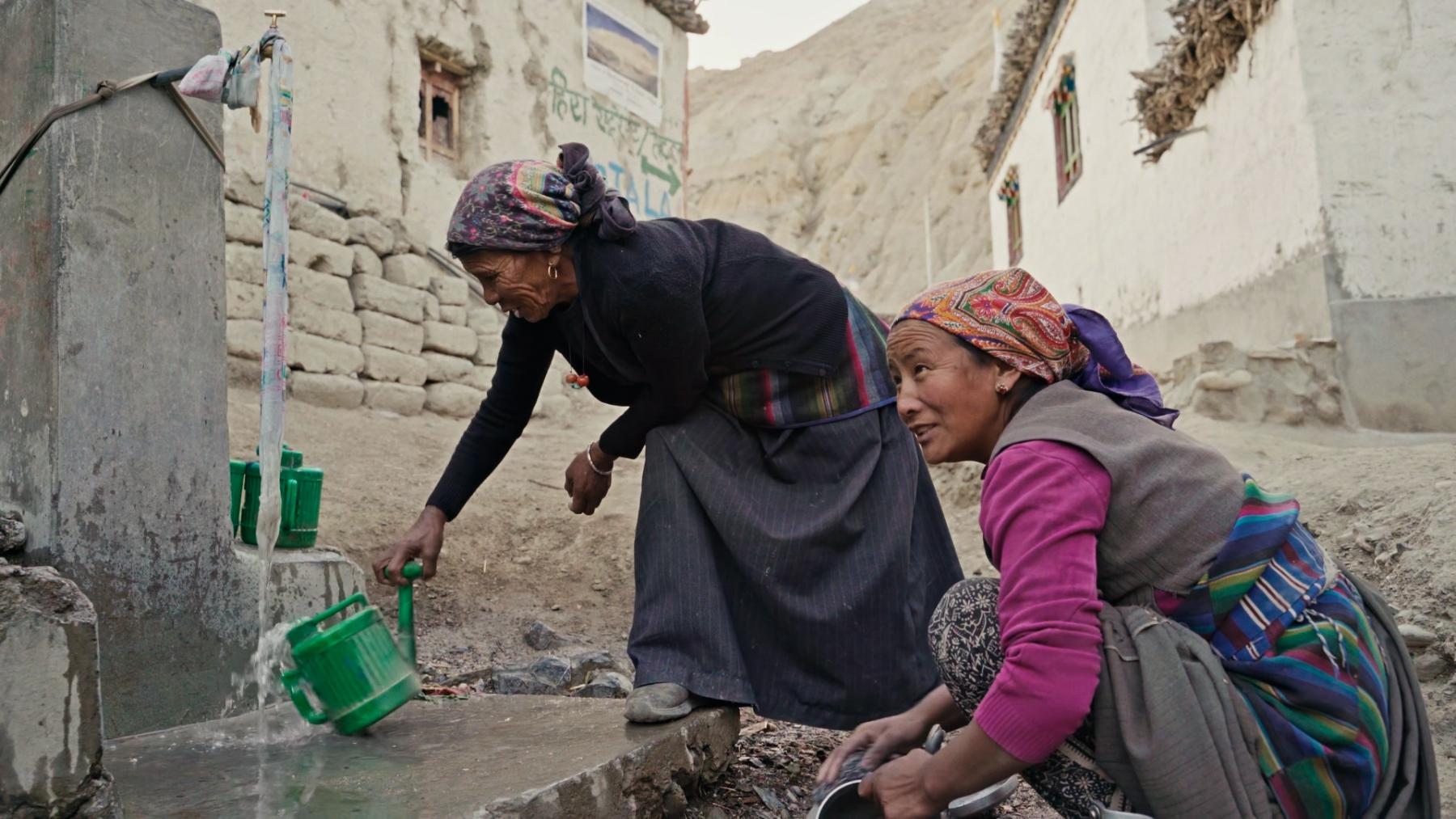
Lama Tsultrim belongs to a 900-year-old lineage of the Bön religion. The tradition that is usually passed down from father to son is now hanging by a thread. The Lama’s son in the title of the film refers to Lama Tsultrim’s son, who has been gone for two decades and is now a sushi chef in New York. Without a son to pass on the practice to, the tradition faces the risk of disappearing. The film is thus a meditation on how Himalayan communities are slowly crumbling under the strain of multiple phenomena, of which migration remains the most visible. This transformation is shown through a glimpse into the lives of Chimi and her husband, who drives his own Uber in New York, as well as by travelling across Lubra and then to two other villages in Mustang—Dri and Dhey—before moving to Samling and Bicher in Dolpo. We see vignettes from each of these places—locked doors at the houses at Dri; the soon-to-come physical relocation of Dhey, owing to shortage of water; and the rising water levels in the rivers of Lubra.
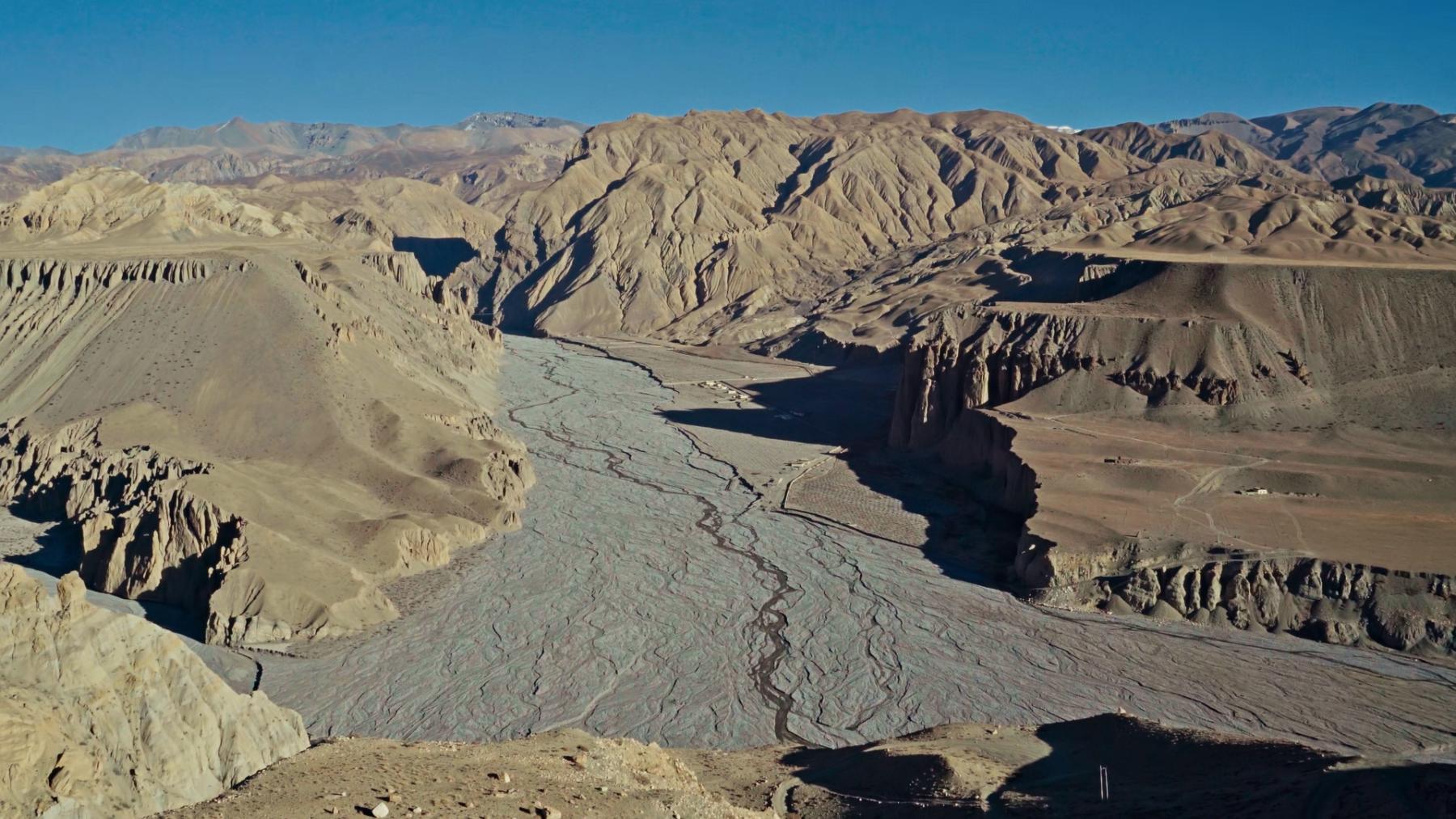
“The challenge was that this film needed a voiceover, which I do not usually do,” Tseten shares. He adds: “It needed a Point of View, and that really pushed me to 'take a stand', as it were—to look at the idea of Shangri-La from an insider's perspective.” The resulting narration is subtle, signposting the viewer into the next place and moment in the film. In between the stories and anecdotes of the locals, the landscape comes to fill in the silence and the transition—the very land that guided the course of the lives of its people until modernisation found its way to them.
There is a tension between the people’s desire to move for safety and the government’s plan to “preserve” Lubra for its cultural significance. In one scene, a group of young men at Lubra are discussing the flooding of the rivers. “The level (of the river) keeps rising 1 or 2 metres every year,” one of them says while describing how during floods, the locals live under the shadow of fear; the sound of the river is terrifying. “As important as culture is, we value our lives,” another remarks. The agitation is real; the suspension between culture and life continues to strangle the people. “If visas were easy, the whole of Mustang would leave,” someone else says. The tension is omnipresent. The question is no longer whether the young will leave but when. In her book The Ends of Kinship (2020) that documents life in Mustang, Sienna R. Craig cites the censuses in Nepal from 2000 and 2010 to show that Mustang has one of the highest rates of depopulation in the country.
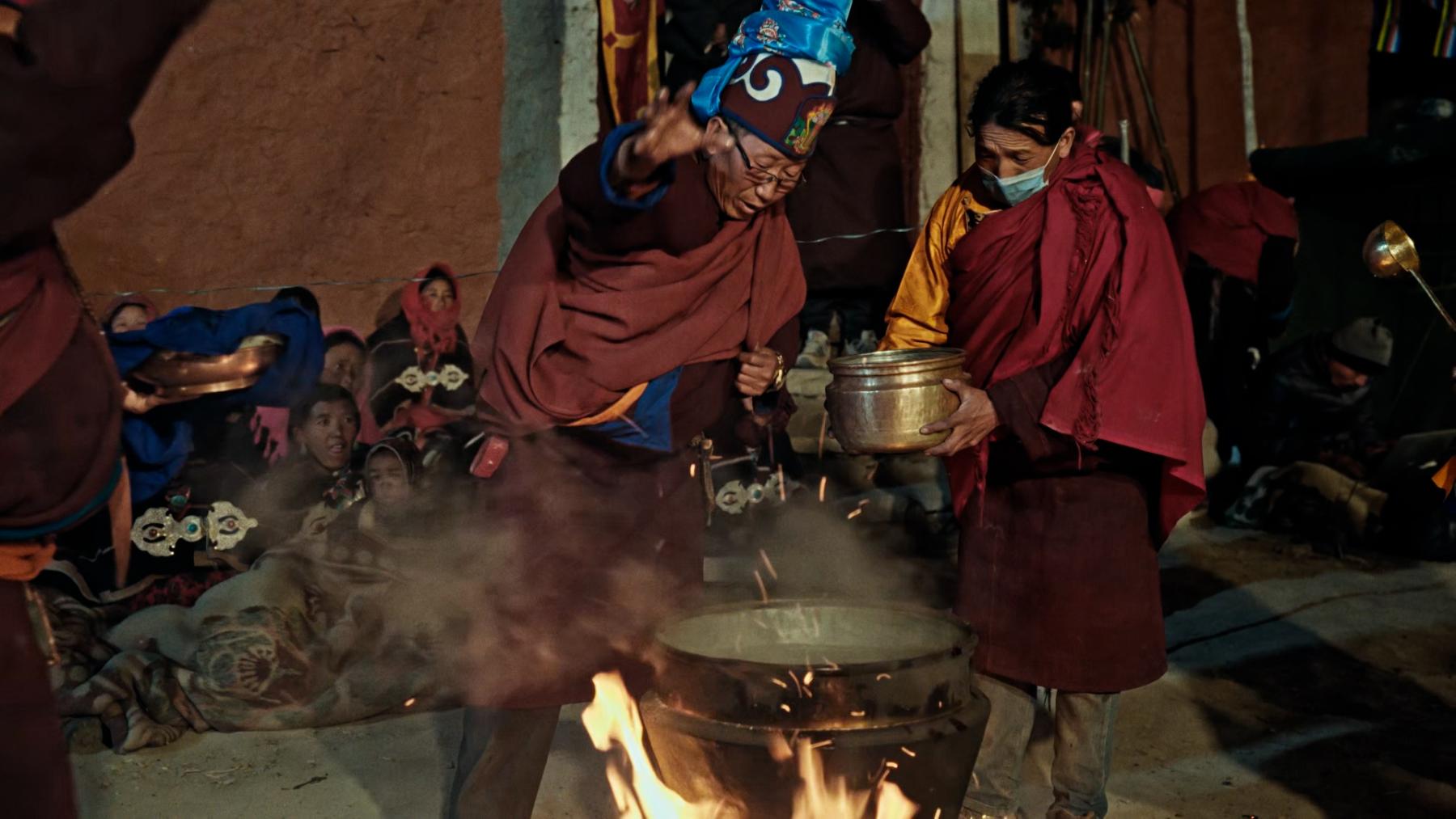
Unlike Lubra, in Dolpo, which is 4200 metres above sea level, Bön culture seems to be thriving. While roads have reached Dolpo, the region remains one of the most remote in Nepal. At Samling, which is the Bön centre in Dolpo, Lama Sherab's two sons and a host of other monks help him keep the culture alive. Tseten captures their celebration of the Bön ceremony called Walchu, which seeks to balance natural elements and dispel obstacles, and was performed for the first time in twenty years.
Throughout the film, Tseten goes around collecting stories and experiences from the locals in each place. The elderly and the women seem more honest on the camera as they provide unfiltered access to their thoughts. However, the young men—some of whom are there on vacation from their American jobs or will be leaving soon—appear more cautious. They seem to measure each word they utter, as though aware of what the camera is capable of doing. This might be the reason why Lama Tsultrim's son refuses to be on camera when Tseten visits him at Queens in New York. Thus, the character that drives the title of the story remains unseen though not completely unknowable.
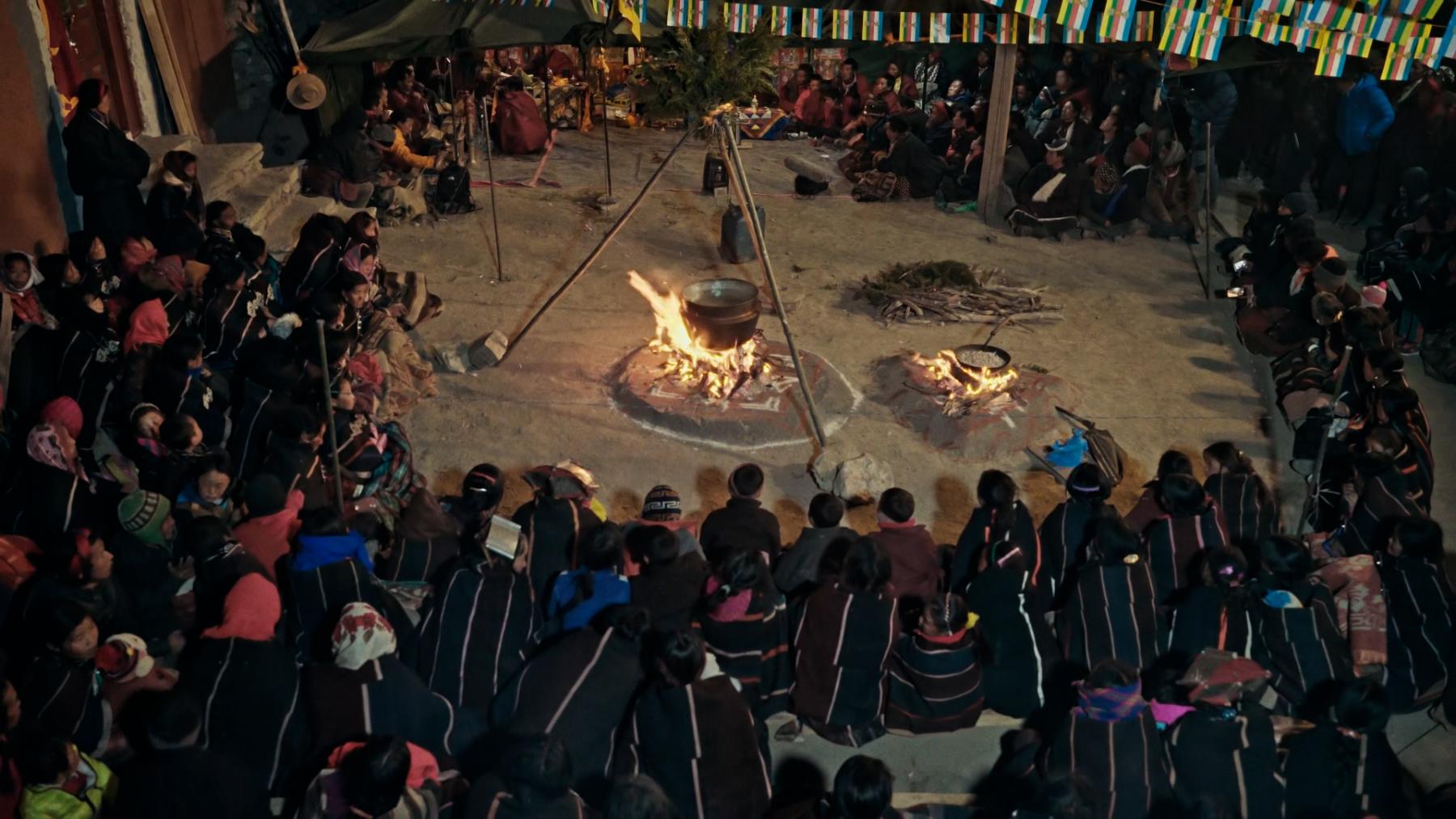
In Queens, Tseten reunites with Chimi and her husband—the couple he met at Lubra. They have both migrated here for a better life. On a cab ride with Chimi’s husband and another villager, the conversation about why people come to America resurfaces. The main reason remains the quest to earn a good livelihood, which is difficult in Nepal. They say everyone wants to go back and that the desire to return home is always there.
While the Bön village at Lubra might be at the crossroads of disappearing, Bön as a culture is thriving all over the world—including in New York, where a Bön Centre has been established. Craig quotes in her book, “...it is estimated that about a quarter of the nine to ten thousand culturally Tibetan people from Mustang District live in New York.” The desire for a shared culture and the longing for home pulls them here.
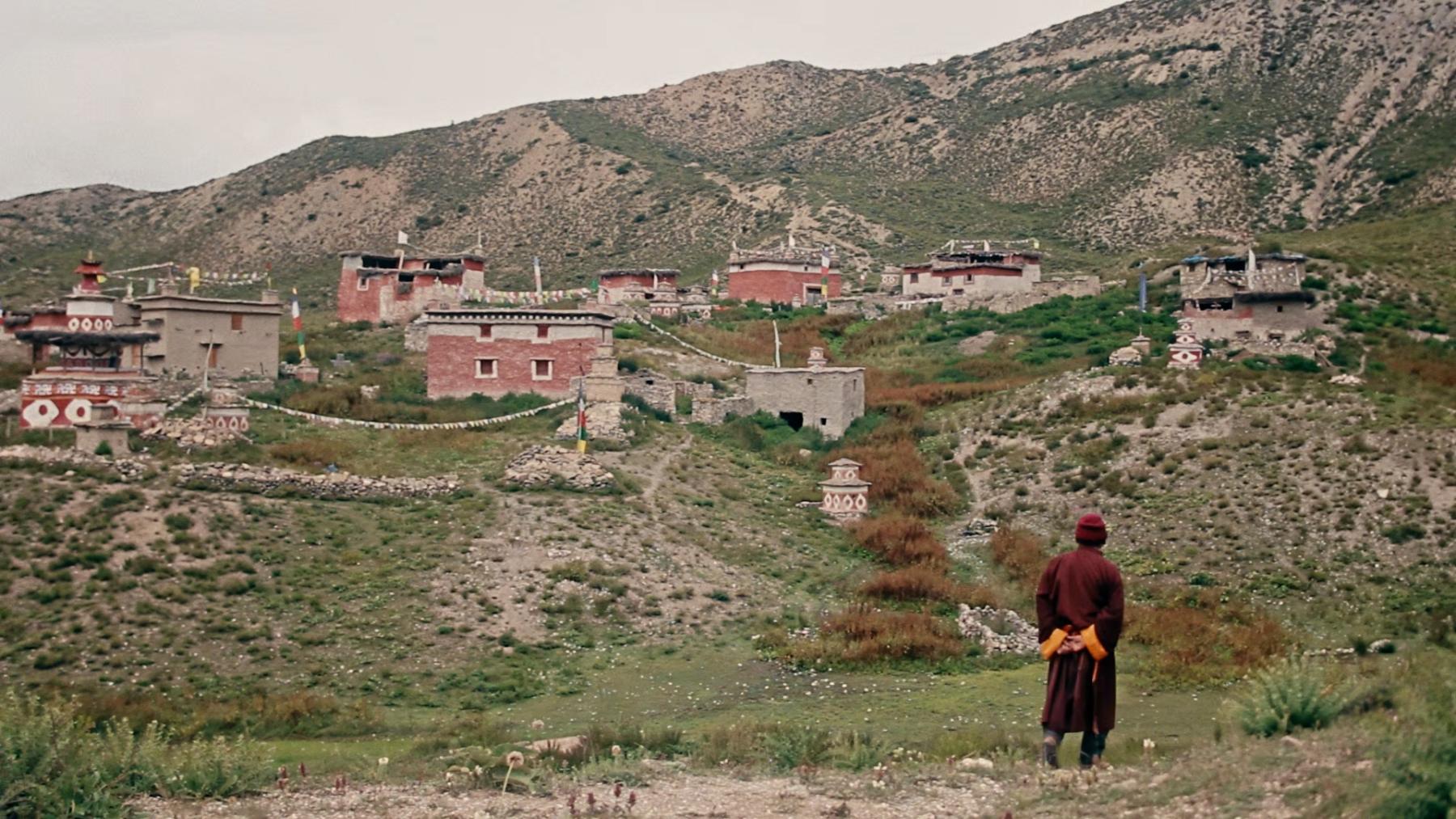
The scene cuts from the statue of the Buddha glittering through a glass pane in New York to Lama Tsultrim’s room as he looks towards his son’s portrait. There is silence and uncertainty. “Lubra was once a famous place,” Lama Tsultrim says. He then points to the changing times as he shares about the debris the river brought. The accelerated speed of modernisation, globalisation and climate change has cracked open these Himalayan communities. The people here are now caught between choosing a better life elsewhere and yearning for their roots and homes.
In the final frame, Lama Tsultrim walks as the screen fades to black. “Where to go, where to live?” Perhaps his son has a point in not returning, he thinks. We are left to wonder what will become of cultures, traditions and identities as the world around us continues to spin at a never-before-seen speed. Will new mechanisms emerge to replace the old or will the old find a way to survive through the cracks? While the exact answers are unknown, a woman from Dri that Tseten meets echoes a universal truth—“We do not go anywhere; we are stuck here. We do not know. Wherever we go, we all die.”
To learn more about Mustang, read Alfa M. Shakya’s essay on Kishor Kayastha’s panoramic photographs and Mila T. Samdub’s two-part essay on his grandfather Lhamo Tsering’s personal archive documenting Tibetan resistance.
To learn more about films screened at this year’s KPFF, read Ishtayaq Rasool’s reflections on Mohamad M. Wali’s Searching for Grandpa (2025).
To learn more about the previous edition of the KPFF, watch Vishal George’s conversation with Thomas Sideris on the film Gas Stations or The Pigeons of Lahore (2024), Sahil Kureshi’s reflections on Sanjiv Shah’s Hun, Hunshi, Hunshilal (1992) as well as Kshiraja’s conversation with Sara Saini on her film In the Wake of Remembering (2024) and her essay on Nishtha Jain’s Farming the Revolution (2024).
All stills from Kesang Tseten’s The Lama’s Son (2025). Credits: Shyam Karki, Bishnu Kalpit and Khemi Tsewang. Images courtesy of the director.