

Bad Education: Pressures of Childhood in Abbas Kiarostami’s Homework
The first part of this essay explored the context of Abbas Kiarostami’s early documentary Homework (1989), created under the aegis of Kanoon—a progressive cultural institution founded in the 1960s during the period of the last Shah of Iran, Mohammad Reza Pahlavi’s modernisation reforms, and where Kiarostami spent two decades developing his filmmaking style. The essay also discussed Homework’s acknowledgement of the filmic apparatus, a Kiarostami trademark, which in this film serves as a friendly rather than only a documentary presence for its young subjects.
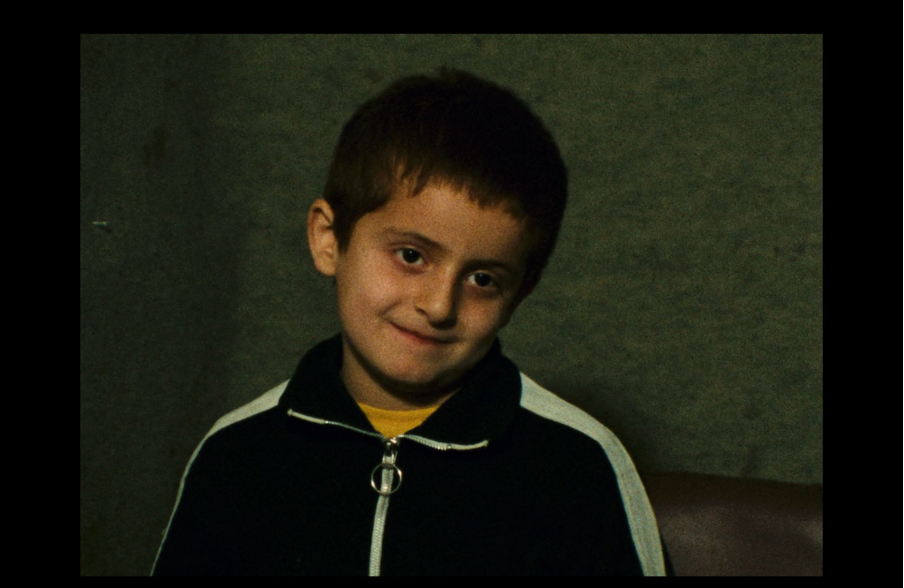
In Homework, Kiarostami’s questions to his young interviewees are variations on a few themes—why they have not done their homework; who at home helps them with it; whether and which cartoons they prefer; and if they know the difference between encouragement and punishment. The encouragement/ punishment binary is at the heart of the film’s interview segment—the responses, halting and abashed though they may be, speak volumes about a fear-based authoritarian system that destroys more than it nurtures. They also lend a powerful emotional charge to a film that had set out to be a dispassionate inquiry into the workings of the school system in post-revolutionary Iran.
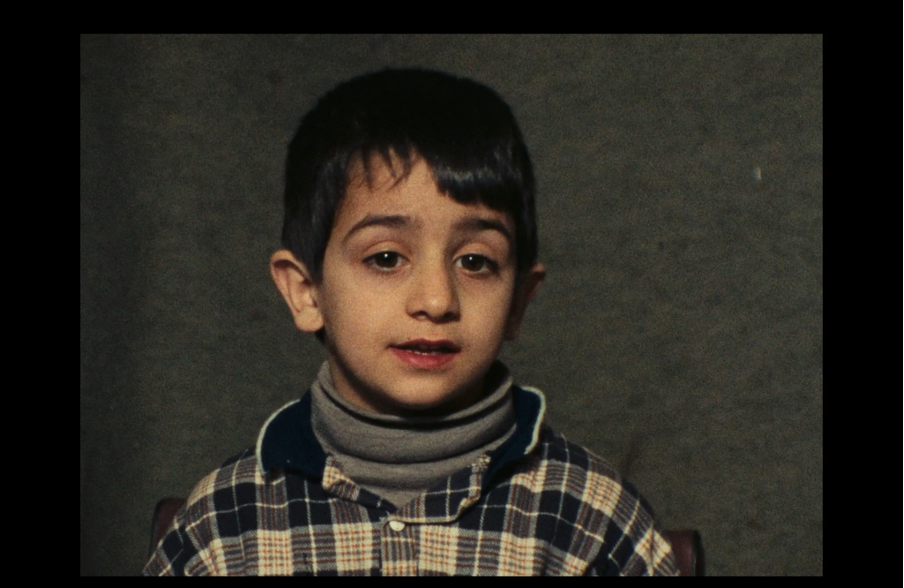
In the film, there is a child who does not know what reward to ask his parents for if he scores full marks; his inability to decide betrays the fact that he has probably never been offered a reward before. On the other hand, all the boys know what punishment is—the belt recurring as a frequent instrument of discipline used at home. Their shy, often shame-filled responses provide a peek into their home lives: social visits and fights that frequently disrupt study, parents who cannot read or write, and unkind older siblings who can provide support but either punish or refuse to help. Most complain about too much homework, and yet, having visibly internalised adult moralisation around television watching, they claim to prefer homework over cartoons.
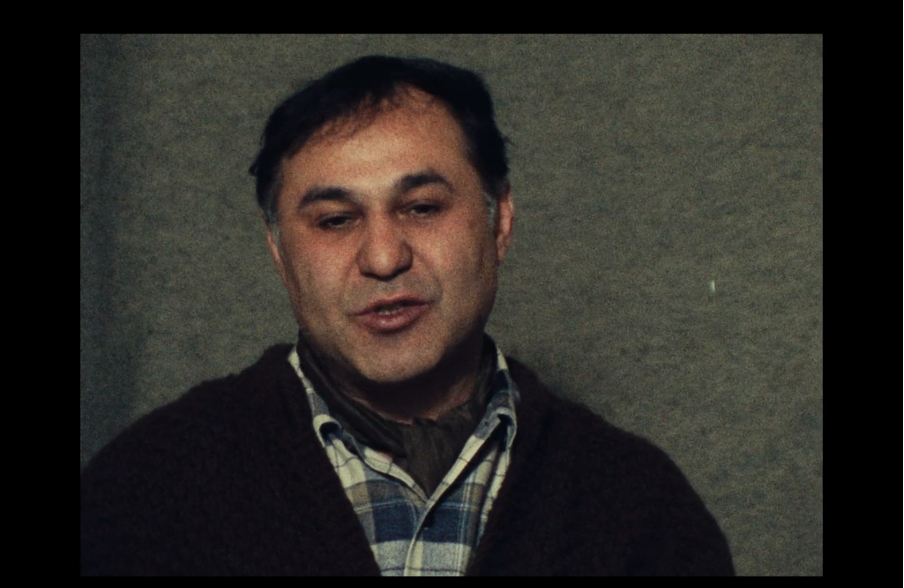
The film is expectedly filled with children, and the only adult voices that are allowed to exist in it—including Kiarostami’s—are the ones that insist on the need to shift the blame and responsibility from the children to the adults in charge of them. Kiarostami is the first to suggest this shift of onus—even though seemingly detached and concerned only with an incisive line of questioning—by telling a child who has assumed that he is bad at taking down dictation that since he is otherwise a good student, it is perhaps the teacher who dictates poorly. This suggestion turns into an all-out denunciation of the culture of overwork enforced both at homes and within school systems, along with the misalignment in methods between teachers and parents—a boy’s father expounds on the importance of creativity and originality rather than the present emphasis on rote learning and reproduction, which, he fears, will produce a passive, vulnerable, unhappy and fragile generation, unfit for the twenty-first-century.
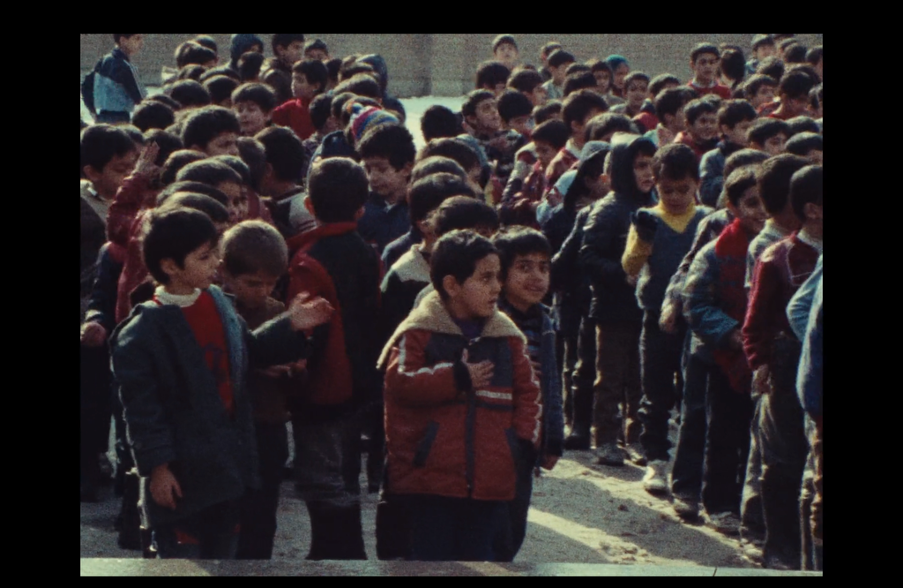
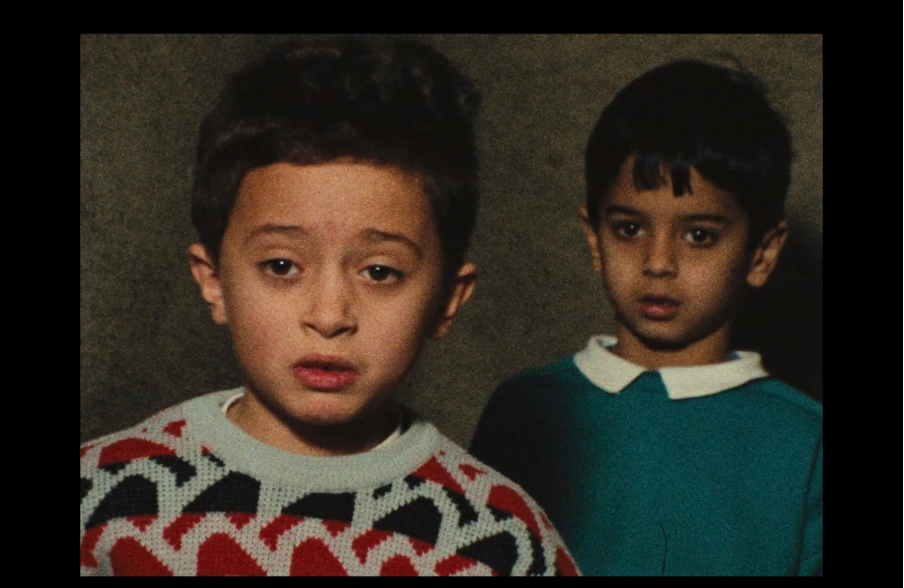
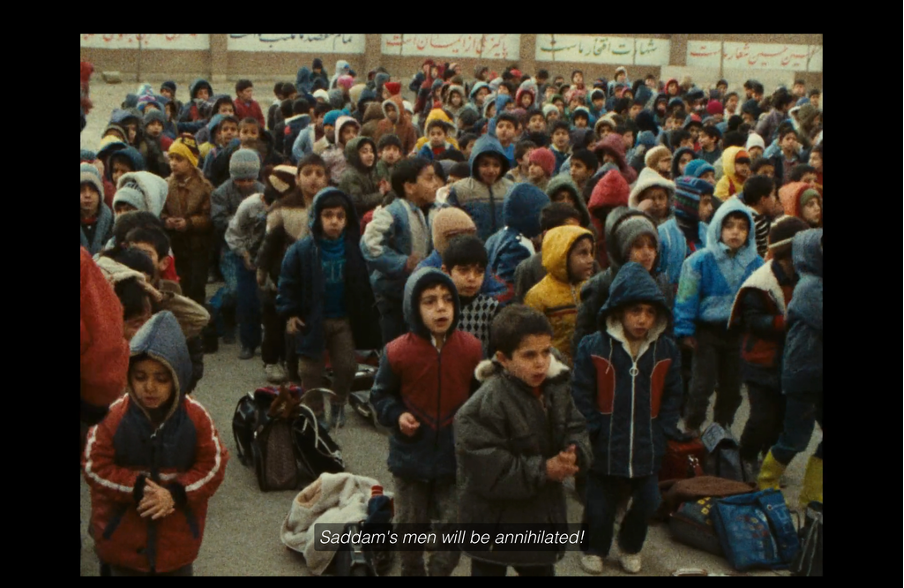
Almost as an example of the harm that can be done by an oppressive educational system bent on punitive measures, religious indoctrination and compliance, the film gives us two scenarios—the first, collective, and the second, up-close and individual. At a religious assembly in the school yard where the boys are urged to sing a hymn in praise of Saint Fatima, the children appear listless, inattentive and uncoordinated—the resulting cacophony prompting the director to switch off the sound. In the second, we see Majid, a restless, anguished and nervous boy, who is fearful and distrusting of authority and constantly needs his friend Molai by his side. That the film freezes on the boy’s face as the friend stands guard behind him is perhaps the director’s way of ensuring that the image leaves an impact—that Majid persists in our minds the way the effects of an insidious system will no doubt linger inside him.
Homework was made towards the end of the Iran-Iraq war (1980–88), and the film shows how the rhetoric of war and state propaganda have encroached upon the children’s worlds within the home and the school. During morning assembly, they are encouraged to shout out slogans such as “the warriors will win” and “Saddam’s men will be annihilated,” along with chants in praise of Ali ibn Abi Talib—the first Shia Imam, cousin and son-in-law of the prophet Muhammad, and a foundational model for the post-revolutionary government’s ideology. During the interviews, a child says that he wants to become a pilot when he grows up so that he can kill Saddam. Another, who has just watched a film about Iranians and Iraqis fighting on a boat, makes a profound observation that the front and the home are not that different after all: fights occur in both spaces.
It is almost impossible to not see the documentary and the school with its anxious children as a microcosm of Iranian society under the repressive Islamic Republic. Demonstrations in Iran—over inflation and unemployment in 2017; over increases in fuel prices in 2019; over compulsory hijab and sparked by the death of Mahsa Amini in police custody, for the Women, Life, Freedom Movement in 2022; and against economic policies in December 2025—have all rapidly escalated into nationwide movements demanding the overthrow of the regime. “Down with this dictatorship,” “death to the dictator” and “our enemy is right here” have been prominent slogans chanted by protesters. They have long seethed with the sense that it is their own government that is responsible for economic hardship, systematic human rights violations, executions and brutal suppression of dissent.
There is a sense of this betrayal in Kiarostami’s film—of being mistreated and let down by the very people who were meant to protect and support. The children of Homework also evoke the nostalgia for a lost childhood, and for the longing of freedom and stability that many Iranians have long desired.
In case you missed the first part of the essay, read it here.
To learn more about artists exploring post-revolutionary Iran, read Shefali Khan’s essay on Marjane Satrapi and Persepolis, her graphic novel (2000–03) and its 2007 animated film adaptation and two-part essay on the censorship and political turmoil shaping Iranian cinema, Santasil Mallik’s reflections on Sreemoyee Singh’s And, Towards Happy Alleys (2023) and Upasana Das’ essay on Hooria Ahmadi’s Tehran Youth Diaries.
All images are stills from Homework (1989) by Abbas Kiarostami. Images copyright with the filmmaker.