
Video Afterlives, After Video: The Critical Media of CAMP
A city symphony melds the urban landscape with resistance etched in the poetry of lok shayars (people’s poets), activating the working-class neighbourhoods of Parel and Worli in Mumbai through CCTV movement. Interwoven footage—from cell phone to hand-held video camera—captures the everyday on wooden boats in the unbounded waters of ports across Western India, Eastern Africa and the Persian Gulf. A dense cable of wires runs through the narrow bylanes and into the main streets of Khirkee in New Delhi. Across three bodies of work, CAMP, a collaborative studio based out of Mumbai, mediates video’s transience and traversal through transformative publics.
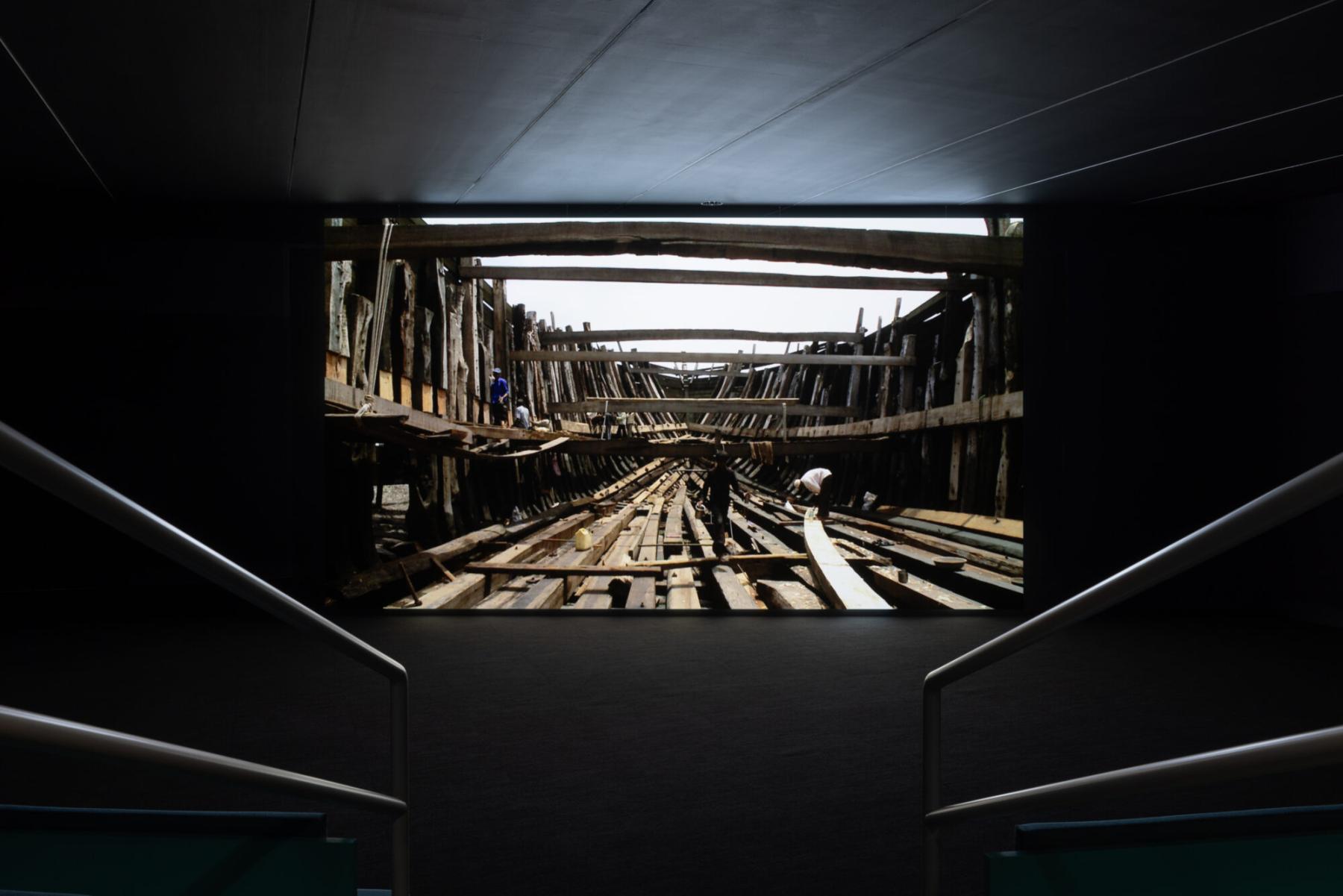
From Gulf to Gulf to Gulf (2013. Standard-and high-definition digital camcorder video, VHS C-tape, and cell phone video [variable formats], all transferred to HD video, 83 min.)
Video After Video: The Critical Media of CAMP, on view at the Museum of Modern Art (MoMA) until 20 July 2025, features three major works that consider video’s transformations of the public sphere over more than a decade. Stuart Comer and Rattanmol Singh Johal open their curatorial note by gesturing toward the “poetry of the system of images,” or the ability to grasp the rapidly changing nature of image proliferation and production today. CAMP’s practice is a mobilisation of widely available technologies that engender new possibilities for creating collaborative media, cinema and agency through images. The three works on display in the exhibition—Khirkeeyaan (2006), From Gulf to Gulf to Gulf (2013) and Bombay Tilts Down (2022)—encompass the studio’s expansive engagement with video, as it breaks open the established notions of subjectivity, whether through the inversion of the filmed subject as the filmmaker or through the collective, diffused sense of image-making that permeates through all three works.
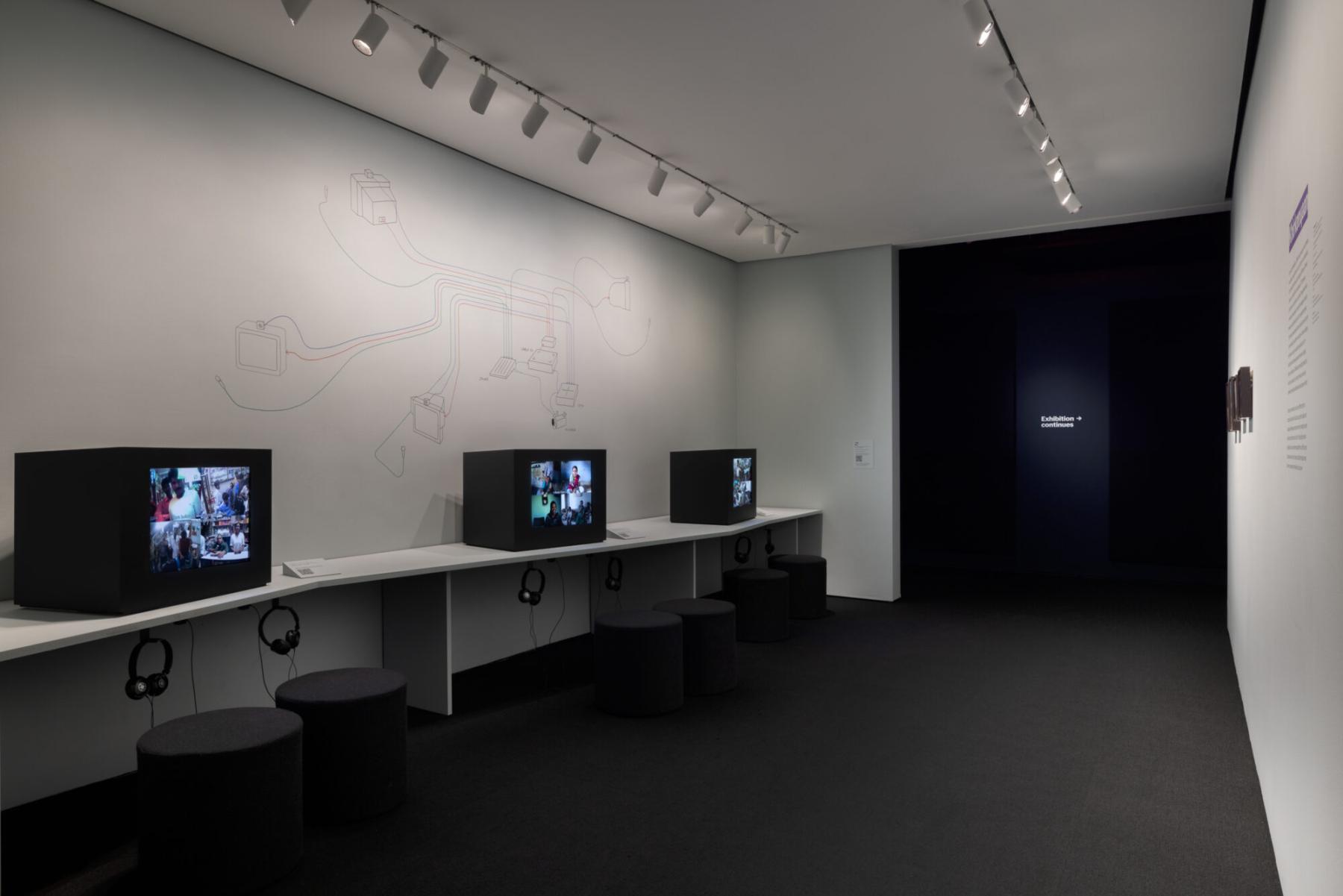
Khirkeeyaan (2006. Six standard-definition videos [colour, sound; varying durations], wall drawing and four inkjet prints.)
Initiated by Ashok Sukumaran, Shaina Anand and Sanjay Bhangar in 2007, CAMP is based in Chuim Village, Mumbai. The trio organise gatherings and screenings in their rooftop cinema, collaborate on various projects and write around media practices. Their interests span a commitment to independent digital commons, with projects such as pad.ma and indiancine.ma that make independent video accessible online, as well as a film annotation companion platform, phantas.ma. Drawing from the database of Indian cinema, phantas.ma combines excerpts and fragments from both pad.ma and indiancine.ma as well as other companion platforms. It invites viewers to comment and engage in a discussion around the videos released every week. While the dimensions of open access as a promise of democratic space and the potentialities of creating images by video may already seem out of line with the current debates around image generation, CAMP’s practice can be read as a testament to their collaborative spirit and of annotation as a site of political valence that counters the monopoly of images in the age of disinformation to create infrastructures beyond the institutional.
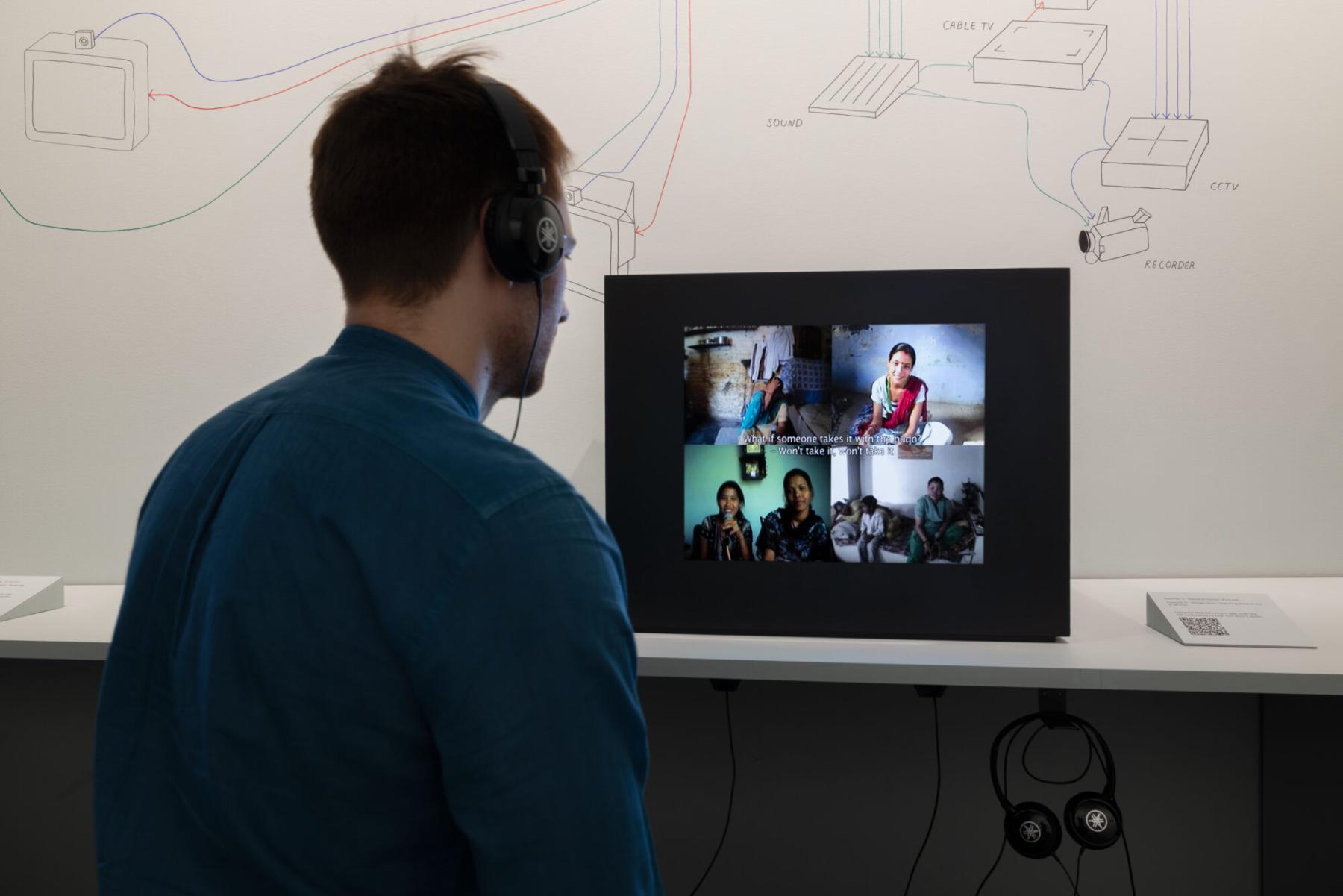
Khirkeeyaan (2006. Six standard-definition videos [colour, sound; varying durations], wall drawing and four inkjet prints.)
Khirkeeyaan (2006) creates a collaborative communications and televisual network in the Khirkee and Khirkee Extension areas in Delhi, using CATV (Cable Access TV) and CCTV (Closed Circuit TV) technologies to create a neighbourhood communication system. The televisual image becomes a site of tension as the viewing subject looks onto itself on the television set as several interconnected codes of interaction come into play. Divided into seven episodes, Khirkeeyaan moves from the oft-visited neighbourhood shop fronts to specific ethnic households within the neighbourhood, experimenting with the possibilities of opening up the borders between the creation of images and the subjects in its stead. The mesh of cables that create the local system amongst the TV sets in Khirkee is evident in the illustration that accompanies the installation view of the work, bringing together the wires of the camera, television and microphones that create the web of communication. Each episode is then displayed in recreated television boxes, complete with four inkjet photographs from behind-the-scenes of the experiment, likely to supplement the experiential force of the experiment that might be lost in the effort to recreate the television screens. The promise that Khirkeeyaan purports is the activation of the televisual image to break open the vanguards of caste, class and religious lines that collapse within the bylanes, like the mesh of low-hanging cables still present across Khirkee today.
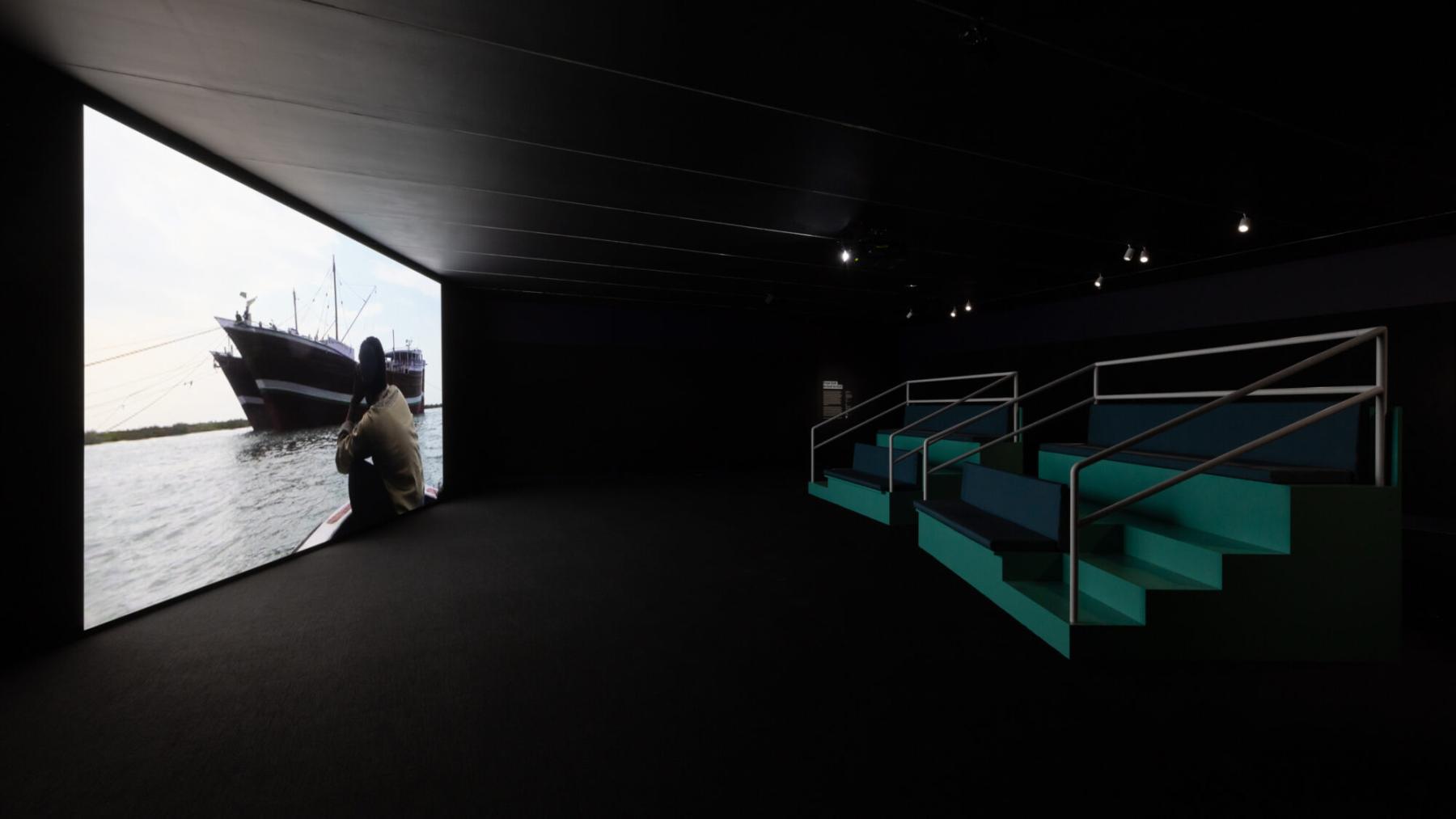
From Gulf to Gulf to Gulf (2013. Standard-and high-definition digital camcorder video, VHS C-tape, and cell phone video [variable formats], all transferred to HD video, 83 min.)
From Gulf to Gulf to Gulf was made in collaboration with sailors from the Gulf of Kutch and other seafarers from Pakistan and Iran embarking on wooden ships that transport a variety of physical goods from ports located from Western India to the Persian Gulf and Eastern Africa. The only feature-length film in the show, it stitches together single-shot footage made primarily by the sailors on cell phones and video camcorders, in dialogue with CAMP. A myriad of video technologies coalesce, almost as a parallel to the borderless seas and their limitless possibilities that the protagonist-image makers of the film occupy. Filmed over four years and traversing the Gulfs of Kutch and Aden and the Persian Sea, From Gulf to Gulf to Gulf intercuts footage of varying formats which occupy visual and aural landscapes, including popular film songs and tales of sailing across the waters. The unbounded waters coalesce also into the sharing of footage, both shot by the sailors and accessed through Bluetooth file sharing, thus breaking open the possibilities of making visible images of the everyday camaraderie on the boats.
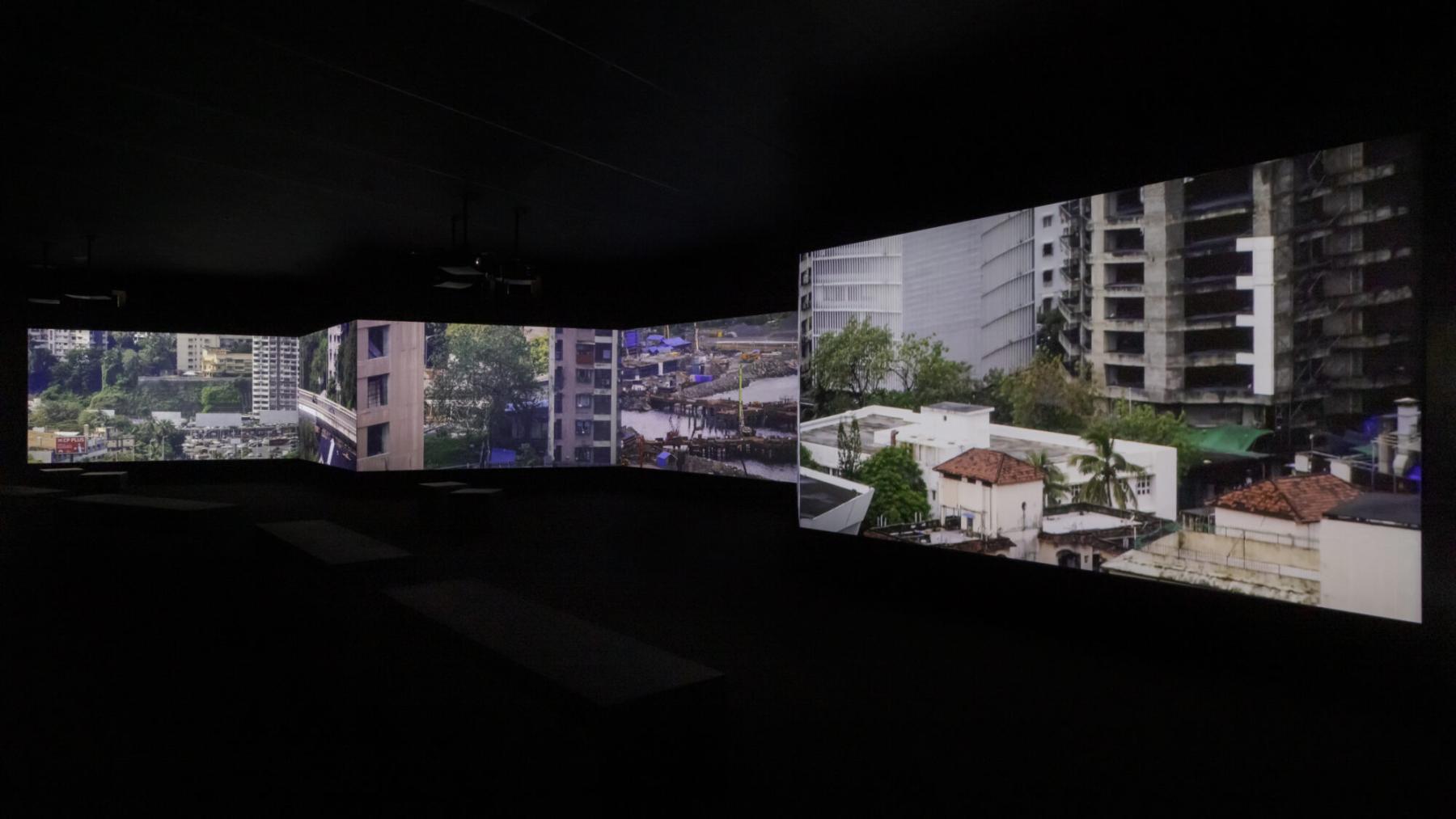
Bombay Tilts Down (2022. Seven channel 4K CCTV video and two alternating soundtracks, 13:14 min.)
The limits of filmed landscape and the contours of a city are stretched to their extreme in the seven-channel video installation Bombay Tilts Down. An expanded view projected on accordion screens, the film documents Mumbai’s landscapes, from sea to the finite onlooker that is curiously aware of the zoomed-in camera—CAMP used a single 4K CCTV camera mounted on the rooftop of a thirty-five storey building in South Mumbai. Accompanied by a revolving soundtrack composed by BamBoy (Tushar Adhav), the film cycles through haunting ambient music mixed with sounds of the city, from thunderous storms to factory sounds and searing Dalit and Leftist revolutionary literary and poetic legacies, with excerpts from dialogues and performances by KA Abbas, Sambhaji Bhagat and Narayan Surve among others. The film demands that the viewer stay with the images and return to the different details and experiences captured on the screen, for a single visit or location within the installation does not suffice. The revolving soundtrack itself suggests the expanded environment that the film reconstructs, one where the physical and cultural landscapes of Mumbai devolve into its multiplicities, not just of perspective but the very geographies of the city that is engendered deeply by uneven developments—from the high rises to the secured gated locales of the upwardly mobile to the shanties that remain, a call to the working-class histories of textile-mill workers.
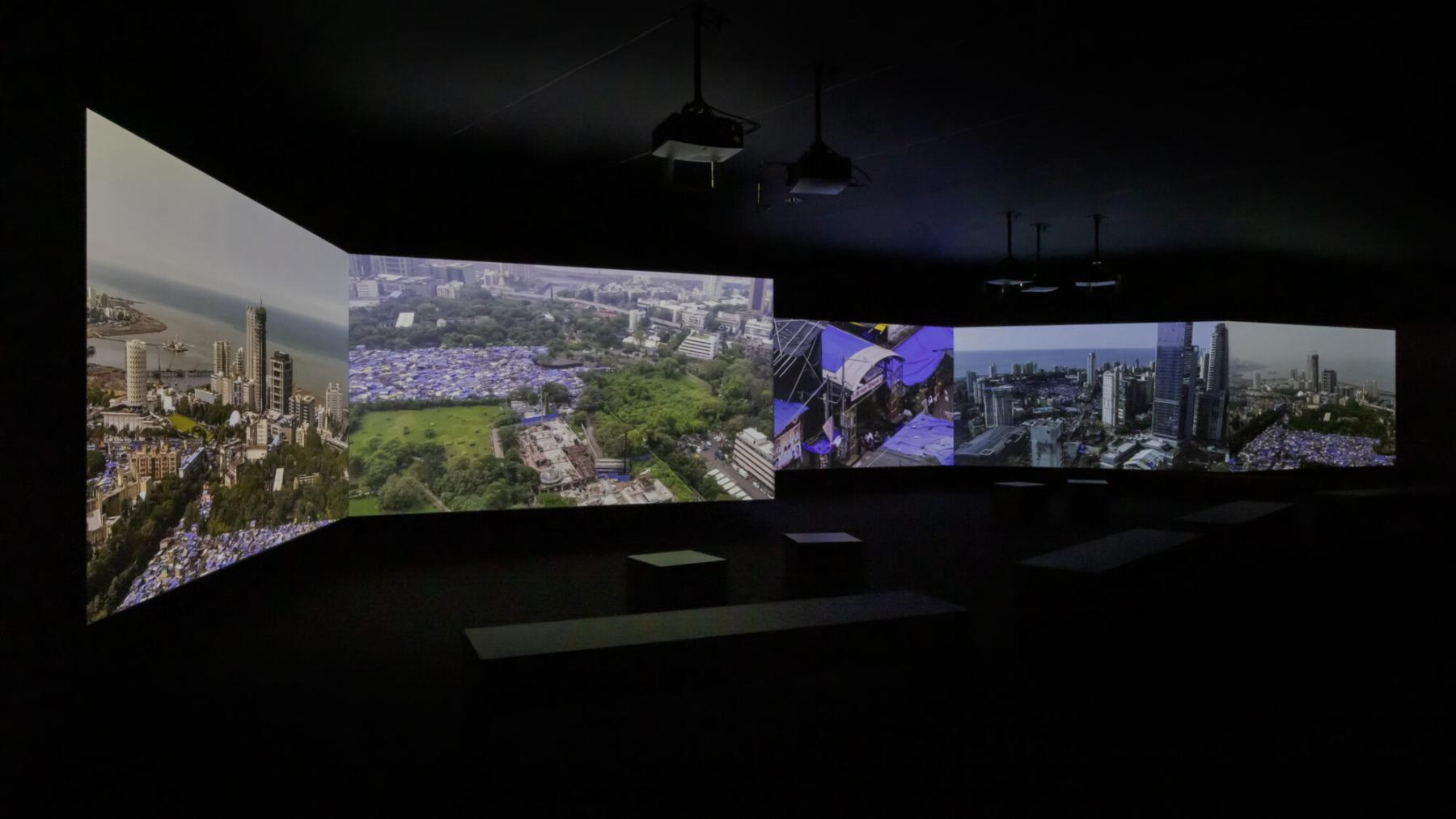
Bombay Tilts Down (2022, Seven channel 4K CCTV video and two alternating soundtracks, 13:14 min.)
Video After Video places CAMP’s discursive media practice on the cusp of its transformative potential, spanning over two decades of work encapsulated in three, albeit extensive, works. The digital sites that CAMP are involved in remain active and critical to think alongside the works made visible within the expanded and gallery display in the Edward Steichen Galleries at MoMA. Accompanied by a recently organised “Study Day” with a panel that looked at media, film, law and visual art, the show beckons the support for new work and research around CAMP’s practice. A decade removed from their earliest works, Video After Video signals a return to some of the early questions that CAMP fostered at the turn of the rapidly proliferated visual public sphere, realised perhaps only through video. In their three-act performance, CAMP’s recursive turn to the author/producer/subject/object spins beyond the binary into a call for collective action.
All images are installation views from Video After Video: The Critical Media of CAMP. Photographs by Johnathan Dorando. Images courtesy of The Museum of Modern Art.
To learn more about CAMP, read Shweta Kishore’s two-part conversation with Shaina Anand and Ashok Sukumaran, Ankan Kazi’s essays on Bombay Tilts Down (2022) and The Neighbour Before the House (2009–11), as well as Gulmehar Dhillon’s reflections on A Photogenetic Line (2019).