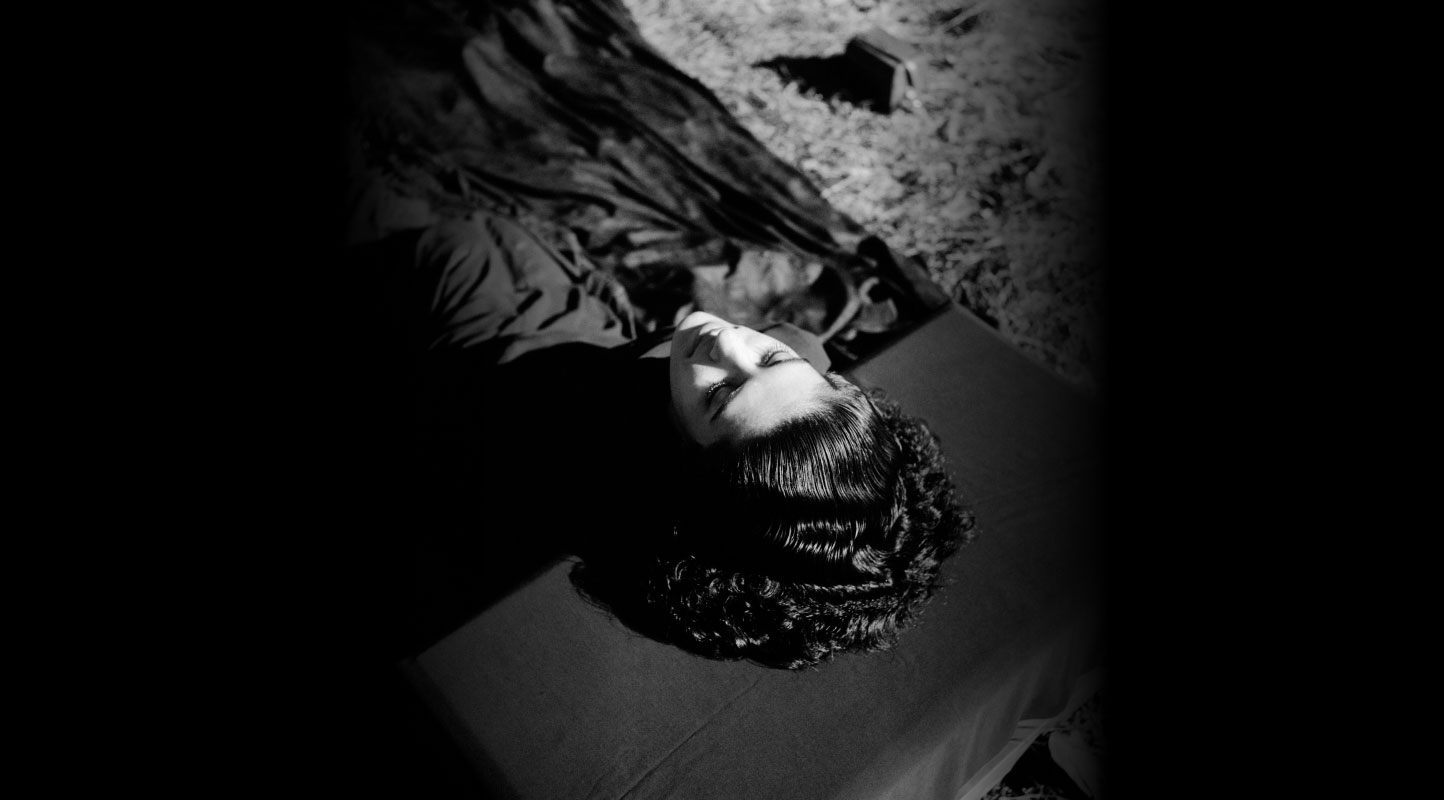


Following through Pedagogy: Surveying Printmakers in Eastern India
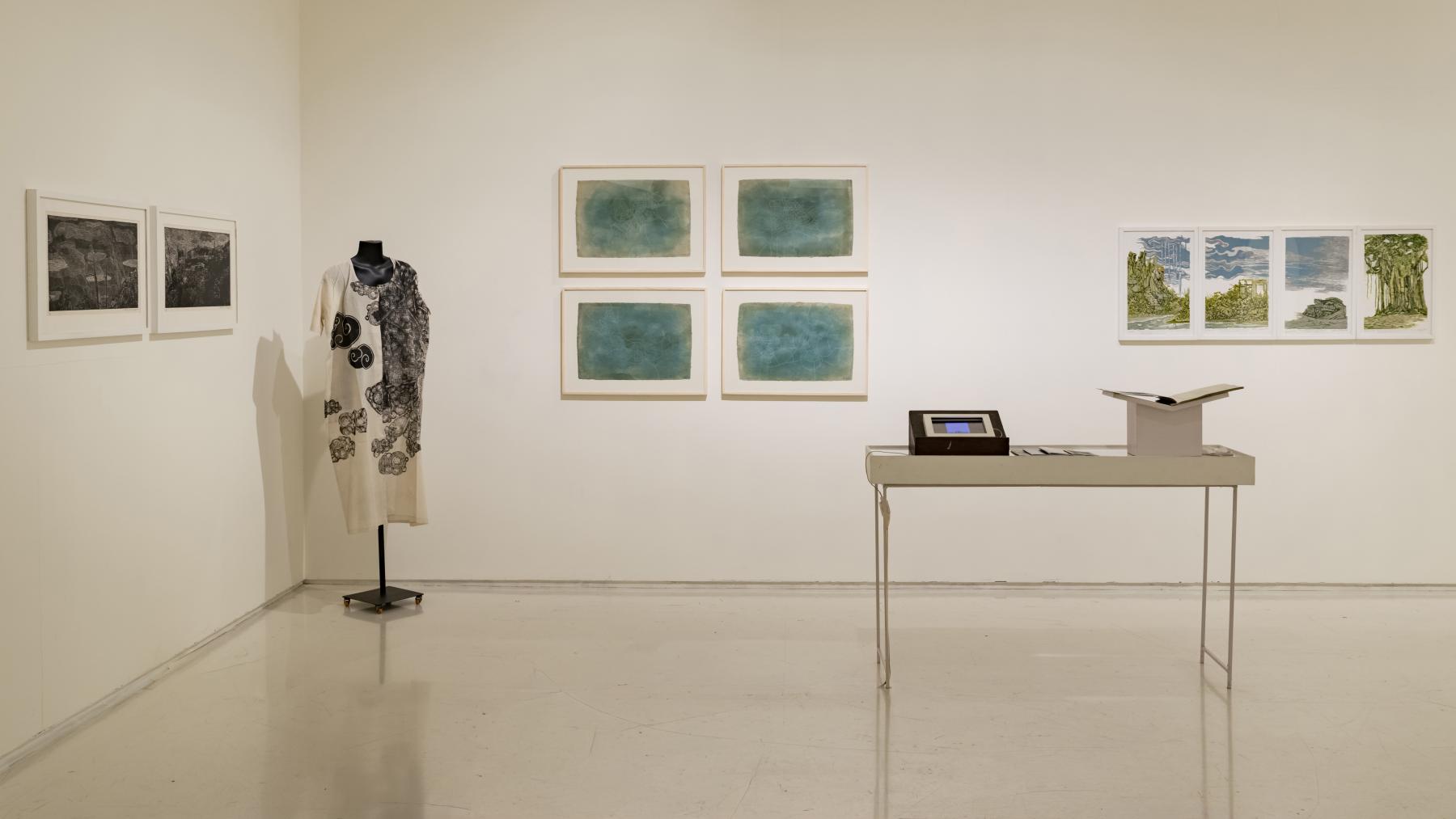
In this continuing discussion on PURVAI: Printmaking in Eastern India – Pedagogy to Practice, curated by Paula Sengupta and on view at Emami Art from 9 January to 7 March 2026, we look at how the exhibition traced pedagogical frameworks within art school structures, while highlighting individual artistic practices and their areas of preoccupation as they took experimentations with the medium forward.
Placed beside Temsuyanger Longkumer’s work, a continued depletion of natural cover came through Sangita Maity’s series of postcard-sized copper plates rendered in aquatint. These referenced a dark shadow looming coldly over the sparse plateaus of the Chota Nagpur region, which are mined for their iron ore, depicted here as erosions in the smooth ground, eating away deeply into the copper plate, their pathways tinted a natural blue using the degenerative process of patina.
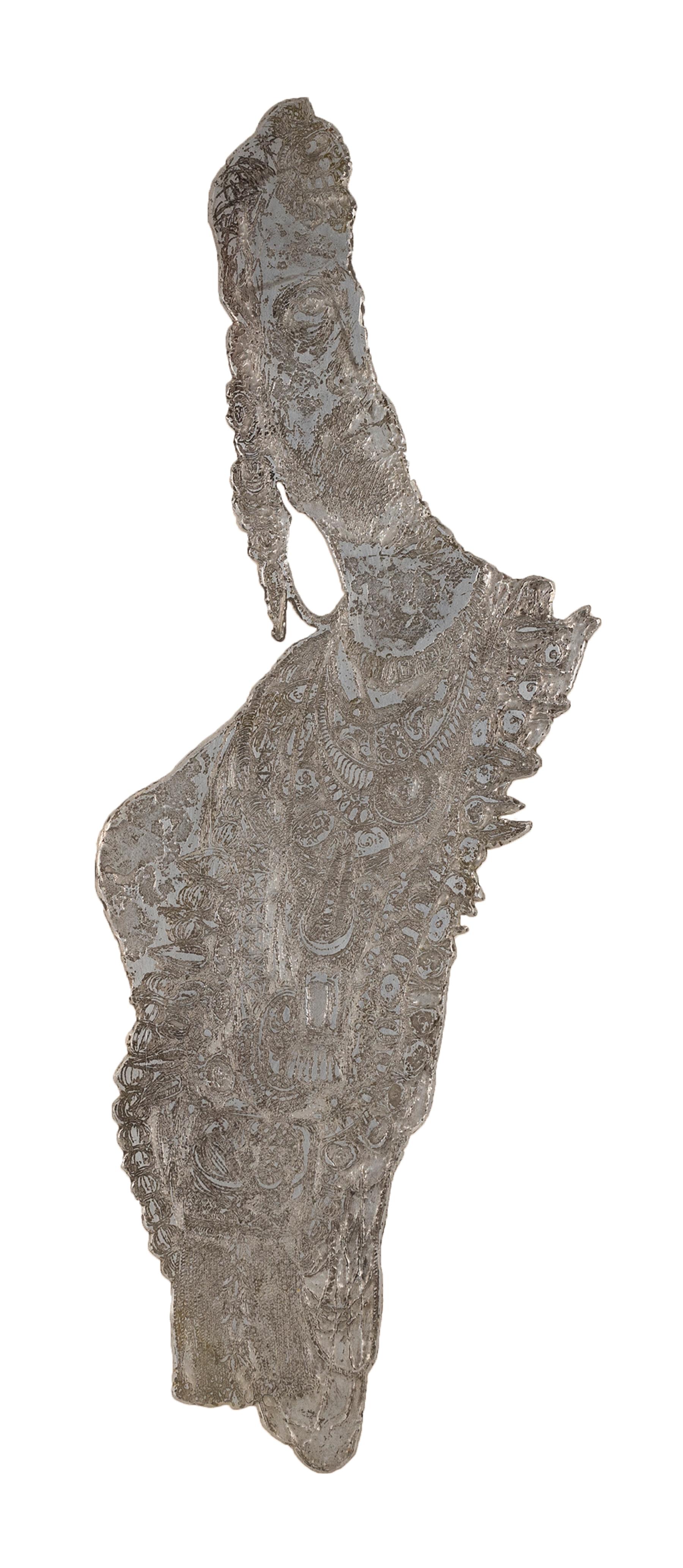
Placed on the opposite wall and acting as a complete foil to Maity’s work was Santiniketan artist Raja Boro’s layered woodcuts. Reflective of his deeply intricate printmaking practice, Darjeeling pines stand unmoving—half-hidden by the winter mist—in the silent valley against a blue evening sky wanly lit with the rays of the setting sun. Acting as another counterpoint was Deepanwita Das’ resin-cast etching prints, which hold together architectural forms of Kolkata, particularly windows and doorways. Layering their hollow interiors with the flora she collects or generating pressings between resin layers, her motifs seem like chapter ornaments illustrated by Satyajit Ray in later editions of Abanindranath Tagore’s Raj Kahini (1905), which compiled narratives by the latter around a dynasty of warriors in Mewar, now in Rajasthan. Ray’s illustrations were miniature-inspired, featuring women peeking out of arched windows with intricate jaali (latticed screen) work, whereas Das highlights semicircular colonial windows interspersed within the city.
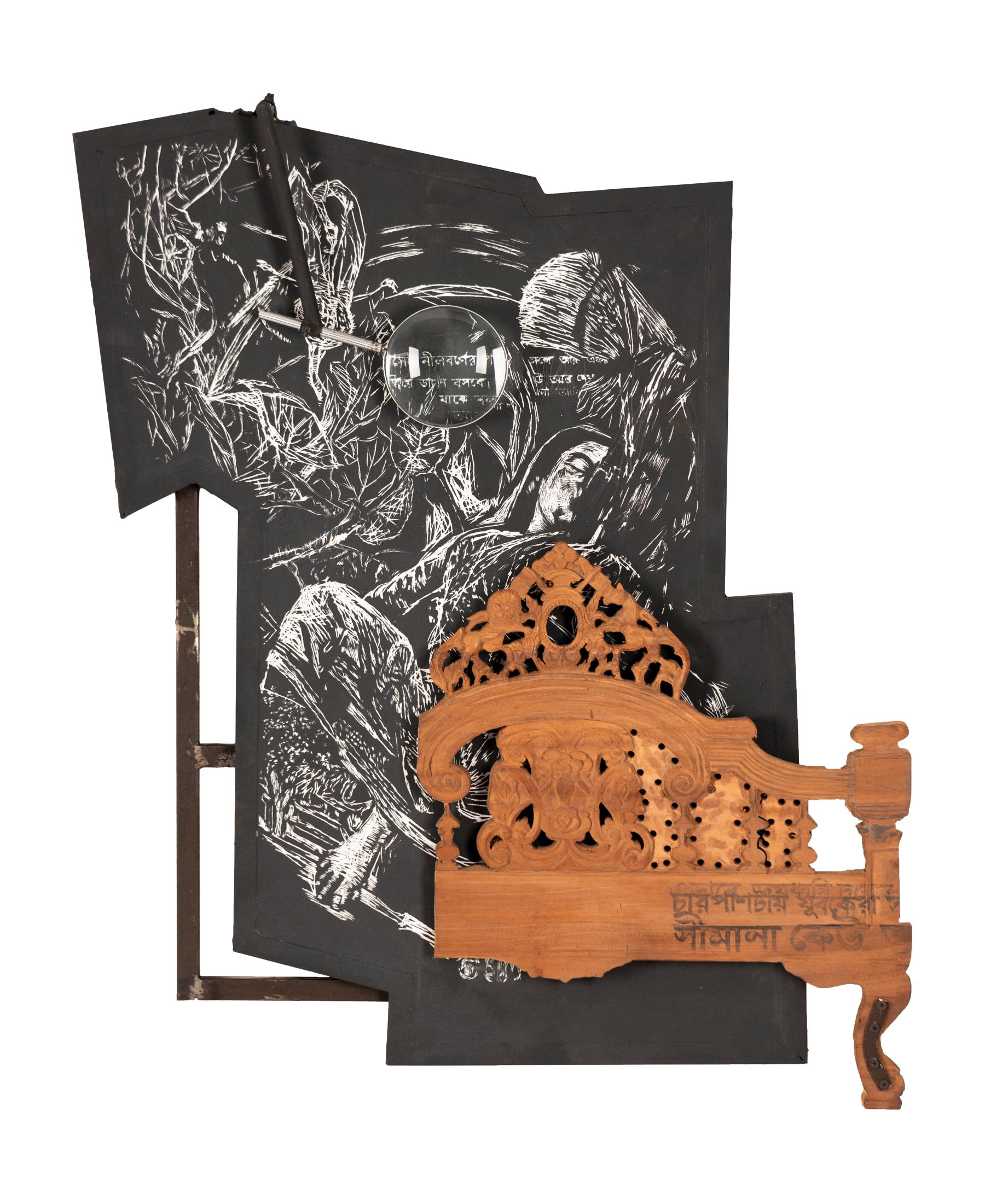
Atanu Bakshi’s mapping takes a bird’s-eye view which excavates into a landscape that seems to collapse in on itself to reveal the serpentine maw of coal mines in his hometown of Birbhum. This has become a node for many artists from Visva-Bharati to criticise and comment on oppression within the mine. So close to ground level in the exhibition, the intricacies of Bakshi's map reveal thin geometric shapes atop the hollow maze-like phantom house plans in a government blueprint, perhaps implying what Mohammed Bazar block will look like if the ongoing Deocha-Pachami coal mining plan in Birbhum is completely realised, resulting in the mass displacement of Indigenous people.
Compared to Bakshi, Priyanka Lodh’s work engages in a mapping that exists in oral narratives and memories, where she looks at the city of Siwan in Bihar, across three segregated panels like a graphic narrative. The work hauntingly unearths memories of the first civil disobedience movement in Champaran by the indigo planters who were forced to grow indigo on their land by the British, and highlights how significant Siwan’s Rajendra Prasad was in connecting the farmers to Gandhi, who had called for the movement. Lodh seems to insinuate that figureheads of the movement come alive through terracotta sculptures within the Parivartan campus, Takshila, by artist Sukhdev Rathod drawing from folk narratives.
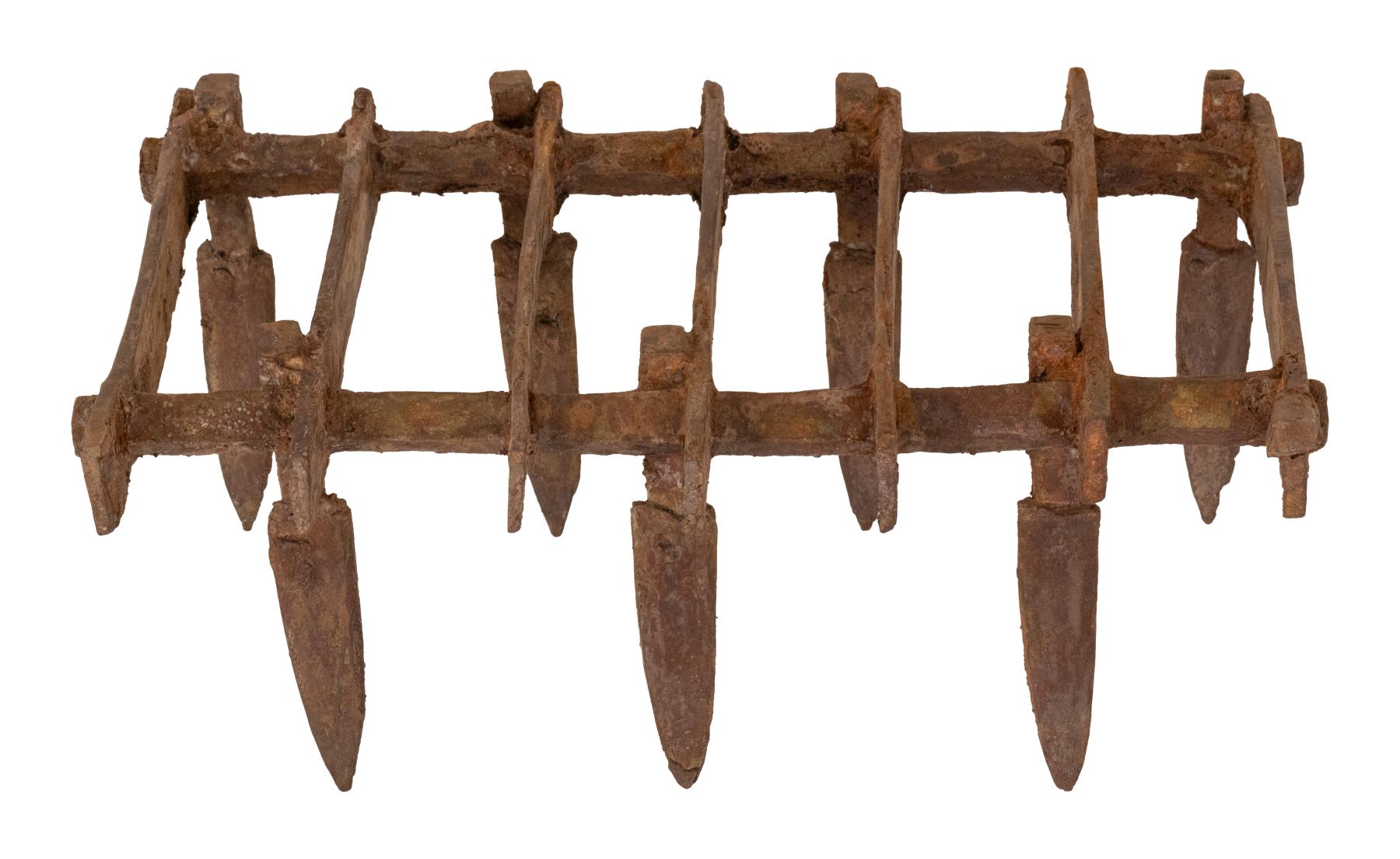
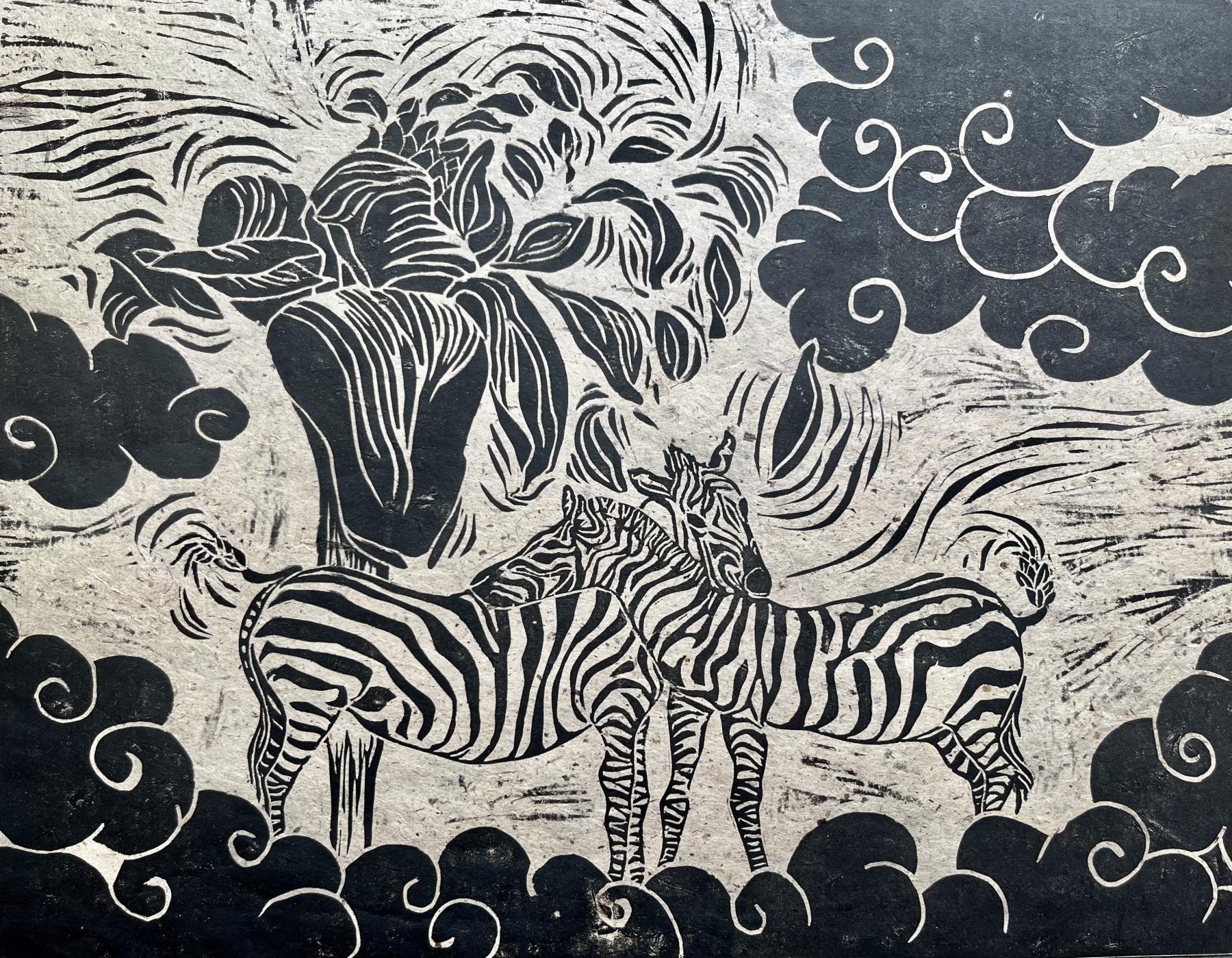
A series of jagged tools line the walls through the works of various artists including Maity’s miniature knife-like ploughing instrument used by the miners when they were engaged in agriculture, or Pathik Sahoo’s sculptural fish-trapping device, or the linearity of form in Khokan Giri’s study of the physicality of fishing materials that are rendered into lines which transform into throbbing internal forms within the body. Wounds emerged in sharp red lines encircling a child in Sweety Chakma’s series of portraits and Sheshadev Sagria’s labouring body morphing forcefully to reflect the restricting wooden frame which cuts through it, with wooden textures, akin to Longkumer’s, etched across the body. Jayeeta Chatterjee’s woodcut print on a saree depicts a smiling woman sawing off her own feet, dressed in the informal garb of happy domesticity—sewn into its infernal fabric through Chatterjee’s Nakshi Kantha embroidery, unable to detangle.
.jpg)
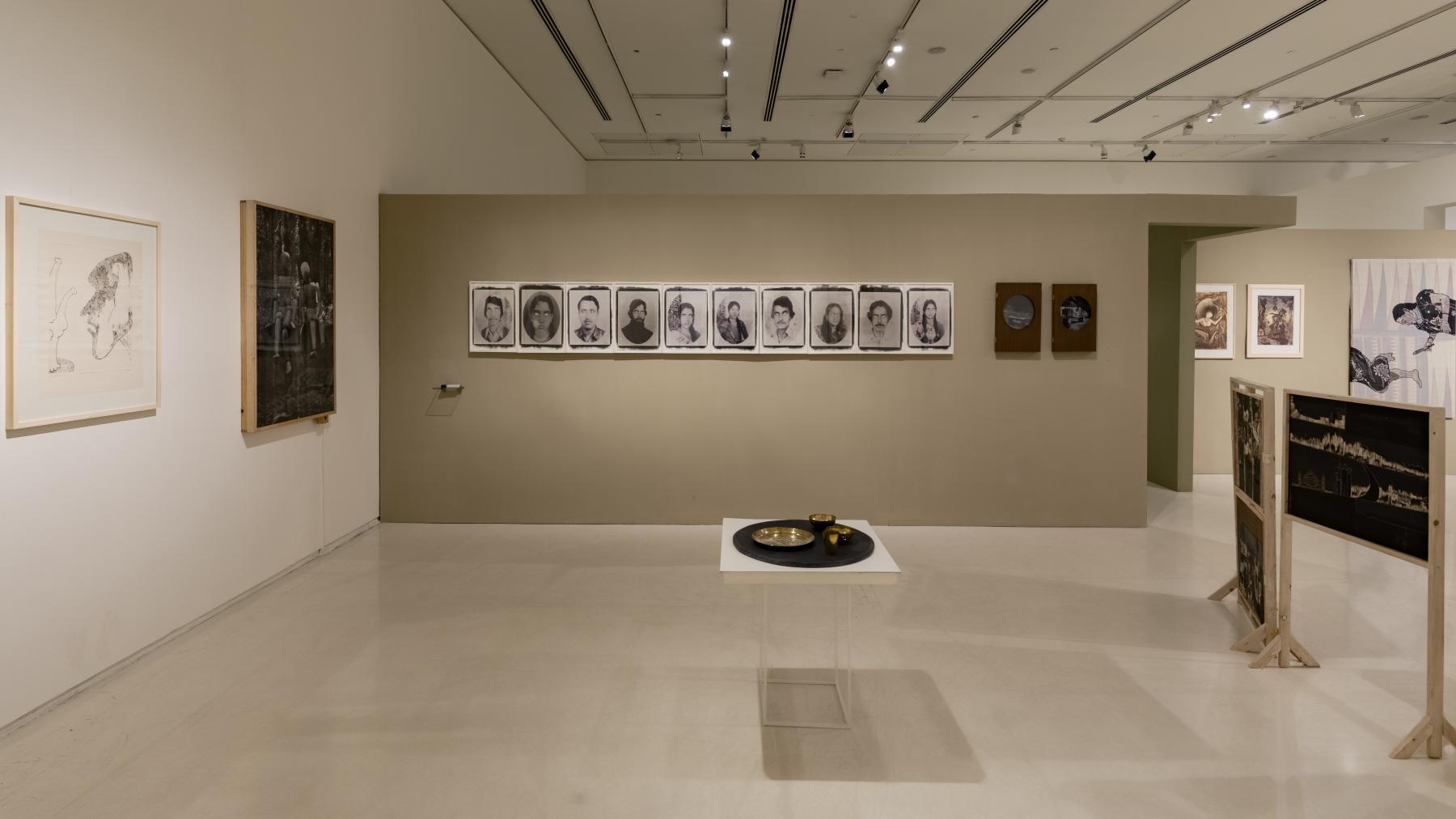
A fragile presence marked Sengupta’s own lightbox linocuts, with phantoms of a Royal Bengal Tiger and Chitals materialising through tiny pinpricks of light against the Sundarbans—bound to vanish upon an electrical change or a shift in stasis affecting their precarious existence. Like Sengupta, printmaker and professor at the printmaking department in Kala Bhavana, Arpan Mukherjee presented his earlier work, “The Proposal,” where he subverts the gaze in his collection of old studio photographs used for prospective marriage requests—making them come alive by animating their eyes with tiny bindis, as the subjects look at each other surreptitiously, as if violating a social contract. Here, he left crafting the gaze to the viewers, with a marker. The weekend before the exhibition’s closure saw the portraits become a delightfully familiar exercise in doodling and the creation of a new personhood.
Like Mukherjee, many senior artists in the exhibition have been pedagogues in art institutions, like Raj Kumar Mazinder at Assam (Central) University in Silchar; Debnath Basu and Jayanta Naskar at Rabindra Bharati University (RBU); Sengupta herself or Pinaki Barua at RBU and Visva-Bharati respectively. A series of linocuts of pedagogues from the Bengal School and beyond who have shaped learning at Visva-Bharati cover up a wall. While the show makes a note of these institutional affiliations in Bengal, which can be traced to student works, it does not quite follow through on how printmaking pedagogy is being taken up through these works beyond the fact that they are continuing with the medium. Such a task is admittedly challenging in an exhibition that highlights emerging artists; curating their works thematically loses grasp of the larger pedagogical narrative.
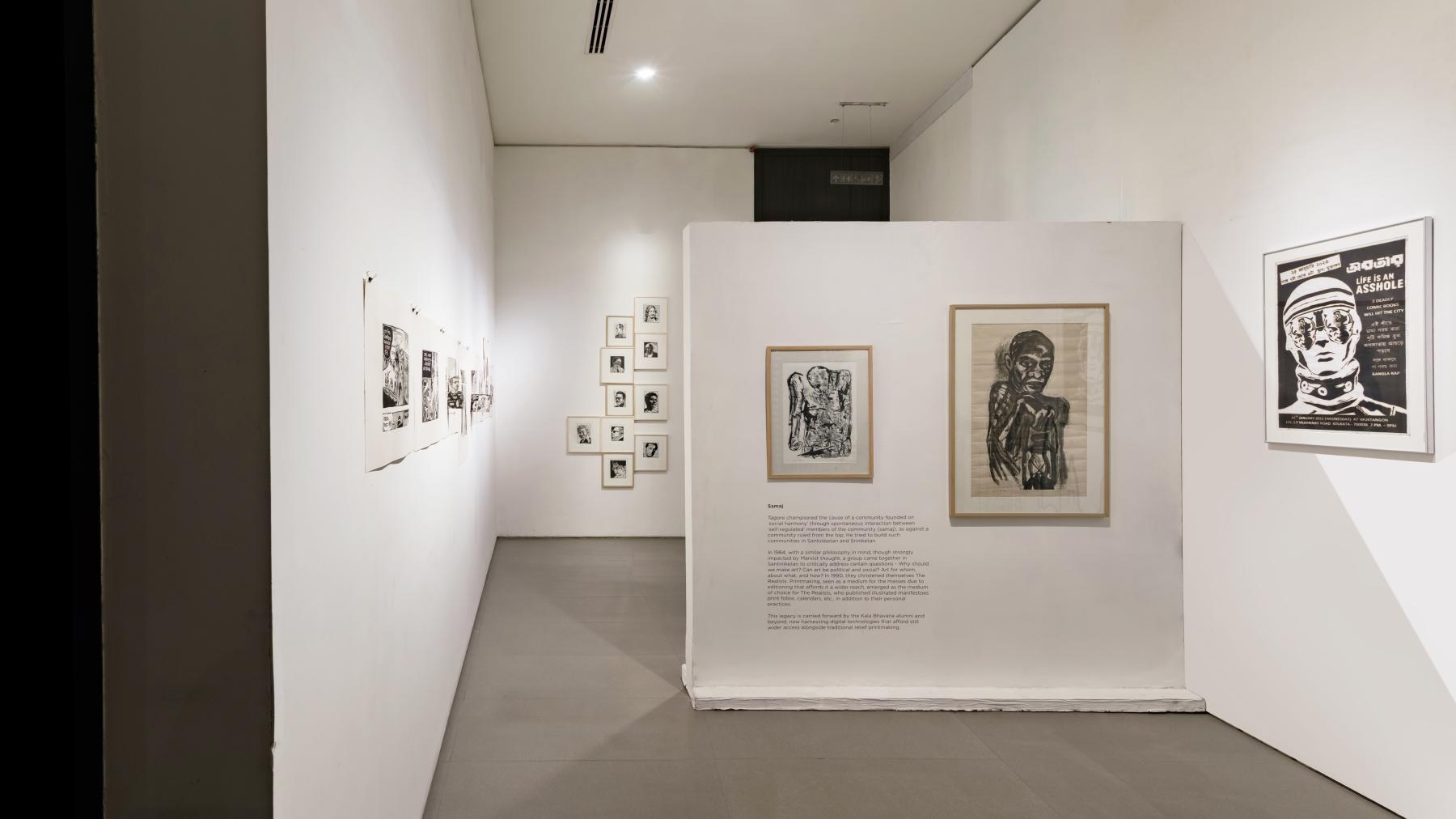
The survey exhibition also followed how a group of pedagogues like Mukherjee and the late Suranjan Basu established their own forms of printmaking. The latter was renowned for his dark borders encircling thin fragmented lino lines to form gaunt figures, reminiscent of Chittaprosad’s deliberate lines chiselled out on wood a few decades previously. Juxtaposed with that were printmaker Sambaran Das’ lithographic promotional posters for a book release, emulating the cheap newsprint of minuscule Mandrake comics in the daily paper—some of which Sujay Mukherjee cut and isolated on the opposite wall, which took on new meaning. Perhaps following through on pedagogy is not how Sengupta visualised the show after all, choosing to focus more on the independent shape that emerging voices have been taking over the past few years.
In case you missed the first part, read it here.
To learn more about printmakers, read Adreeta Chakraborty’s conversation with Anupam Sud and Aparna Chivukula’s conversation with Jayeeta Chatterjee.
To learn more about Arpan Mukherjee, read Radhika Saraf’s two-part essay on the exhibition Impermanence (2025) and Anisha Baid’s curated album from the artist’s series Fairer People = Beautiful People = Powerful People (2013–18) and also watch a walkthrough of the exhibition Unsealed Chamber: The Transient Image (2021) with its scenographer Sukanya Baskar.
All images are courtesy of the respective artists and Emami Art.