

Curating Films in Times of Genocide: Ethical and Historical Questions
On 25 October 2025, the Cinematheque Beirut team presented a film programme at the Arab Image Foundation as part of the “Violence and Visuality” conference organised by the Media Studies programme at the American University of Beirut (AUB). The screening was followed by a discussion with Anaïs Farine and Karim Naamani (Cinematheque Beirut), moderated by Mariz Kelada and Sara Mourad from AUB Media Studies. In the first part of the conversation, Farine, Naamani, Kelada and Mourad discussed the various, and sometimes paradoxical, meanings and effects of capturing violence on screen. In the second part, they shared their vision, roles and process at Cinematheque Beirut. In the following final part of the conversation, they share the ways in which the films in the programme speak to one another.
Sara Mourad: There is always a possibility of reenacting violence by representing it, of turning it into a spectacle for consumption and us into voyeurs rather than witnesses. I am thinking here, for instance, of some of the monuments created in the aftermath of the Beirut Port Explosion, which were discussed by one of the conference panellists, where art flattens violence into kitsch. Or the violence inherent in the spatial technologies of visualisation used during the genocide in Gaza, which were discussed by Sam Rabiyah in his presentation, wherein technologies developed and intended for military use reproduce through their mechanical, distant gaze, the dehumanisation of Palestinians. How do you see the films navigating this delicate, tricky line in rendering violence in visual terms?
Anaïs Farine (AF): I have been part of the organisational team of a Palestinian film festival in France for the past ten years. In the past two years, we have been reflecting a lot on this question. The programme of the last editions was an attempt to “look otherwise” (as suggested by Thy Phu during the conference) and to stop the endless repetition of violent images. I absolutely agree with the urgency of the question and I think that Oraib Toukan’s work in general is central to answering it. However, I would like to “use” the question to comment on something that drew my attention a few days before the start of the conference. I suddenly realised that something was not present in the final programme and that this aspect was also absent from the films that we exchanged during the curation process: the violence of the revolutionaries. I asked myself: where is Frantz Fanon in this programme? Where is the question of the use of violence to free people? Is this fear of reenacting violence by representing it preventing us from curating a programme that reclaims violence as a tool in a liberation process? I am thinking here about Third Cinema, films such as Now (1965) by Santiago Alvarez and films made by militant Palestinian filmmakers in the 1970s but I am also thinking about the sabotage proposed by filmmakers such as Kamal Aljafari and Philip Rizk, for example.
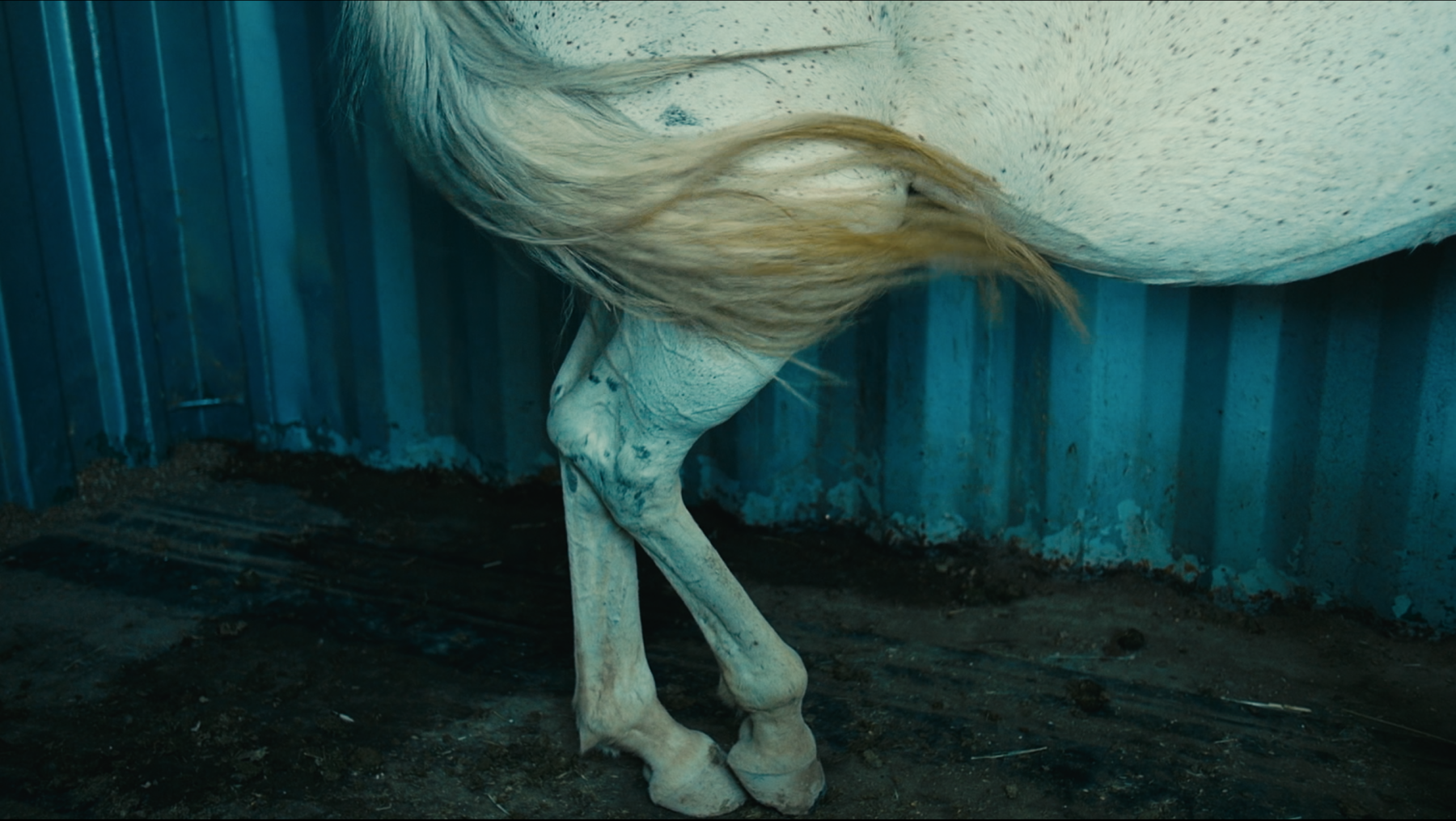
Karim Naamani (KN): It is quite surprising that we did not think to programme revolutionary films that deal with this sense of liberatory violence. I do not think I can begin to explain this sort of lack actually. I can, however, try to find a link between Mohamed Bourouissa’s Temps Mort (2009) and Toukan’s Offing, in how they deal with this idea of the “humane” image. I want to start with Offing first, because I think it is very difficult not to talk about it without thinking about Toukan’s two other films, Via Dolarosa (2021) and When Things Occur (2016). Both of these films seem to come at odds with each other with the regime of images that is being employed by Palestinians in regard to the representation of themselves and their liberation, particularly in reference to the humane image. The former film rejects this notion as it looks towards Hani Jawhariyyeh and the Palestine Film Unit (PFU), whilst the latter looks towards Palestinian journalists and their photographs and testimonies towards capturing the humane image in the face of violence enacted by the Israeli Defense Force (IDF). Toukan’s intervention on these images complicates their existence and muddies the water, so to speak, so much so that the first film literally references Glissant’s concept of opacity. By reading Offing within this sequence of films—a sort of trilogy of opaque images—it becomes clear that Toukan is pushing back against the humane image by rejecting the push to humanise Palestinians for the Western gaze. Why should we humanise ourselves to people who already do not see us as human?
There is a film that I adore called Do You Remember Sarajevo (2002). The film works as a long montage of personal archival footage gathered by people who lived through the Siege of Sarajevo and weaves between shots of armed militias fighting in the streets and underground parties held by residents. The stark difference in imagery is not meant to be jarring, but rather a representation of a lived reality under violence that resists the notion of victimisation by both the people that live through it and a Western gaze that seeks to victimise them too. Offing sits well within this trajectory and regime of images, that the images that we see are playful, mundane even. It is the everyday that we are accustomed to, and yet the testimony of Palestinian artist Salman Nawati is a constant reminder of the ongoing violence, even when it is not visible. You cannot hide from the violence of sound. You cannot close your ears in the same way you close your eyes; you cannot “look away.” Weaving the sound of violence with largely mundane images is a reminder of the precarity of living under violence, of how alienating it is and how the mundane itself becomes more precarious.
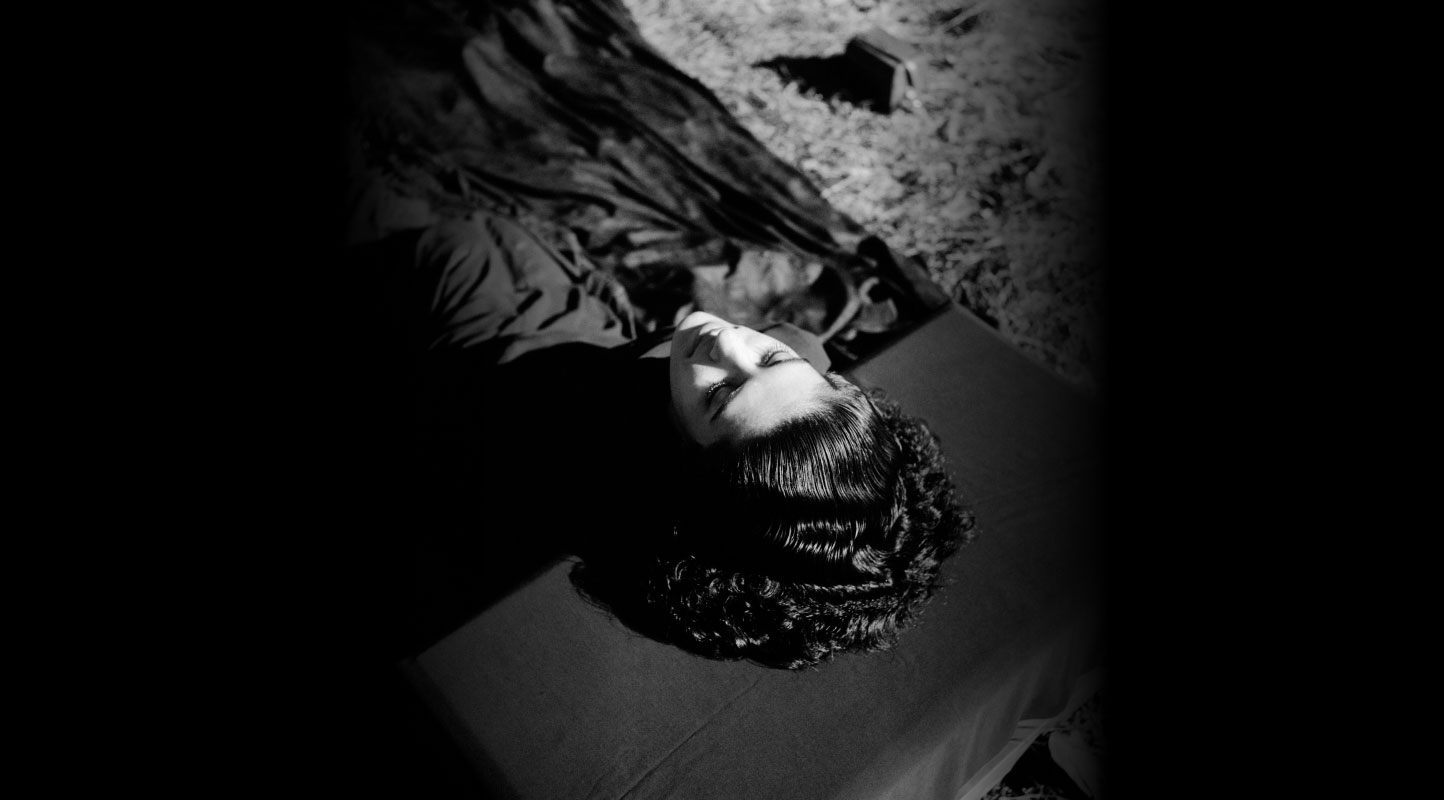
I feel like this is a great segue in part to Temps Mort, even though I still find it a hard film to think about. It very much deals with the same idea of the mundane image and resisting the victimising gaze, only now within the specificity of incarceration and the poor image. I find Temps Mort to be a very touch-starved image, constantly trying to grasp for a hand to reach out and touch it. In part the poor image facilitates this affect, but it is also the subjectivity of the film and what it is capturing, an outside that is both so close and so far. What keeps me with the film is when Al returns home for a brief period before returning to prison, and he recalls the experience as a dream, it does not feel real. Again, we are placed in the precarity of living under violence and how alienating it is.
Mariz Kelada: Each of these filmmakers has their own trajectory as artists, and no doubt each is situated in a certain geography and social political history. Yet, they are also part of transnational circuits of circulation, and we cannot deny the contentious institutional realities of contemporary art as a ‘global’ political economy. I am curious to know what are the traditions each of the films draw on, what are the genealogies of cinema or contemporary art they build on, if at all, or are working against?
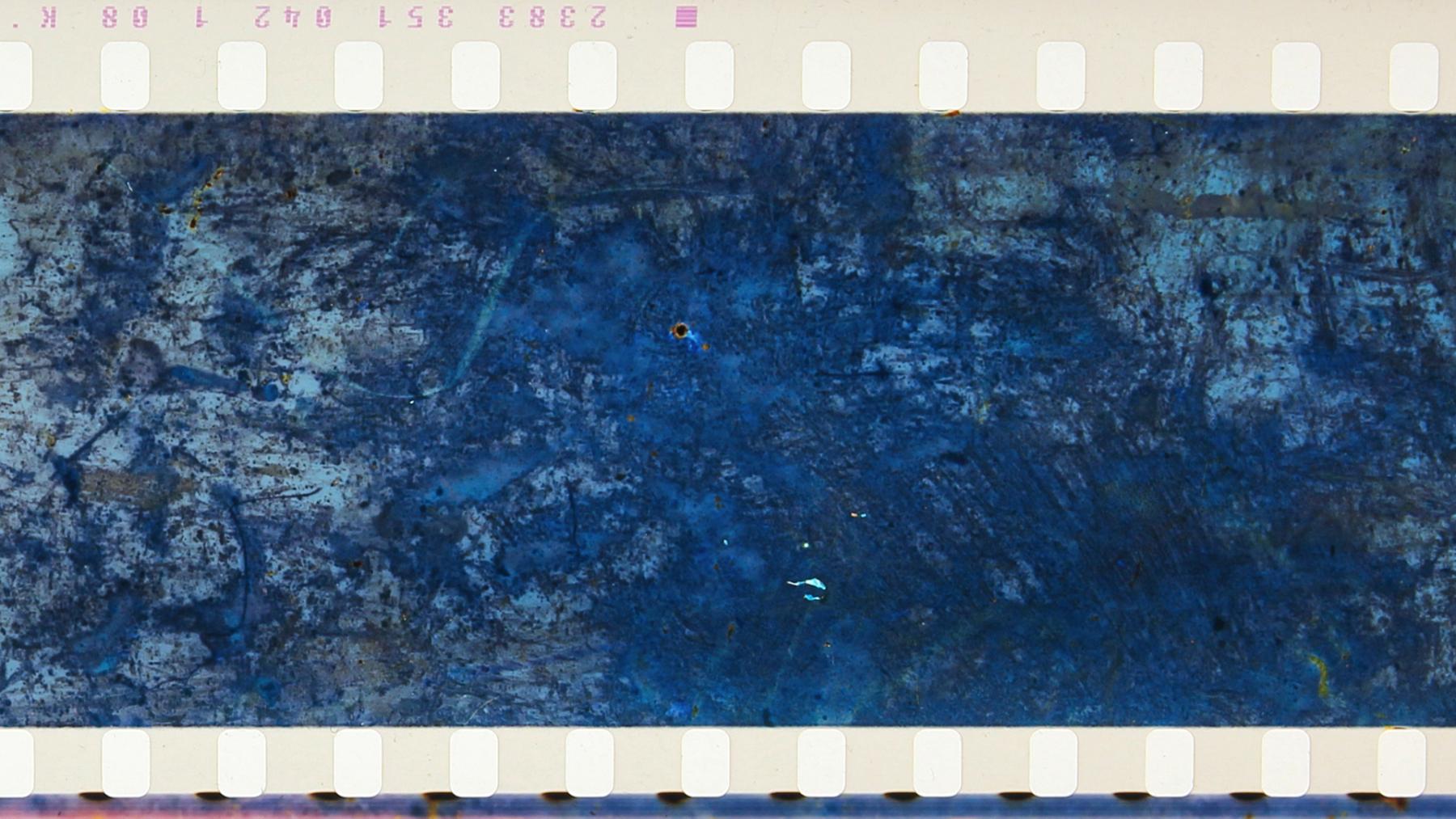
KN: I have already spoken somewhat about Toukan and Bourouissa’s films and how they speak to each other, and I want to veer back to the first film in the programme, sound of a million insects, light of a thousand stars (2014) by Tomonari Nishikawa. It is a very poignant short film on the materiality of film itself and ongoing ecological collapse and its consequences. The formal elements of the film remind me of early twentieth-century experimental films like Symphonie Diagonale (1923–24) by Viking Eggeling or Dots (1940) by Norman McLaren, experimentations in non-narrative filmmaking that are wholly abstract. There is a certain poeticism in the capture of violence when looking at those works and at sound of a million insects in comparison, as if the radioactive earth itself is intervening on film history as much as it is on a film strip. There is a certain difficulty, I believe, in making visible or representing the Anthropocene, given that it is an abstract concept that permeates into almost every facet of our lives. Seeing a translation of that in film without human intervention, the absolute removal of the human agent speaks both to the ontology of the camera as a machine but also to being a witness to the Anthropocene as it persists.
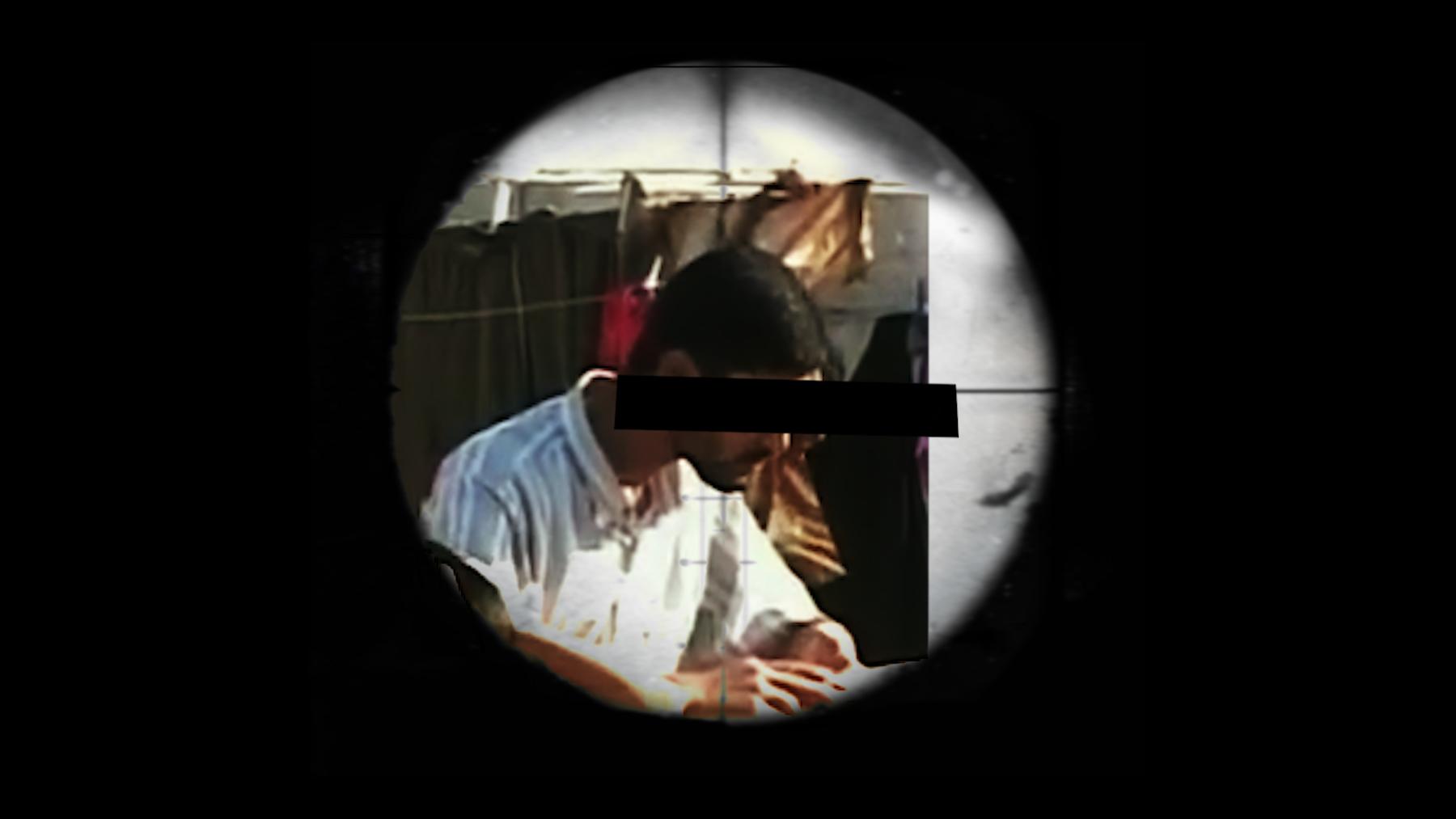
AF: Mahmoud Alhaj was born in Gaza in 1990. He left Gaza during the genocide and is currently based in France, where he presented Control Anatomy last summer. In an interview published when his film was screened in FID Marseille in 2025, he was asked: “Harun Farocki’s Images of the World and the Inscription of War (1988) comes to mind, right down to the tone of the voiceover. Is it a reference for your work?” To which Alhaj answered:
"I watched Images of the World and the Inscription of War, as well as other works that deeply engage with the relationship between image and sound. Farocki’s films, albeit subconsciously, may have taught me how sound should work alongside image, and how an image can be narrated without being interpreted. But this alone is not enough to make a film. There is something that cannot be learned from any cinematic reference: the specificity of experience, its uniqueness and the sensitivity that comes only from living within the event. My voice in the film is also an extension of my reality, of my body, which experienced the image not as a visual substance but as an existential state. Therefore, it cannot be said that any reference can contain or reduce this experience. Farocki may have helped me listen to the image, but the pain I carry cannot be borrowed.”
In case you missed the previous parts of the conversation, read the first and second parts here.
To learn more about films exploring the lives of Palestinians amidst the long history of settler colonialism and the ongoing genocide, read Kamayani Sharma’s essay on the depiction of childhood in three short documentaries, Sudha Padmaja Francis’ reflections on Hany-Abu Assad’s Omar (2013) and Kshiraja’s observations on Yousef Srouji’s Three Promises (2023).