

Weaving Video Stories: In Conversation with Mekh Limbu
.png)
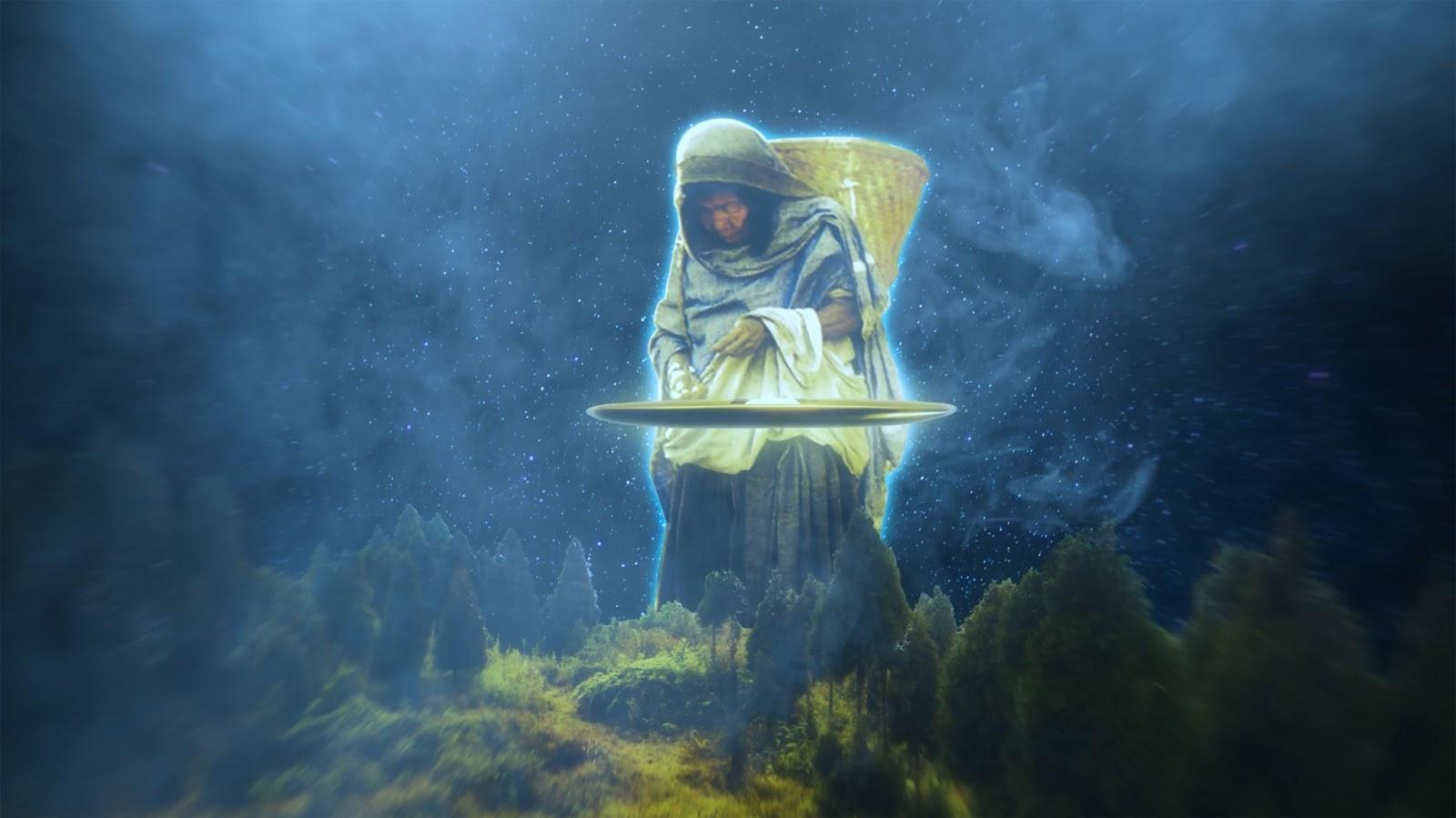
Recently exhibited at the ninth edition of Colomboscope: Rhythm Alliances, which was held from 21–31 January 2026 in Colombo, Mekh Limbu’s work Chotlung: traversing spirits, redemptive songs (2025) explores whether ancestral wisdom can offer grounds for reclaiming sovereignty, particularly in spaces marked by the violence and rupture of state-backed large-scale infrastructural incursions in the name of “development.” In the first part of this edited conversation, Limbu speaks about weaving as an act and metaphor that invokes the grandmother spirit Yuma and inspires a continuation of struggles of the Adibasi-Janajati Yakthung community—to which Limbu belongs—to protect their land and preserve their relationship to it; his understanding of weaving and video as amenable forms for collective practices of storytelling; and the injury caused by infrastructural projects on the community’s sacred landscapes.
Radhika Saraf (RS): Can you please tell us about the title of your work?
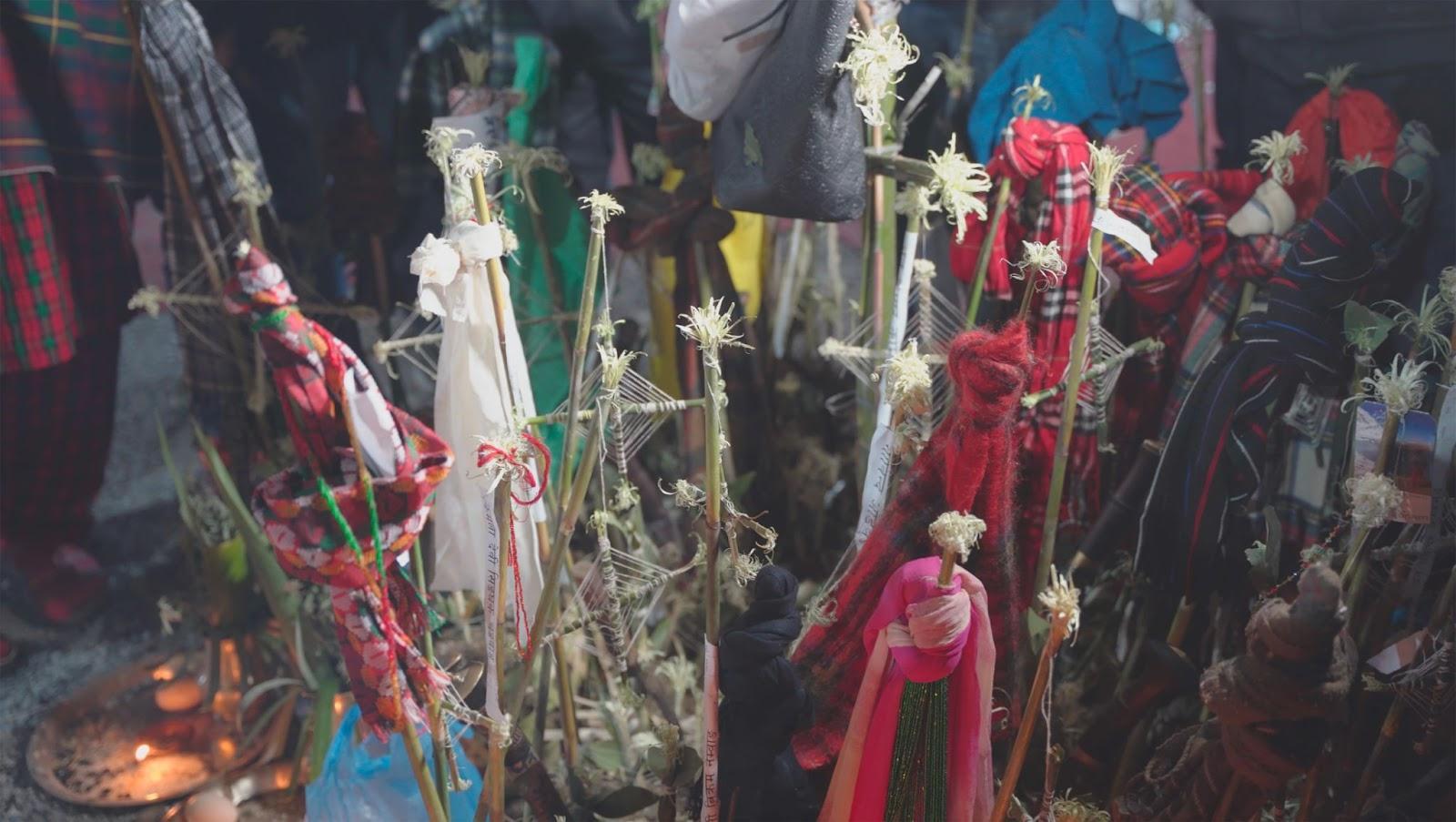
Mekh Limbu (ML): “Chotlung” in the title is related to the grandmother’s spirit that is being invoked throughout the work. Yuma is the grandmother’s spirit of this particular part of the eastern Himalayas and often the sacred sites and rites that are associated with her are described using this word. “Chotlung” is also used in reference to rituals in which both ancestral spirits and maternal figures are remembered, and during these rites, the act of weaving is often ritually invoked.

RS: In your artist statement, you say that weaving is a “language of memory and revolt,” whose origin place is Mukkumlung, a sacred Yakthung site. Could you please describe the role of weaving in your work and its importance in the lives of the Limbu people?
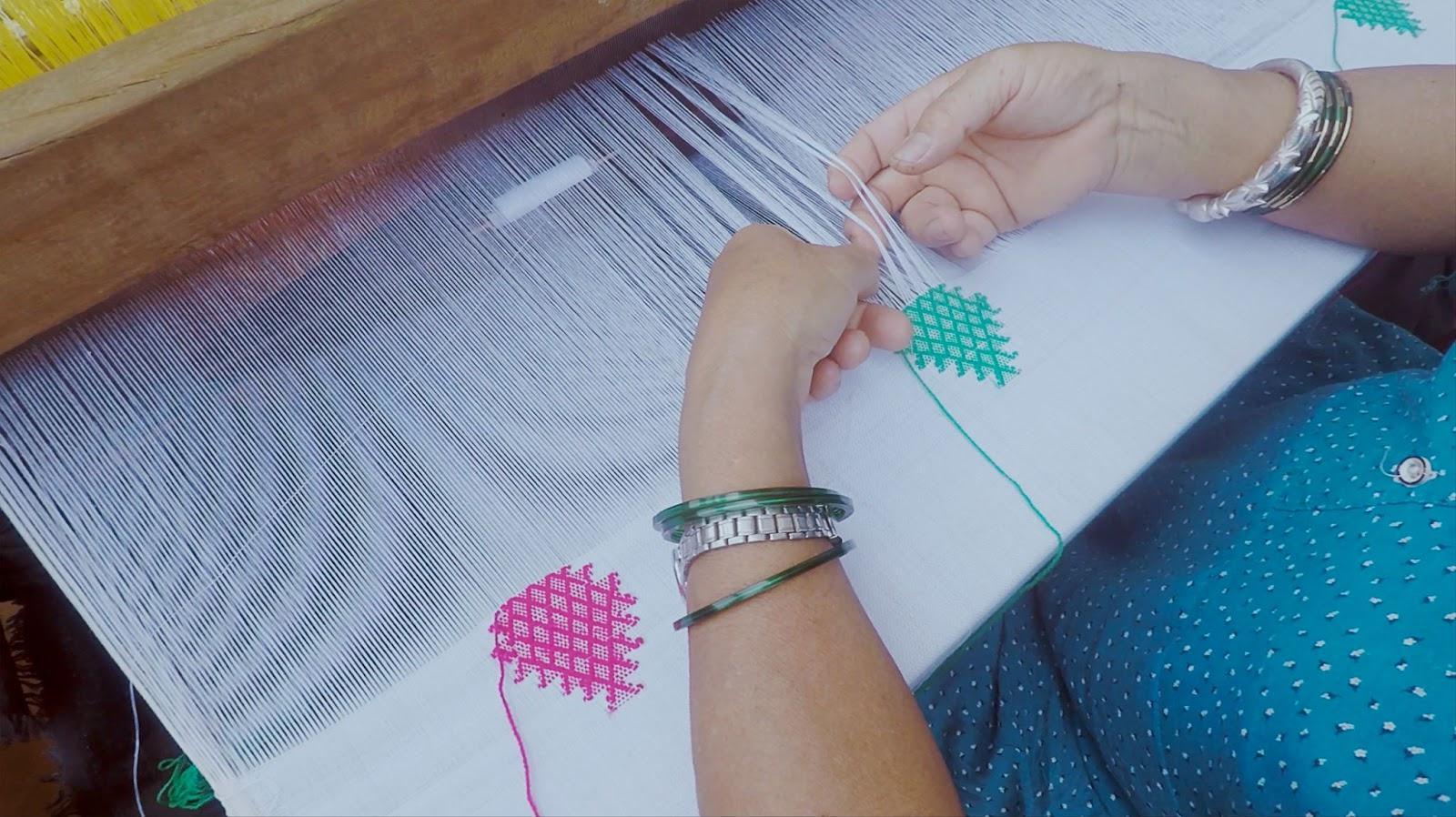
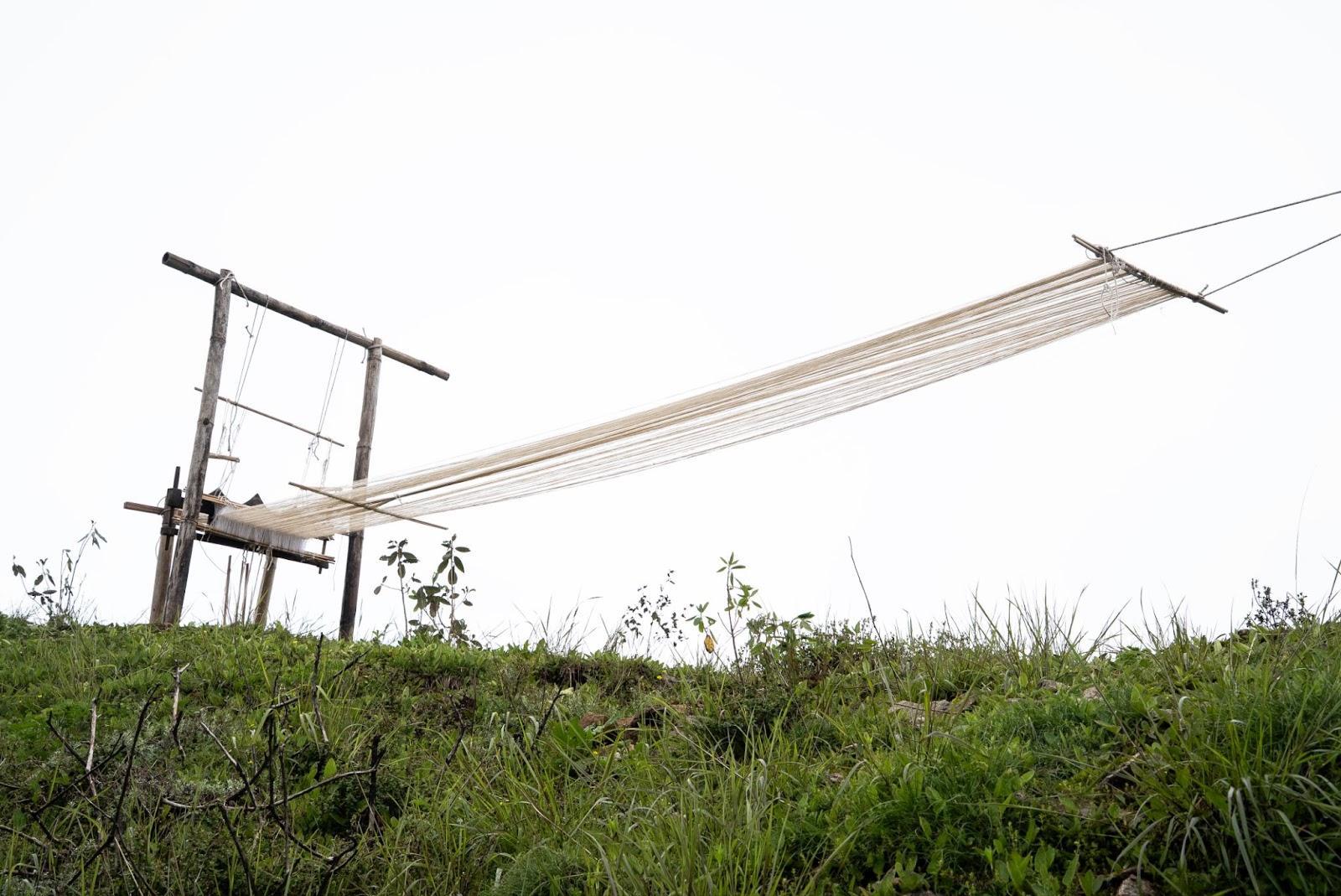
ML: Weaving is often referenced throughout Yakthung cosmology. From the point of creation to different points of civilisation coming together—weaving is referenced throughout these stories. Certain rituals even require the use of thread and materials that are used for weaving, for rites significant for the community. So weaving keeps appearing not only as an act but also as a metaphor for the continuation of the struggle and for the relationship with land that the Yakthung community has.
RS: Both weaving and video have a central role in the work, can you please elaborate on your process?
ML: In relation to the video, I have been thinking of the ways in which vernacular ways of performance, rituals and chanting are often used to communicate messages and stories within the community. I realised that these traditional practices are very similar to the ways in which video can be used today to carry messages. So the video captures those specific moments and also my interpretations of how to communicate what is being faced by the community right now.
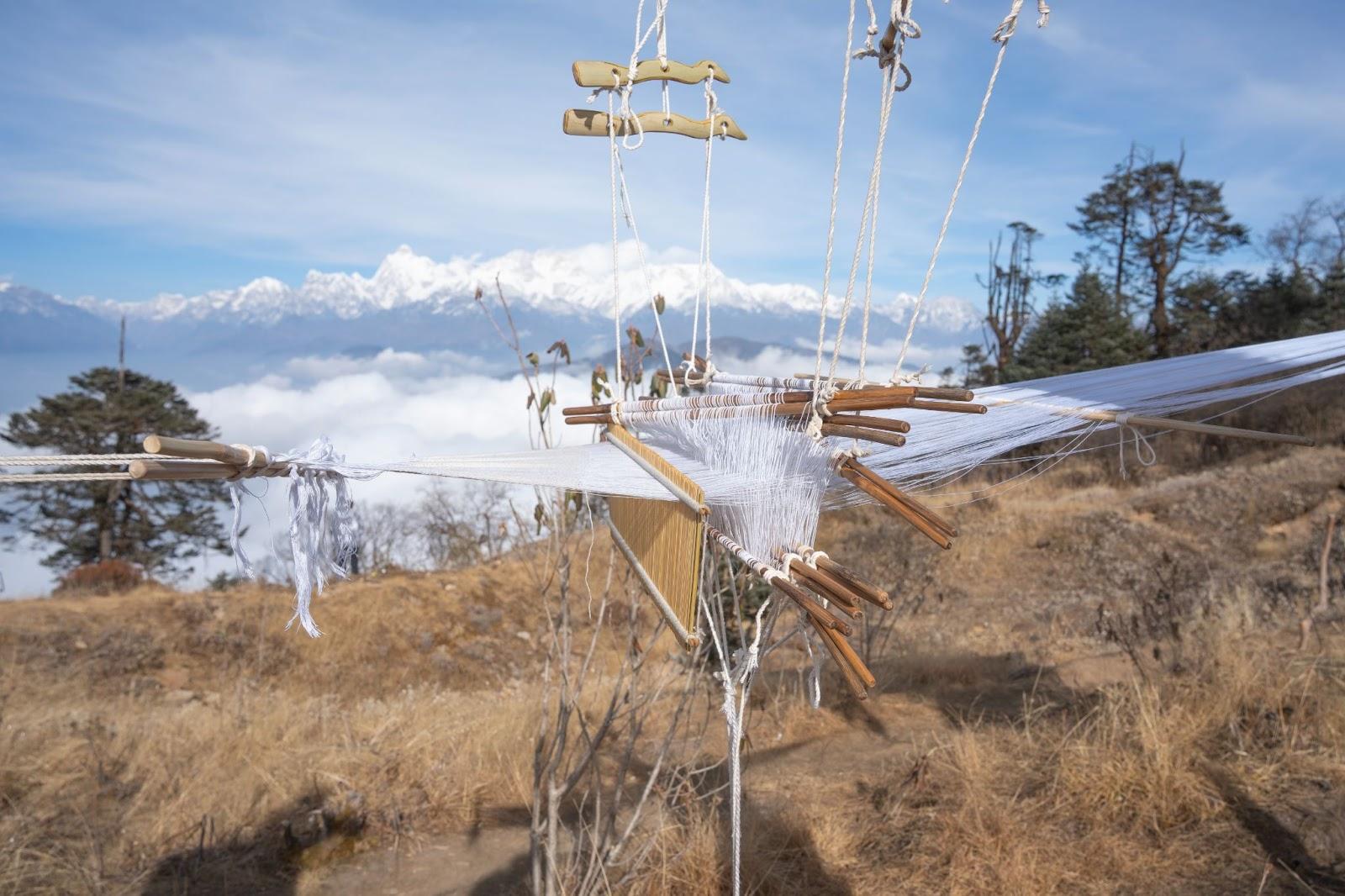
Weaving carries a similar purpose. The idea that weaving requires collective strength and effort is often understood metaphorically; so if the act of weaving goes well, it is a signifier of the community also surviving and continuing its relationship with the land, through the various struggles that exist. And in that way, I feel that these two acts are not necessarily separate, they feed into each other. In Yakthung rituals, when chotlung is evoked, and when rituals try to guide oneself or one’s community toward chotlung, there is often this recounting of collective struggles and presence in the land. It is almost like a reminder of what is needed to move forward.
RS: In the period of late capitalism that we are in, there is an alienation from oneself and from others. And perhaps a return to these collective practices is also to remind oneself of the necessity of resistance against what capitalism does to us?
ML: The video deals with large-scale infrastructural projects that are funded by individuals with big capital or connections to the political sphere of Nepal. They are able to push through such projects despite many controversies. The work is trying to address the repercussions of the privatisation of such capitalisation of both natural and sacred landscapes. It is an example of how communities in Nepal are responding to these types of predicaments.
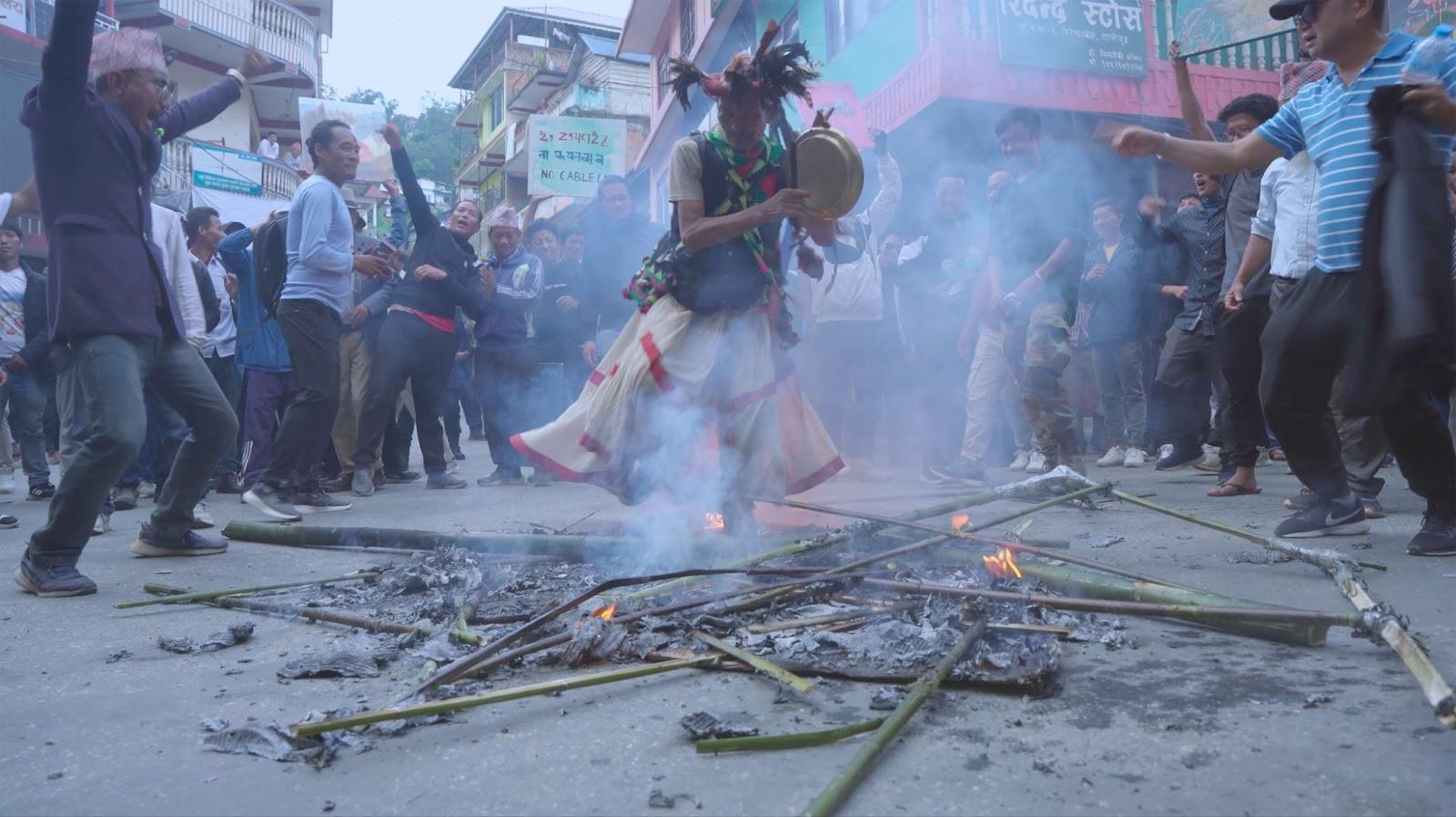
If communities that are there had agency to determine where to build these cable cars, how to structure these hydropower plants and how to determine the profits from these projects, then there would be participation and negotiations in such projects—which are termed as "development." Yet it is very apparent who gets to profit and who does not, and that is the tension that is palpable when you look at the work.
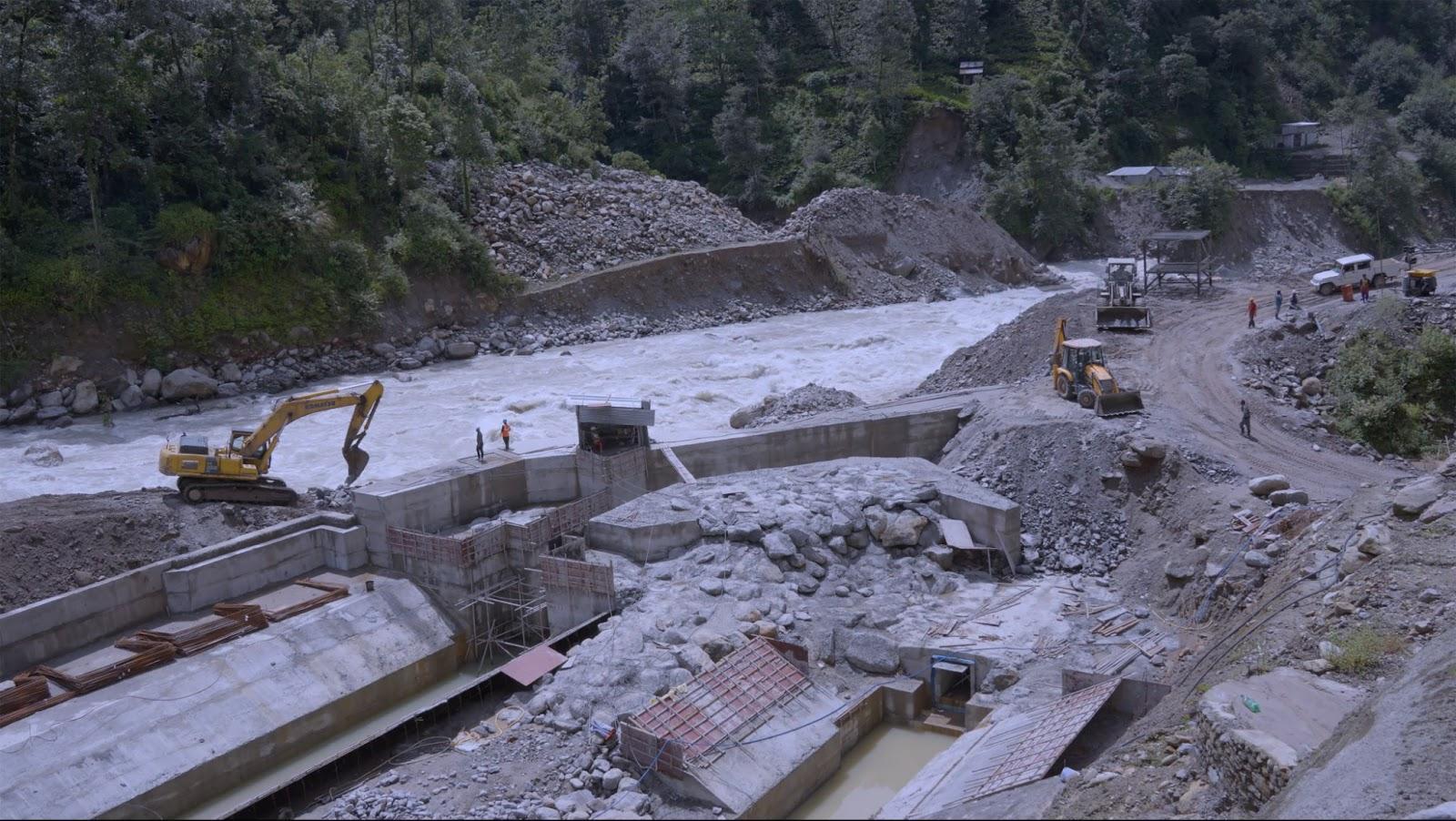
For instance, the river that is cited in the work, Imbiri Yangthangwa—which is also called the Tamor River and is situated in eastern Nepal—has one of the highest number of hydropower dams on a single river across the Himalayas. There are over twenty intended hydropower projects on this river and three are already under construction now. The force with which the river descends is very high, so the potential of generating hydropower is significant on this river, resulting in a lot of prospective speculation.
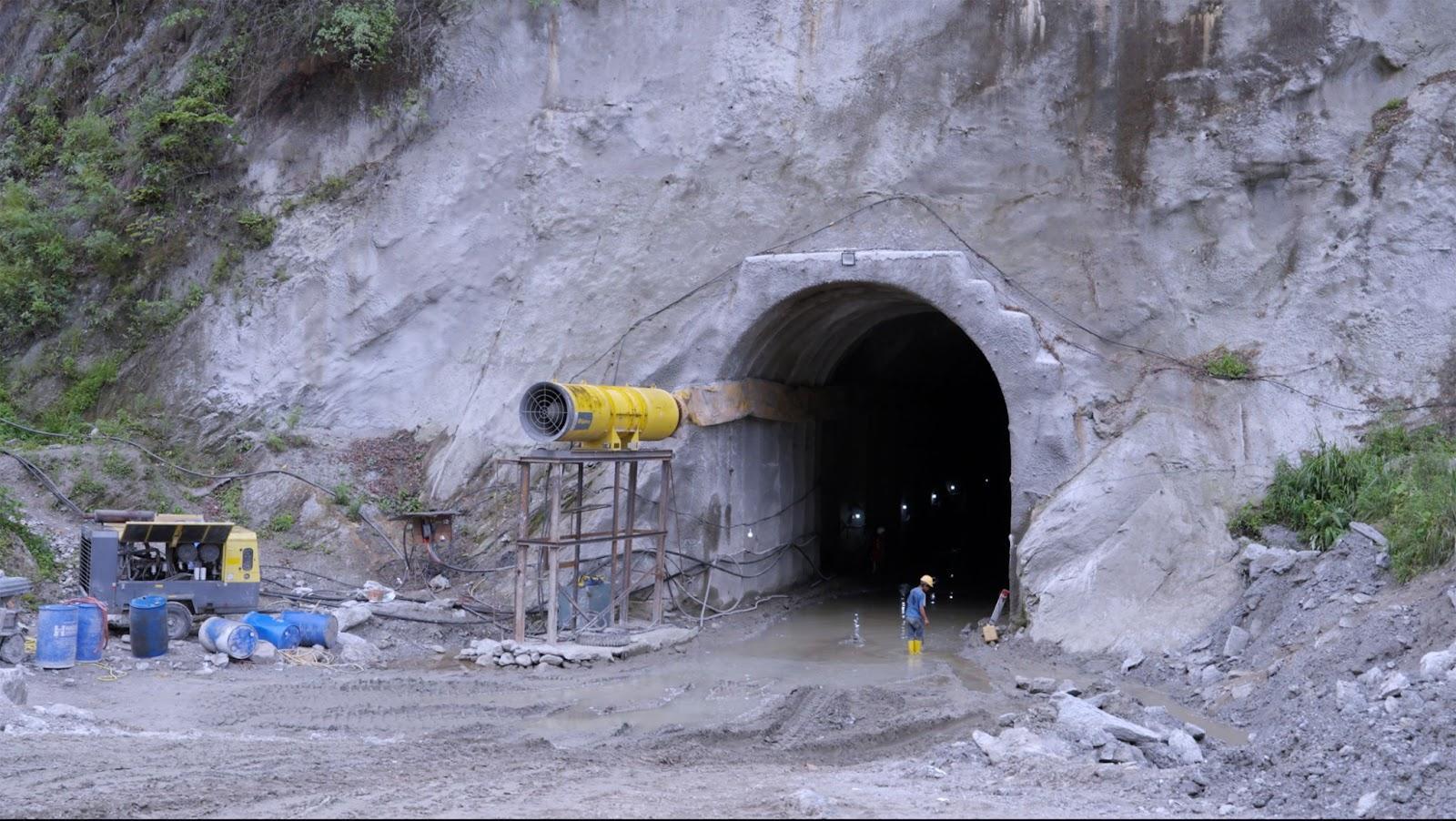
And particularly with regards to hydropower construction, it is not just the run of the river system but there is also a lot of tunnelling that is being done. It is causing disruptions to existing water cycles and spring water that is often used by the communities there. A lot of communities are facing struggles with respect to access to water as a result of this construction. And because rivers control these micro-climates in the Himalayas—what the dams do is they disrupt the flow of how the river moves, which then disrupts the wind, or how the heat collects in specific valleys—so you have certain valleys in which there is now excessive heat, almost like the plains between Nepal and India, and these effects were not communicated or even foreseen.
Thanks to Priyankar Chand for translating between Nepali and English and enabling this conversation.
Chotlung: traversing spirits, redemptive songs was co-commissioned by Colomboscope and Ghost 2568. It has also been supported by the Experimenter Generator Co-operative Art Production Fund, ArTree Nepal, Kalā Kulo, Yakthung Cho and Goethe-Institut Sri Lanka.
To learn more about Colomboscope: Rhythm Alliances, watch the episode of In Person, in which Radhika Saraf speaks to Basir Mahmood about his work A Body Bleeds More Than It Contains (2026). To learn about previous editions of Colomboscope, read Pamudu Tennekoon’s reflections on Ruwangi Amarasinghe’s fantastical forests and notes on the discussion “Seeding a Grove of South Asian Solidarities” at Colomboscope in 2024 and listen to an episode of the ASAP podcast featuring festival director Natasha Ginwala, Arushi Vats in conversation with Anushka Rajendran, the curator for the 2022 edition and read Ankan Kazi’s reflections on the online radio programme A Thousand Channels as part of Coloboscope 2022.
To learn more about artists exploring the relationship of Indigenous communities to land, watch Bhumika Sarawati’s discussion with Subhash Thebe Limbu as he speaks about Adivasi Futurism, Riddhi Dastidar’s review of The Land Sings Back (2025), Mallika Visvanathan’s curated album from Kunga Tashi’s Children of the Snowy Peak (2019–ongoing) and Sakhi Subramaniam Chowla’s album documenting Diyari Puja in the Bastar region of Chhattisgarh.