
Urdu Worlds: In Conversation with Ali Kazim on Text and Image
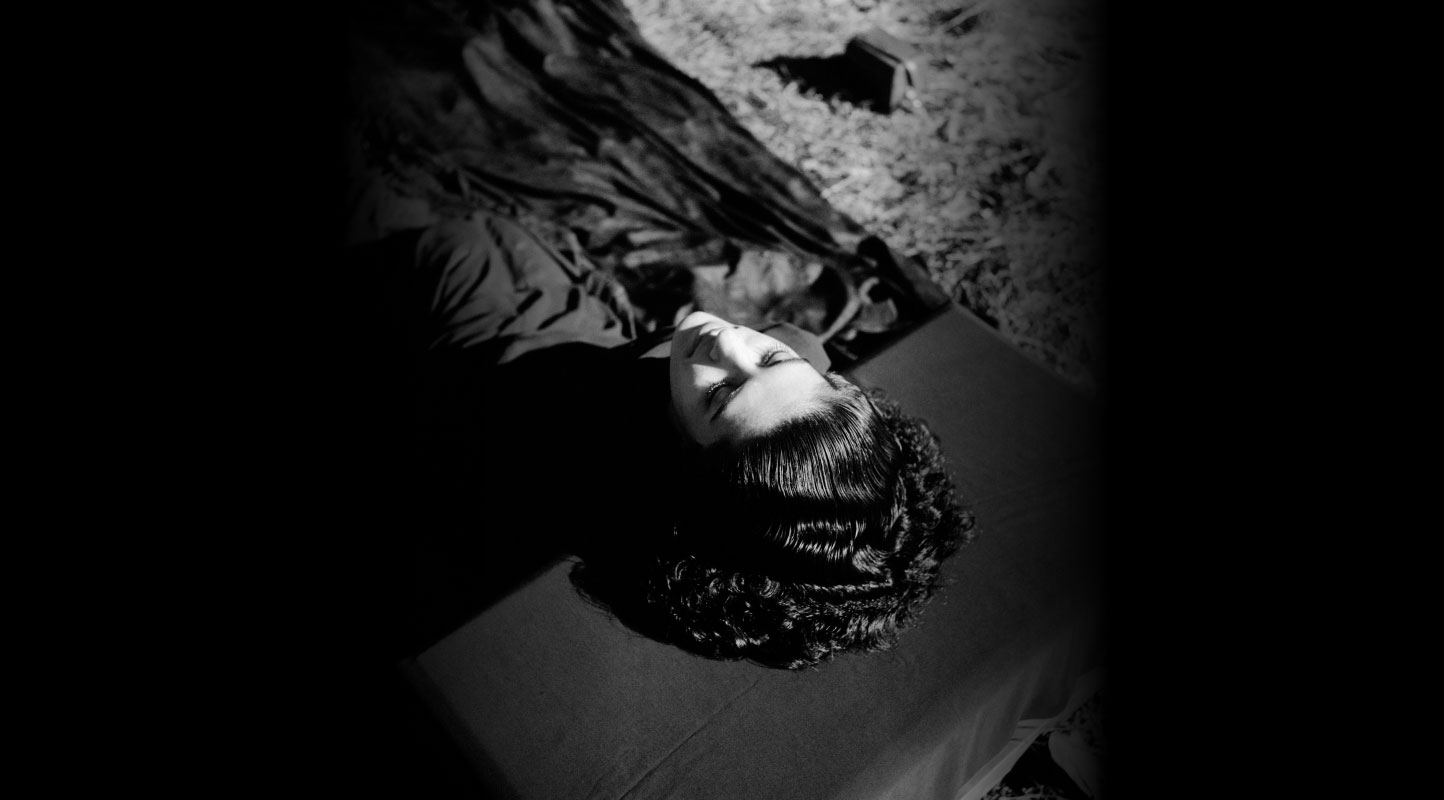
“Ali Kazim is known for his slow, painstaking and repetitive process,” art historian Emilia Terracciano wrote in her essay for the Lahore-based contemporary artist’s solo exhibition held at Frieze No.9 Cork Street, London in 2023—The Weight of Blue—while reflecting on his series “Mara’s Army” (2022). The work involved the creation of various pigments of blue to create tones through layers of application using the wash technique, and Terracciano noted how: “Twirling, agitat-ing (sic), and submerging repeatedly the paper, up to fifty times, in a tray, Kazim created and fixed the deep blue tone he desired.”
, 2022.jpg)
To understand Kazim’s practice is to keep returning to fragmentary toys in the shape of birds from c. AD 101–400 that he found in the Ashmolean Museum during his studies at the Slade School of Fine Art, or to pottery shards from a Harappan site—yet unexplored by archaeologists. This repetitive process generates a framework of transmission between these artefacts and a world of Urdu literature and mythology in South Asia, where texts draw from similar worlds of visuality.
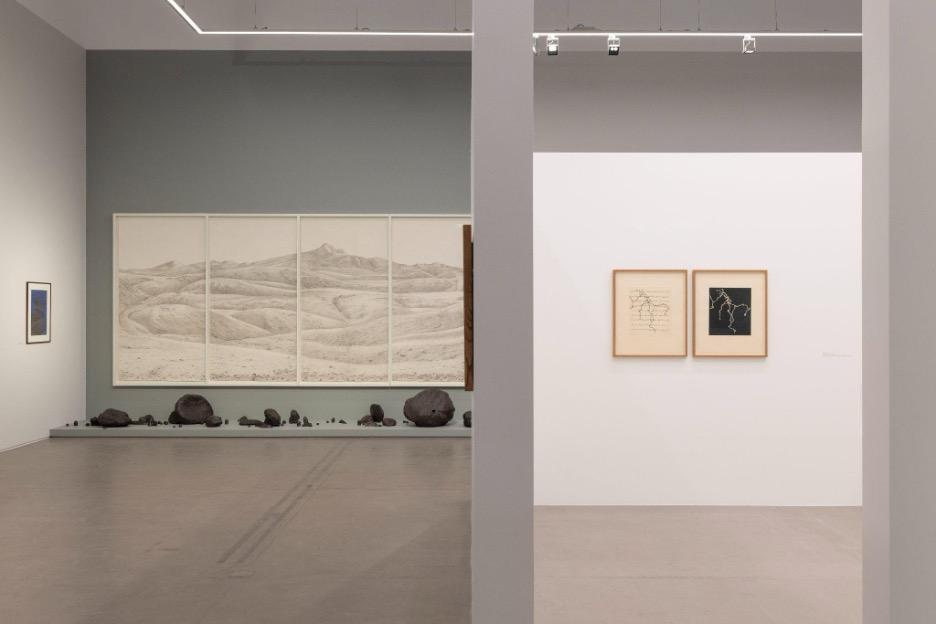
In Urdu Worlds, curated by his longtime friend and collaborator Hammad Nasar at Ishara Art Foundation in Dubai, UAE, from 16 January to 08 June 2026, more than two decades of Kazim’s practice enter into a dialogue with works by the modern artist and printmaker Zarina—with both artists drawing from Urdu and the visual worlds the language contains. As someone who called herself an “Urdu artist,” finding herself “too Muslim for the US and India, and too Indian for Pakistan,” Zarina moved from translating smaller titles of her work for an uninitiated audience to a conscious decision of non-translation, even when working with longer proverbs within her work. In “Zarina’s Urdu World” (2026), her studio manager, Sarah Burney, explains:
"Zarina had reached a point where it was necessary to express herself in Urdu. To not translate herself, to create some works that were just for her, to cocoon herself in the language of communication and collaboration with her beloved sister, to weave and fully inhabit an Urdu world.”
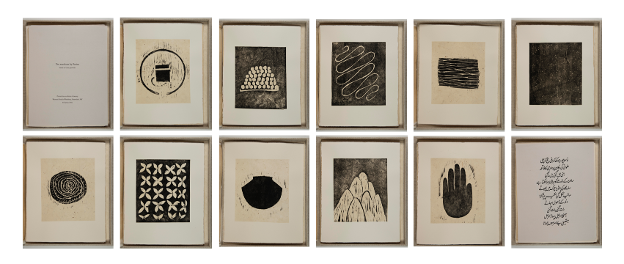
Kazim imagines a world of visuality connected to the Urdu alphabet in his Alphabet Book (2026), which reimagines the Urdu Qaidas (language primers, often used to teach the Quran) available in Pakistan. More often than not, these tended to be created with nationalistic intentions behind child education, as the artist recalled while speaking at Ishara Art Foundation recently. Instead, Kazim draws fragments from his oeuvre to generate an alternative visual world, seeped in historicity—where children can gain insight about the nature of colonialism in South Asia and the evolution of motifs in Urdu literature. In this podcast episode, Kazim speaks about recurring preoccupations in his practice and imagining larger possibilities for the Alphabet Book in Pakistan.
Read below the transcript of the podcast conversation. This text is edited for readability while preserving the original content.
Upasana Das (UD): The exhibition creates a conversation between your and Zarina’s works—when did you first encounter her work?
Ali Kazim (AK): I encountered her work during my BA—the early 2000s. She did a show in Lahore with Ms. Salima Hashmi’s gallery, Rohtas II Gallery—but that was later. When I was in the Slade School of Fine Art pursuing my MA, she was asked to recommend a few artists whom she wanted to include in an exhibition and she recommended my name to one of the galleries. Then I got a chance to speak to her—it was probably 2010 or 2011. I never really got to know her personally or visit her studio as I hardly went to New York. The only time I visited was in 2006 for an artists’ residency and I did not know her at the time.
UD: Both of you look at space and text in intersecting and sometimes parallel ways. Did you find points of correlation or divergence between your practices?
AK: She was living in New York and was looking at her past through the land where she had her ancestral home. It was a place that she was familiar with, whereas I am looking at this land while living here, so that is a slightly different way of looking at the same thing. I do feel that my work is more about people and their memories. It does not matter if it is a landscape or a portrait. Her work, in a way, also comes from memory, from imagining her past and thinking of her own relationship with the city and its people.
UD: What drew you to portraiture?
AK: The portrait series started in 2002; just before joining Slade, I was trying to mimic skin-like textures on paper as I wanted to create a tactile surface. After some attempts, I thought, why not try a material that is closer to skin, like leather or goat hide, which has been used for making tabla and dhol in the subcontinent? So I tried learning basic techniques by going to local artisans who make leather or vellum sheets—somehow, just before leaving for Slade, I managed to learn a bit of those techniques and later totally forgot about them!
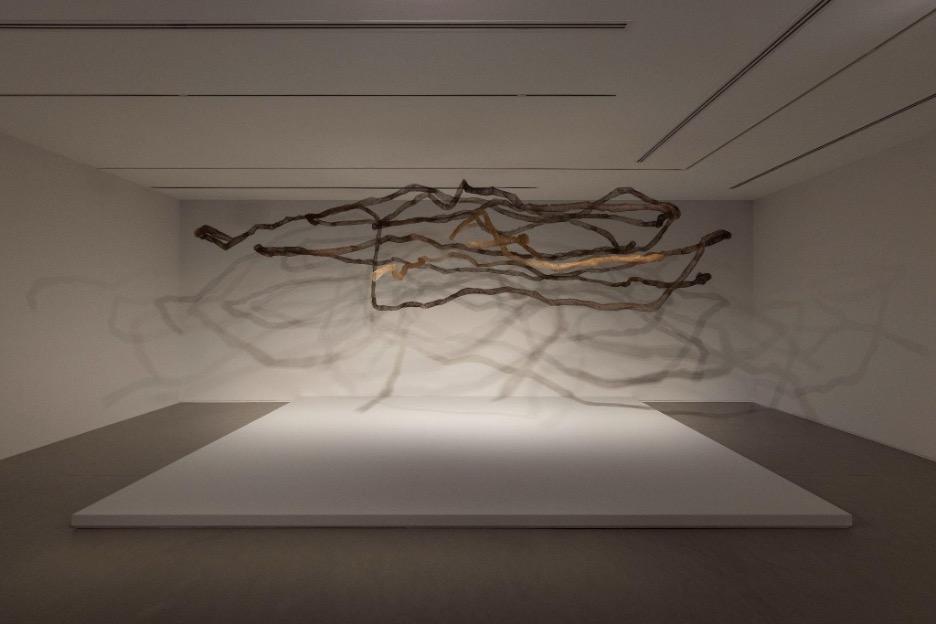
At Slade, I had enough time to understand these materials in a different way. For my degree show, I was developing a piece from human hair—I collected human hair from different salons and washed them carefully trying to understand how I can use them. To bind the material, I tried many glues and hair gels and then realised—maybe it is hairspray. Using just the hair spray that I made, I rolled the hair around my arm and created tube-like forms. Then I suspended those tubes with fine hair, which remain invisible even from an arm's length—so when you enter, you just see a life-sized form floating in space, even with any gentle movement of air. If you move around, it moves. It was like creating a 3D drawing in space—with the very line being created from the human hair. This is an extension of portraiture, but from a different kind of material which is the actual DNA of humans. In a way, human hair is significant in all religions. I did not try to add anything to it, but merely used it as a medium with so many associated meanings.
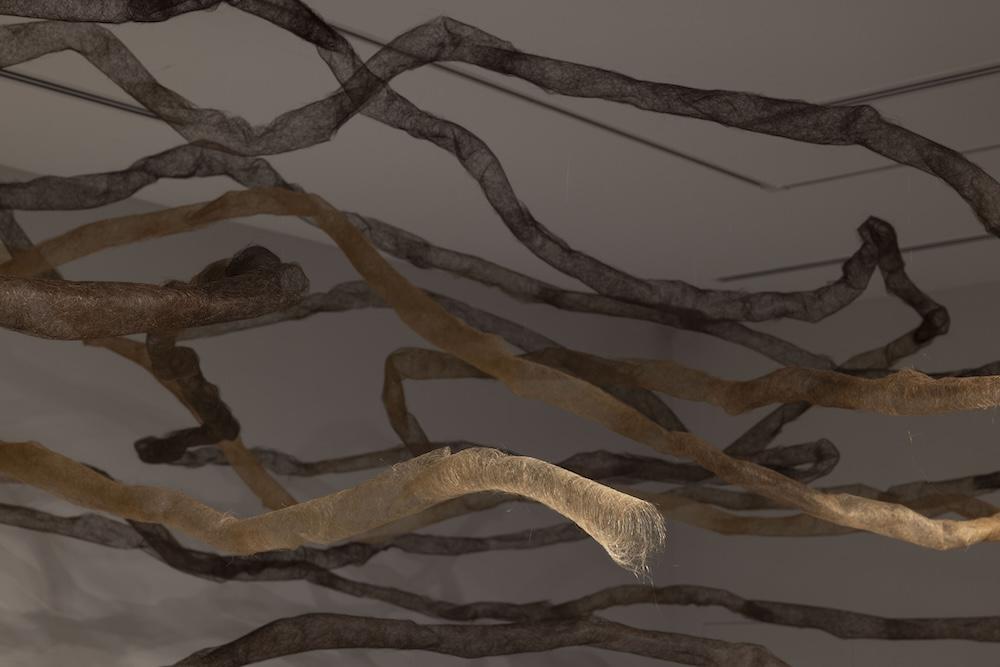
UD: It is interesting how you are imagining this untitled work (the hair sculpture) as an extension of the self-portrait.
AK: Our skin and body are familiar grounds—and become the most accessible thing to start from. I have been painting self-portraits since my BA. When I graduated from the National College of Arts in Lahore back in 2002, I was interested in making portraits. In art colleges here, teachers question your practice a lot and I realised that I did not have any particular reason as to why I wanted to make portraits. So, I started going to different museums in Lahore and came across the King Priest from the Indus Valley Civilisation. It is a small statue and I realised that perhaps it is the earliest example of portraiture from South Asia. From the physical features such as thicker jaw and shorter forehead or the armband and the pattern on the shawl, one can recognise the Dravidian race. This was a perfect example of a portrait for me, and so I started making drawings of the statue as if I were making a portrait of someone from the past—that is how my figurative and portraiture work started. I began noticing physical features and the fashion of people walking around me in the streets of the city or the village—I started noticing people who were slightly similar to those dead characters and I started making portraits of those people.
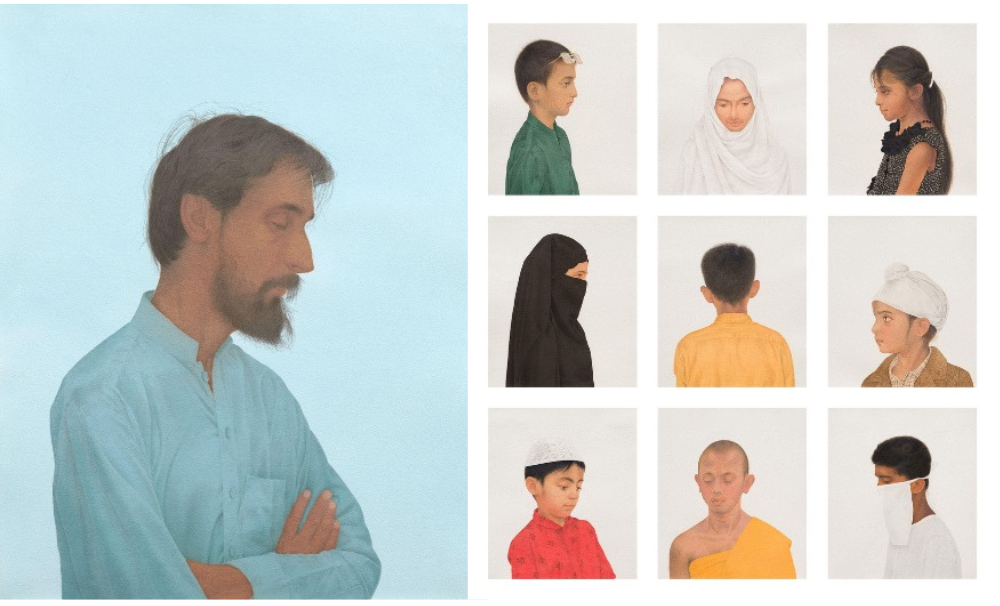
Left: “Untitled (Man of Faith series).” (Ali Kazim. 2019. Watercolour pigment on paper, 56 x 46 centimetres. From the Collection of Tarika Singh and Zafar Ahmadullah. Image courtesy of the artist and Jhaveri Contemporary. Photography by Matt Pia.)
Right: “Untitled (Children of Faith series).” (Ali Kazim. 2024–25. Watercolour pigments on paper, 35 x 31 centimetres each [9 parts]. Image courtesy of the artist and Jhaveri Contemporary. Photography by Andrew Judd.)
UD: Across the portrait series, you have paid particular attention to hair. What made this one aspect of physicality so significant to your work?
AK: Growing up as an art student in Lahore, I learnt from visual material that was available around me in museums in Pakistan—for instance from the Indus Valley civilisation. Then there is Gandhara art, beautiful miniatures from various schools in a later period and then, Company paintings. The material was either terracotta or stone and paper. Because I was learning from the actual surface, I was picking up ideas from these different materials. With the Company School, the focus was just the subject where you had to paint all the details of a flower, a bird or someone’s portrait—that was how my whole language started. When I started making my first portrait, I began working with watercolours and pigments I had at that time—I trained as a painter and not a miniature artist, and in painting, if something goes wrong, you just apply another layer. At a certain point I realised that the surface was not responding to how I wanted to paint, so I overpainted. Then, I took that portrait in the shower and washed the surface gently to remove the excessive pigment—I realised that the surface had become very close to the wash technique of the Bengal School artists. I started studying that school of painting and noticed that the artists were inspired by Japanese woodblock prints which were attempting to create an atmospheric effect through watercolours—and I picked up that technique.
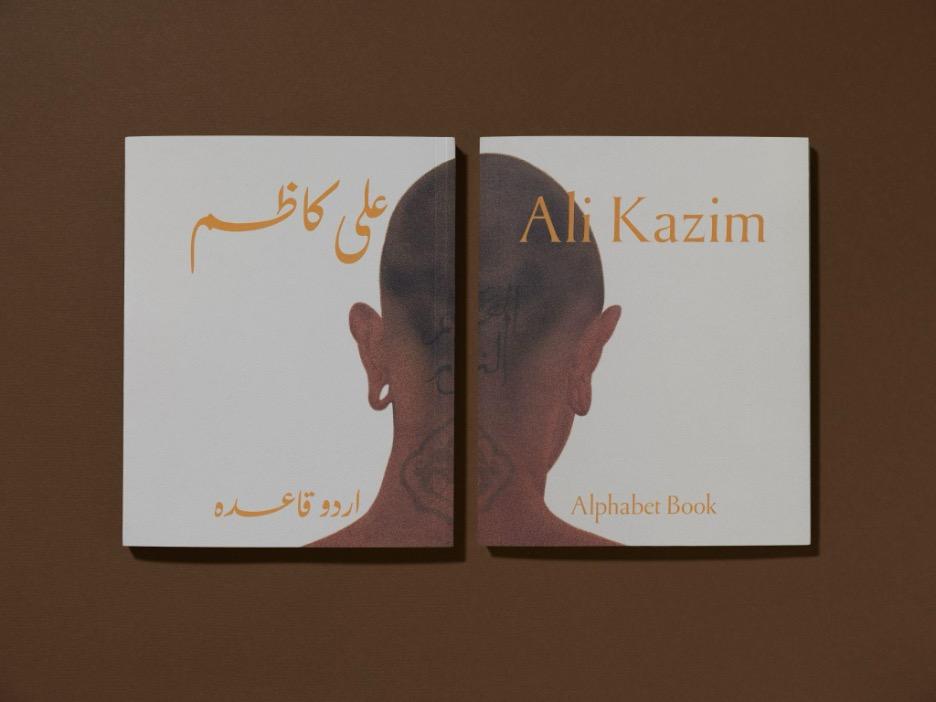
UD: Speaking about your Alphabet Book, some artists from the Bengal School came up with their own vernacular alphabet book Sahaj Path. It was Nandalal Bose who made the simple linocuts—and Rabindranath Tagore wrote the jingles. Making a book like this is an exercise in selecting visuals and storytelling, and I was wondering what your process was.
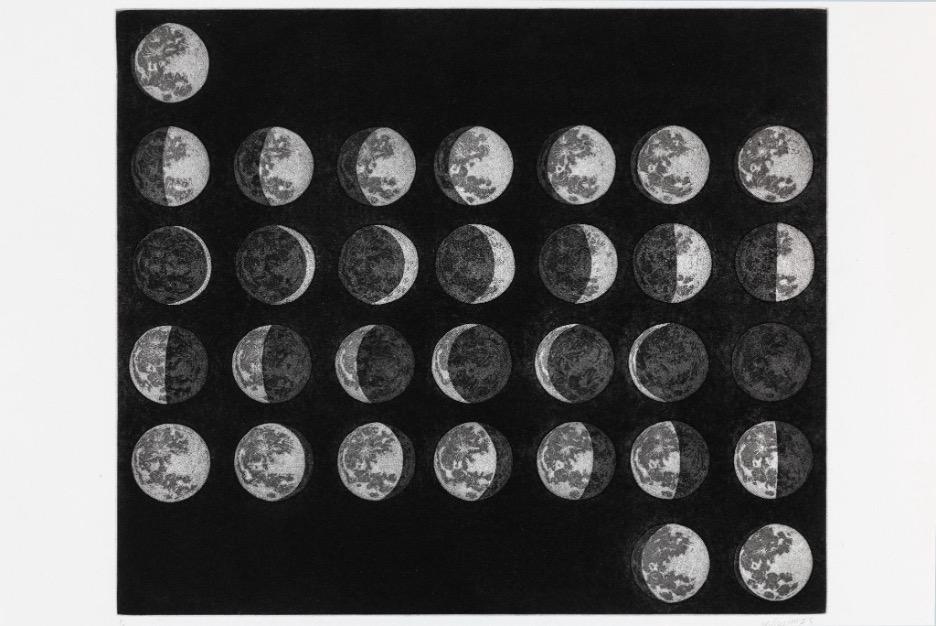
AK: I was aware of Sahaj Path! Perhaps some inspirations came indirectly from it as well. Hammad (Nasar) and I were looking at my practice from 2002 onwards and there are a couple of images from my first Degree show—of narial (coconut) and nashpati (pear)—which were directly influenced by the Company school, where the focus is on the organic form. We took elements from there but also realised that there were many alphabets which were missing. Thus I started a body of work that included nineteen new etchings responding to those letters but I am unsure if I will exhibit them.
UD: You have mentioned previously how working on the book made you shift your practice. Could you elaborate on that?
AK: Perhaps not a change but it has given me freedom to work without thinking about certain boundaries. I remember this image called “Yalabari,” which means hailstorm in Urdu. It is painted in a manner that I used to do during my academic years. There are other works like that in the book. I never thought that I would be making a serious body of work through etching. Initially, I thought it would be slightly easier to etch an image as compared to painting but later I realised that it is so complicated that it has taken even more time! Alongside paintings, the total number of etchings that I created were around twenty-four in one-and-a-half years. It came from just pushing myself and creating images in a different way and I thought that I must have a good etching press in my studio—now I have purchased one from Italy. It is going to arrive in the next month or so and perhaps it will change my studio practice if I develop more prints. Earlier, I would make etching plates in Pakistan and take them to London to print with master printer Simon Lawson and with the help of Christea Roberts Gallery who supported this project. You need to have help with these processes of printmaking.
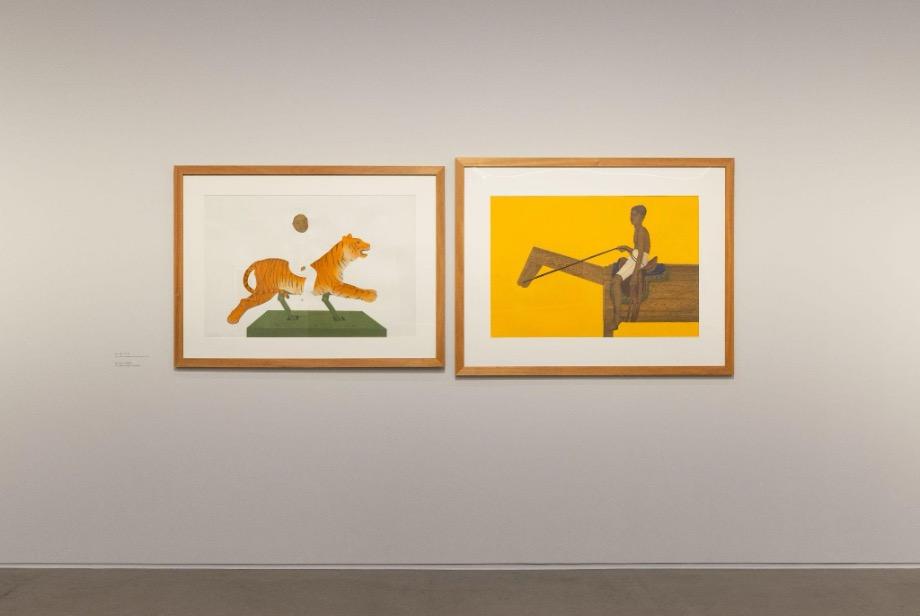
UD: It is interesting how you refer to historical moments like colonialism through objects like Tipu Sultan’s tiger toy also known as “Tipu’s Tiger”—a working version of which is now in the V&A—or the Koh-i-Noor that lies with the British Crown Jewels. Traditional Qaidas often have nationalistic agendas, as you mentioned previously, like using an image of the Kalashnikov for one alphabet. How did you negotiate with this tradition of Qaidas and also illustrate historical moments of significance in the subcontinent?
AK: That is always the case (laughs)—Qaidas have always been very nationalistic, trying to inculcate in children certain ideas around religion. I thought maybe I need to create something complex, where one alphabet will lead to an image, which leads to more layered stories. For example, from the Urdu word “ae,” you talk about the Hoopoe bird or the Hudhud and then you start thinking about different mythologies around the bird—like that of Prophet Suleiman’s around Hudhud or the importance of that symbolism in Islam or pre-Islamic civilisations. I remember very small terracotta Hudhud artefacts in the Ashmolean Museum—I was stunned to see that this bird was important even thousands of years ago. It did not arrive abruptly in Islamic civilisation.
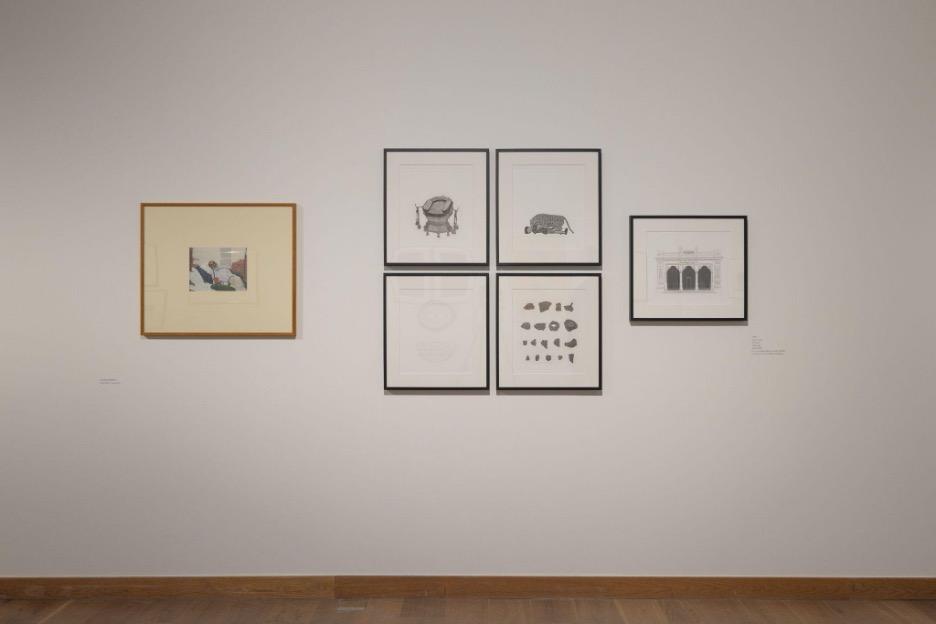
When thinking of the alphabet, I considered the words which came with those alphabets, for example, I used “loot” with laam—it is the same word in Hindu, Urdu and English—borrowed from the region. One is a technical drawing of Koh-i-Noor; another is an etching of Maharaja Ranjit Singh's throne; “Tipu’s Tiger;” and then in one of the etchings, I have made just pottery shards from the Indus Valley Civilisation; and a painting of Bahadur Shah Zafar, the last Mughal emperor. With that set, I felt it was a complete chapter of the colonial past and what happened with Zafar as the last king.
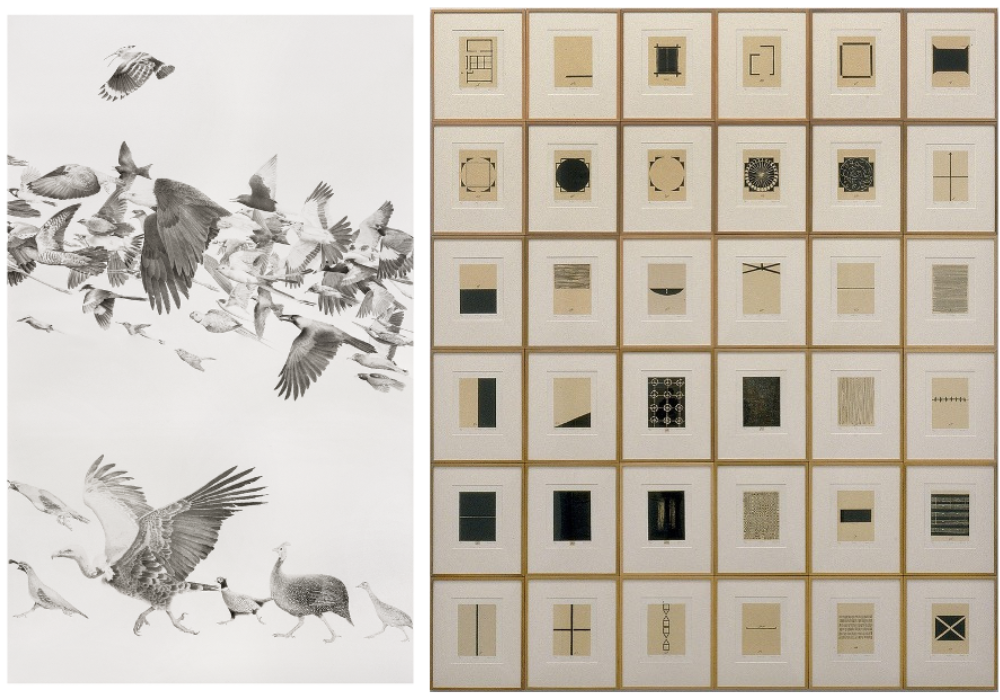
Left: “Hudhud (Conference of the Birds).” (Ali Kazim. 2022. Watercolour pigment on paper, 198 x 110 centimetres. Image courtesy of the artist and Jhaveri Contemporary. Photography by Andrew Judd.)
Right: “Home is a Foreign Place.” (Zarina. 1999. Portfolio of 36 woodcuts with Urdu text printed in black on Kozo paper and mounted on Somerset paper, image size: 20.32 x 15.24 centimetres, sheet size: 40.64 x 33.02 centimetres. © Zarina. Image courtesy of the artist and Luhring Augustine, New York. Photography by Lamay Photo. Edition of 25 and 5 Roman Numeral sets, edition 18/25 from the Ishara Art Foundation and the Prabhakar Collection.)
UD: Did you see any similarities in the way you and Zarina were approaching text?
AK: Zarina was using text as a visual language and symbol. I am interested in literature and stories in Urdu—thus, taking inspiration from texts and responding to those ideas—like the painting “Conference of the Birds” (2022) is inspired by Bano Qudsia’s book, Raja Gidh (1981). She was based in New York and did not have much access to Urdu, so she felt the need to use the language that way; whereas where I live, the language is all around me.
UD: You were also juxtaposing text and image in your early career with cinema board painting. Did that influence your practice in any way?
AK: There are always influences from our past. When I was growing up as a child in a small village, we did not have art education on a school level—even now, there are certain schools which offer drawing or art as a subject but those are available in bigger cities, not in villages. When one of my teachers saw a drawing I made, he said that when I get a chance to go to the city, I can learn portraiture from the cinema board painters there, who make large portraits. Perhaps it was when I was in the eighth class that I had a chance to visit the city and I started visiting cinema board painters and small shops during the summer vacation. I joined them as a new apprentice and started learning how to make images in a certain style. One of my cinema board painters ustads (teachers) told me about the National College of Arts in Lahore.
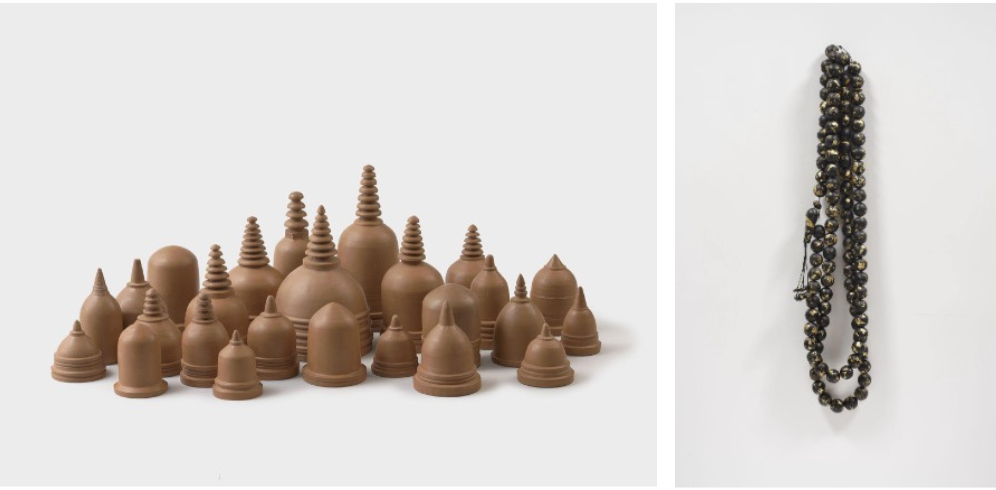
Left: “Untitled (Votive Objects).” (Ali Kazim. 2022. Terracotta, variable dimensions. From the Taimur Hassan Collection. Image courtesy of the artist and Jhaveri Contemporary.)
Right: “Tasbih.” (Zarina. 2011. Maplewood stained with Sumi ink, covered with specks of 22 carat gold leaf and strung with oxidised steel wire [99 beads], each unit: 5.08 centimetres [diameter], total length: 548.64 centimetres. © Zarina. Image courtesy of the artist and Luhring Augustine, New York. Photography by Farzad Owrang. Edition of 5; edition 5/5 from the Ishara Art Foundation and the Prabhakar Collection.)
I was also picking up different things from different sources, like in one of the movies, I saw Dilip Kumar making a sculpture. So, I thought, ah, the hero is a sculptor, I have to learn those techniques as well! I started learning wood carving from a furniture carver, and in an advertisement or a drama I saw a potter making pots, which was very glamorised. So I started learning these techniques from different craftsmen.
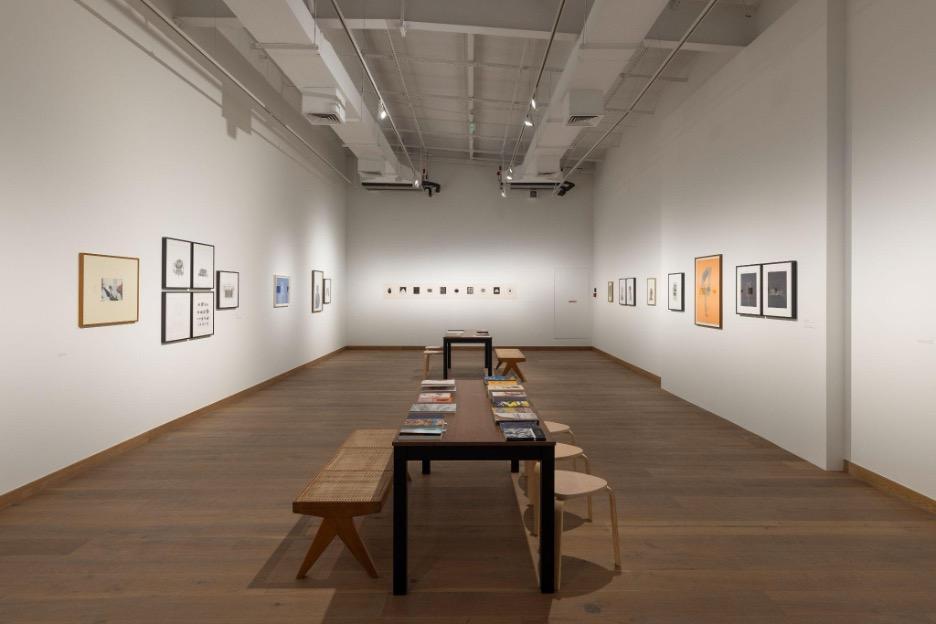
UD: How do you imagine the afterlife and circulation of the book considering how Mughal history is erased from the curriculum in India—do you see children reading them or it becoming part of the curriculum or alternate learning spaces?
AK: It is a temporary agenda—things do not disappear that way. Recently in Lahore, they have renamed all the pre-Partition names of streets; there was a gully called Ram Gully—maybe they changed it to Rahman—and now they have changed it to Ram Gully again. Or for instance, Krishan Nagar, which we are still familiar with—it does not matter if it is given a different name—for us, it is still Krishan Nagar. As artists, we respond as we witness things and we record it. But it is going to stay an important document, at least around my practice. We have intentions of printing in Pakistan so we can reduce the price to make it more accessible to young children and art students as well as the general public.
To learn further about explorations of memory and longing through language as a site of engagement, read Shaon Basu’s reflections on Somnath Hore’s seminal work, Tebhaga: An Artist’s Diary and Sketchbook, a public talk hosted by ASAP | art featuring curators Salima Hashmi and Manmeet Walia on their exhibition, (Un)Layering the Future Past of South Asia: Young Artists’ Voices (2025), Mehran Qureshi’s two-part essay, “Kashmir: The Poem and the (Impossible) Picture” (2025), Najrin Islam’s essay on Sofia Karim’s Turbine Bagh Project (2019–ongoing) and Ankan Kazi’s curated album featuring photographs of the Mukti Bahini (Liberation Army) in Bangladesh.
To learn more about artists reflecting on contemporary Pakistan, read Ruchika Dhillon’s review of Zahra Malkani’s exhibition Noorani Metal Sound (2026), Radhika Saraf’s two-part conversation with Karachi LaJamia, Banhi Sarkar’s reflections on Anam Abbas’ This Stained Dawn (2021), Upasana Das’ conversation with Shahbano Farid on the film Karachi at Night (2024), Arushi Vats’ essay on Zoya Siddiqui’s series Personal Shrines (2016) and Ankan Kazi’s essay on the history of the National College of Arts, Lahore.